


Sustainability
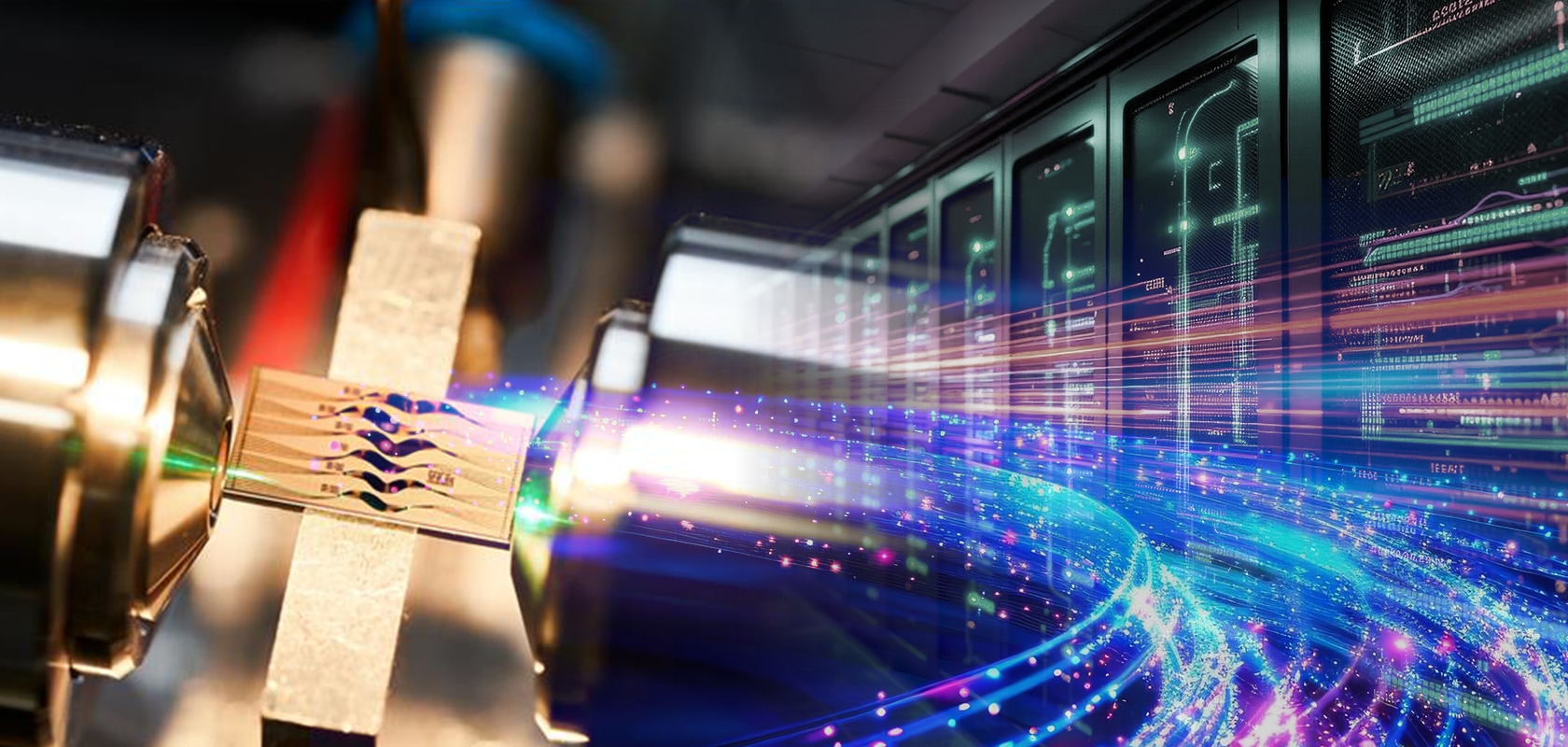
Nowadays, it's standard for everyone to have a smartphone, consult with AI (artificial intelligence) for research, and conduct webinars and remote meetings with people in different countries. Digital Transformation (DX) has level of convenience that would have been unimaginable in the past. However, as digitalization progresses, there are concerns about its growing power consumption.
In particular, efforts are being made through collaborations between industry, academia and governments with the aim of reducing power consumption at data centers—which play a key role in DX—by 40% by 2030. One innovative technology indispensable for these efforts is the Photonic Integrated Circuit (PIC). This technology integrates optical signal processing functions onto a chip, enabling high-speed, high-capacity communication while also saving energy.
In addition, PICs are expected to be widely used across a range of applications, such as automated mobility, enhancement of information security through encryption of personal information, and miniaturization of medical devices and faster diagnoses in healthcare.
Hitachi High-Tech has positioned PICs as a key technology for building next-generation digital infrastructure, and is strengthening its efforts to implement them throughout society. In 2020, we welcomed leading PIC company VLC Photonics, which is based in Spain, into the Group, establishing a structure to further accelerate our global business development.
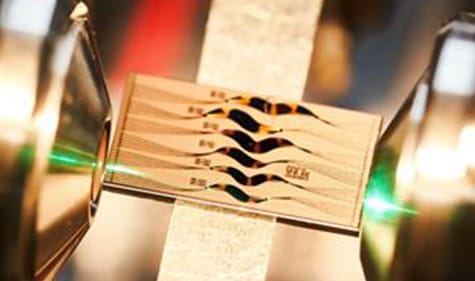
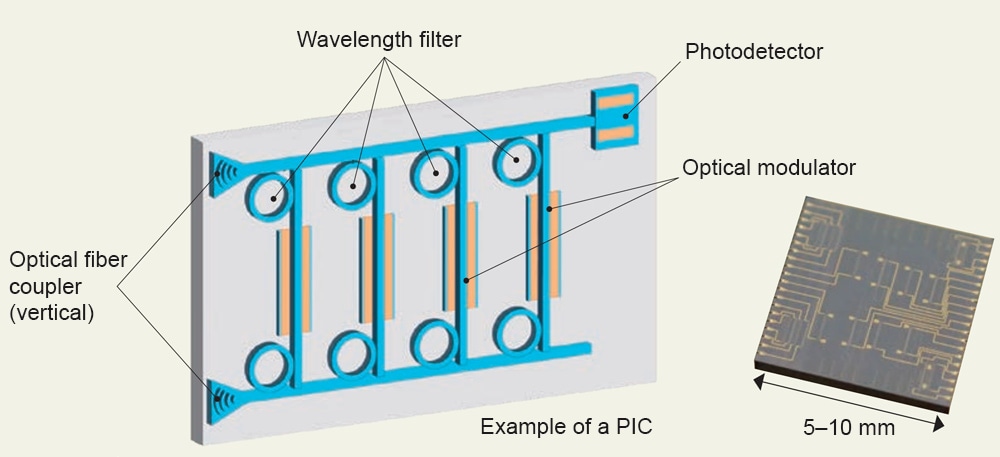
A photonic integrated circuit (PIC) integrates various functions for processing light on a single chip. The chips range from as large as several square centimeters to as small as less than a millimeter, and can contain as many as 10,000 components such as lasers, photodiodes, and modulators, with just micrometers separating them.*
You can think of them as similar to semiconductor integrated circuits (ICs) used in electrical equipment such as smartphones and computers. ICs process electrical signals, while PICs deal with optical signals. This is the biggest feature of PICs and why they are garnering attention. Compared to electrical signals, optical signals have the following characteristics:
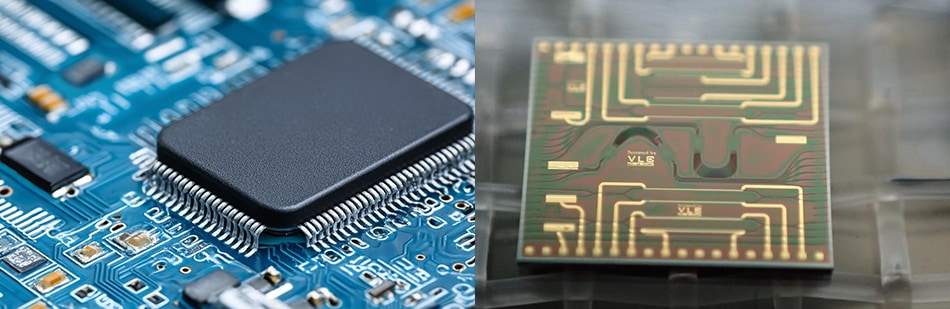
Furthermore, by integrating the various functions of light on a single chip, PICs have been miniaturized and allowing them to be expanded into multiple different applications. In the near future, PICs may be installed in the mobile devices we use in everyday life, creating more comfortable environments through higher speed and lower power consumption. Along with semiconductors, PICs are expected to play a leading role in the digital society of the future.
For many years, Hitachi High-Tech has been engaged both in the sale of optical communication components and modules and in the development and manufacture of semiconductor manufacturing equipment. Utilizing the technical expertise in both optical and integrated circuits we have cultivated through these businesses, we are making full-scale efforts toward implementing PICs throughout society.
Yuhi Takatsuki of the Innovative Photonics Department of the Telecommunications Infrastructure Business Group, Industrial & Social Infrastructure Business Group, speaks about the great expectations for PICs.
"PICs are already shifting from the development stage to mass production, and we are aiming for implementation in society between 2026 and 2027. Data centers are currently attracting the most attention, and collaborative research and development is underway between industry, academia, and government to reduce electricity consumption by more than 40% by 2030 compared to the current level. PICs are indispensable as an underlying technology, and are expected to reduce network latency by 200 times compared with the current level, while also achieving power savings.

Data centers are an essential component of digital transformation (DX). Inside them, servers and network equipment operate 24 hours a day, 365 days a year, processing huge amounts of data. And as the digitalization of society accelerates, the volume of data being handled is only increasing.
Because of this, data center power consumption is a concern. The International Energy Agency (IEA) estimates that by 2030, global data center electricity consumption will reach 945 billion kWh,* approximately twice the 2024 level. PICs that support significant power savings are expected to be a key part of combating this problem.

Takatsuki continues to explain the potential of PICs.
"With PICs, which integrate various functions of light onto a single chip, it is possible to reduce the number of components required for a device from 100 to just one. This characteristic is expected to revolutionize various fields in the future.
One of them is the automation of mobility, such as cars and drones. Research and development for the core technology of LiDAR*1 is ongoing in various parts of the public and private sectors with the aim of achieving Level 5*2 automated driving. This measures distance between a vehicle and another object using a laser, and through using a PIC, the communication delay can be reduced by a factor of ten.
Making this delay shorter means that pedestrians and obstacles are detected earlier, providing plenty of time to avoid accidents. LiDAR using PICs play an important role in protecting people's lives and safety, functioning as the "eyes" during autonomous driving. Since using PICs can reduce the size of a system to less than half that of conventional systems, they are also useful for installation on car bodies where space is limited.

Another challenge associated with the advancement of digitalization centers around increasing security. One of the properties of light is that it changes its state when it is observed. Quantum cryptography* uses this property to reduce the risk of wiretapping and decryption to zero, and PICs that deal with light are indispensable for its development.
Information leaks are a serious problem in today's increasingly digitalized world. This is why the benefits of PICs can't be overstated, as they help in everything from managing PINs and passwords to securing corporate customer information and even enhancing cybersecurity for national and local governments.
Healthcare is another area with high expectations for PICs. Using PICs in medical and communication devices will enable rapid transfer of huge amounts of data on diseases between multiple medical institutions. PICs have the potential to greatly advance telemedicine, such as by providing the ability to perform surgery using robots more smoothly.
As expensive large-scale medical equipment gets cheaper and easier to miniaturize, being able to perform advanced examinations that previously required a large hospital using a palm-sized device at home is no longer just a dream.
Innovations through PICs will bring great benefits not only to Japan, where the birthrate is declining and the population is aging, but also to countries and regions with less well developed medical infrastructure.

In order to accelerate the global development of PICs, Hitachi High-Tech welcomed Spanish company VLC Photonics to the Group in 2020. The company was founded in 2011 as a startup from Valencia Polytechnic University. Providing tailored integrated services ranging from consulting and design of PIC through to prototype manufacturing brokering, characterization, and packaging.
Takatsuki has been seconded to VLC Photonics since 2024, and talks about the significance of co-creation.
"Being a leading company in PIC, VLC have a lot of knowledge that we don't. For example, silicon is commonly used for integrated circuits, but VLC is engaged in research and development by using new materials, such as Lithium Niobate. Above all, they are highly conscious of how they are contributing to addressing social issues by solving customers' issues, which has excellent synergy with Hitachi High-Tech's overall goals."
Europe is at the cutting edge of PICs, and Spain is home to many related companies and research institutes. As the global hub for Hitachi High-Tech Group's PIC business, VLC Photonics will play an increasingly important role.

Hitachi High-Tech Group has formulated five Sustainability Focus Areas (Materialities) for solving social issues, based on the five SDGs (Sustainable Development Goals).
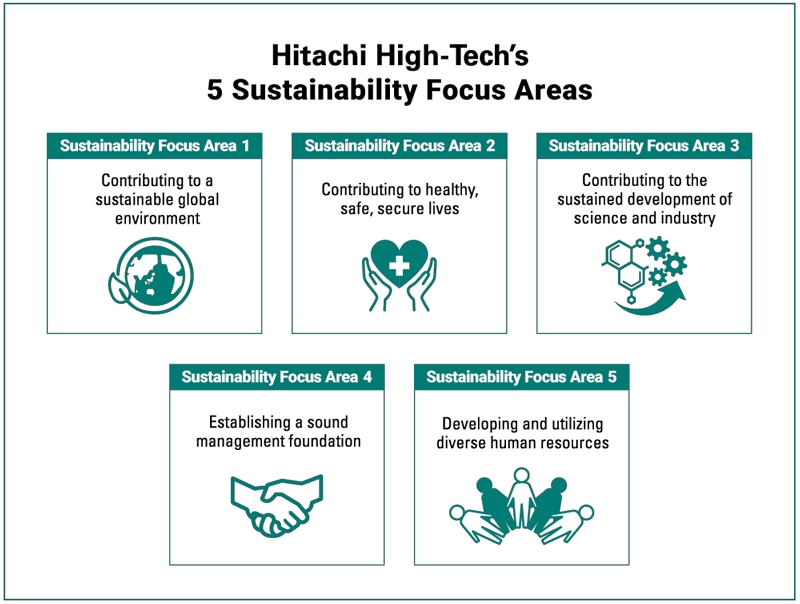
PICs are closely related to "1) Contributing to a sustainable global environment" Reducing electricity consumption in data centers and various other fields leads to CO2 reductions, paving the way for mitigating the increasingly serious issue of climate change and achieving the global goal of carbon neutrality by 2050.
PICs are also key for "2) Contributing to healthy, safe, secure lives" Hiroya Goto, Deputy General Manager of the Innovative Photonics Department, explains as follows.
"Among our PIC initiatives, an important keyword is "well-being."* The fields where PICs are expected to be widely adopted are closely related to people's everyday lives, and we want to contribute to the improvement of safety and comfort by expanding their use to various fields such as autonomous driving and healthcare."
Even as PICs become popular over the next few years, there will likely be few opportunities for you to notice their existence in your daily life. However, as 2030, the target year of the SDGs, approaches, PICs will be an unsung hero that steadily bring about changes to everyday life.
Catch Japan / NHK WORLD JAPAN Broadcast on March 27, 2026