


Overview
Powering the lithium-ion battery life cycle
The world is making major strides
toward achieving a carbon-negative society and circular economy
toward achieving a carbon-negative society and circular economy
-
 Transitioning to a carbon-negative phase is a crucial step in achieving carbon neutrality.
 -
 Acceleration of efforts to shift to a circular economy via supply-chain restructuring
 -
 Enforcement of new regulations and
standards drives such efforts
Eco-friendly lithium-ion batteries
Lithium-ion batteries are essential for promoting the utilization of renewable energy and other environmentally friendly energy sources.
As the demand for batteries increases, issues related to the overall lithium-ion battery life cycle have emerged including the need to secure safety, further improve performance, and reuse and recycling of used batteries.
As the demand for batteries increases, issues related to the overall lithium-ion battery life cycle have emerged including the need to secure safety, further improve performance, and reuse and recycling of used batteries.
Hitachi High-Tech provides
comprehensive solutions for the battery value chain,
from upstream to downstream processes.
By providing support related to the overall lithium-ion battery product life cycle, we contribute to achieving carbon neutrality and a circular economy.
comprehensive solutions for the battery value chain,
from upstream to downstream processes.
By providing support related to the overall lithium-ion battery product life cycle, we contribute to achieving carbon neutrality and a circular economy.
Creating, using, and recycling lithium-ion batteries
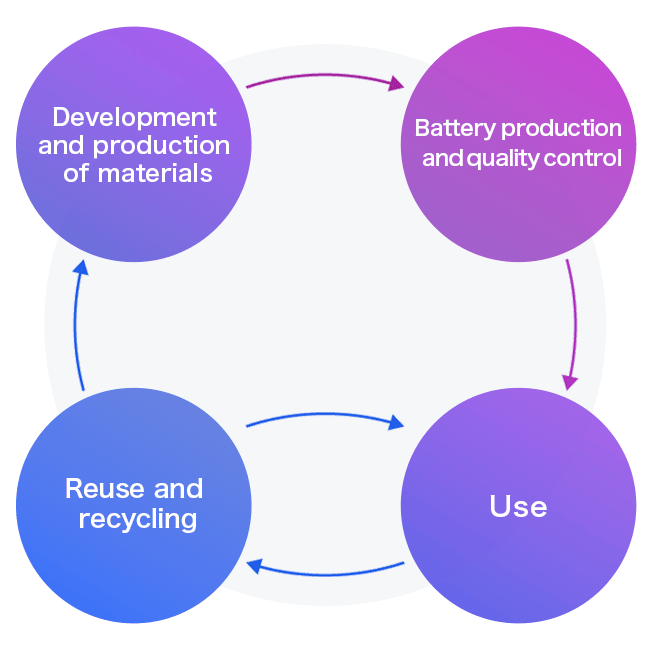
Establishing a suitable lithium-ion battery value chain is essential to promote a more stable supply of battery materials and safety measures.
Supporting the entire lithium-ion battery (LIB) product cycle
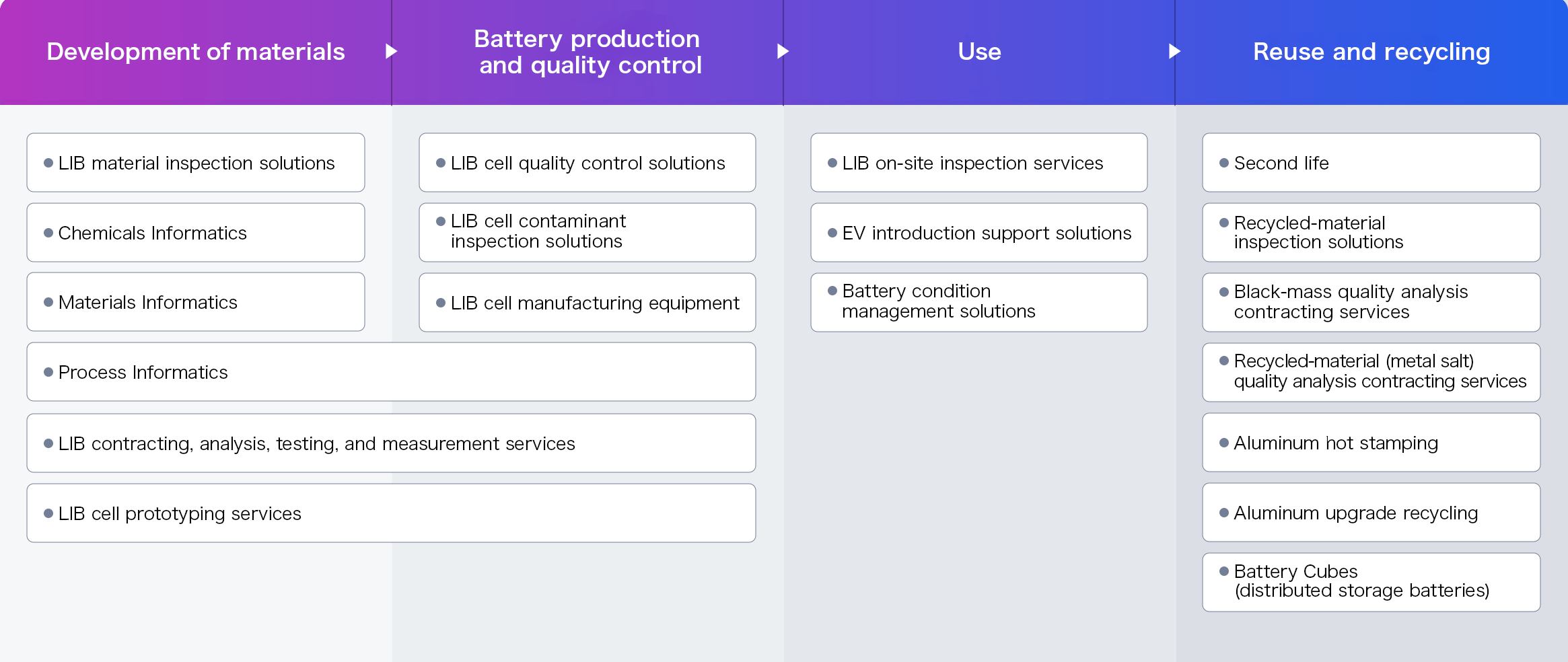
Hitachi High-Tech’s core technological capabilities
Analytical technologies that support observation, measurement, and analysis
-
Analytical abilityWe respond to various needs, including highly precise observation and defect analysis.
-
 Separator microstructure observationOur systems enable observation using ultrahigh-resolution images. The above image was taken at 80,000 times magnification and enables the viewer to see the separator’s surface microstructure.
 -
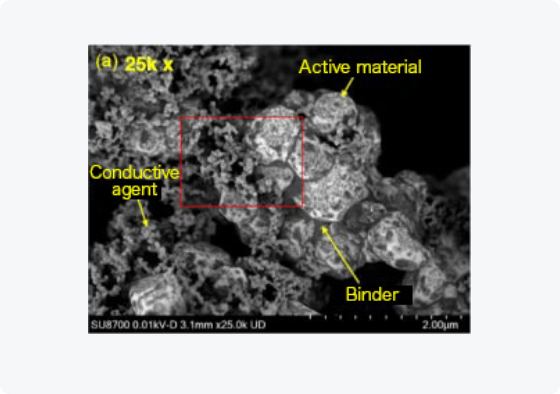 Ultra-low-acceleration SEM observation of cathode materialThis SEM image of lithium-ion battery cathode material was observed using an irradiation voltage of 10 volts. Our systems make it easy to observe the outermost surfaces of such materials at ultra-low accelerations.
 -
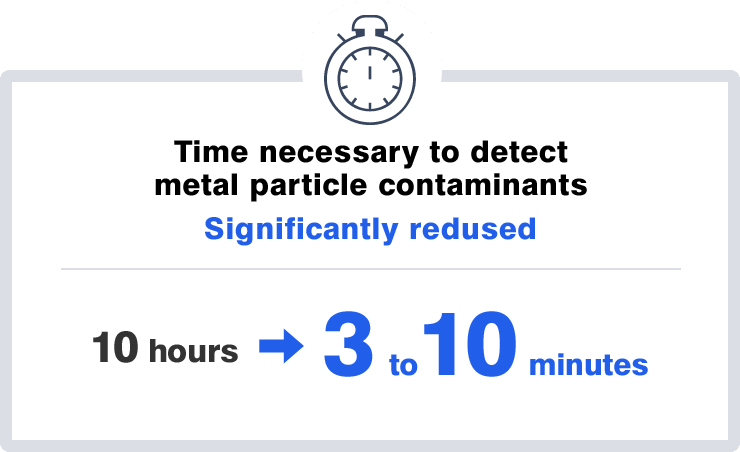
 Detection of metal particlesBy performing an acceptance inspection of the cathode material, anode material, and conductive agent, you can understand the number, size, and elements of metal particle contaminants per weight. You can also understand metal particle contaminants at the time of acceptance and predict the defect rate of the finished products.
-
-
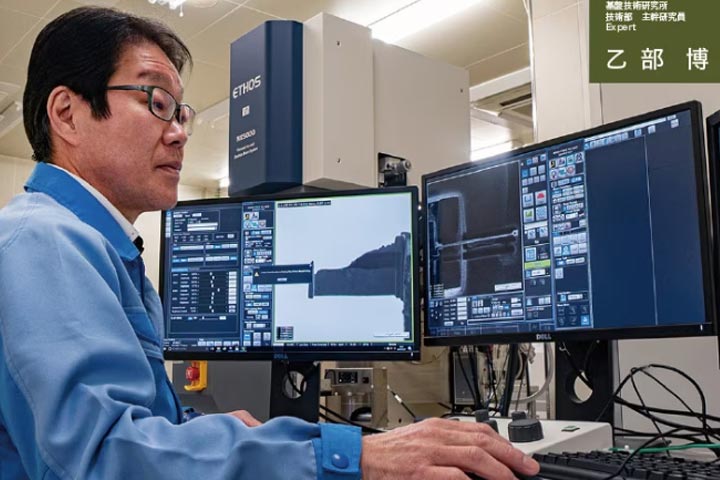
Delivering innovationPursuing reliable manufacturing ability to commercialize innovative technologiesOur team of application engineers with expertise in sample analysis and highly skilled professionals with advanced technological know-how allow us to develop innovative products.
We also have a wide range of original products including SEMs, EA8000A (X-ray Particle Contaminant Analyzer), and SU8700 (Ultrahigh-Resolution Schottky Scanning Electron Microscope).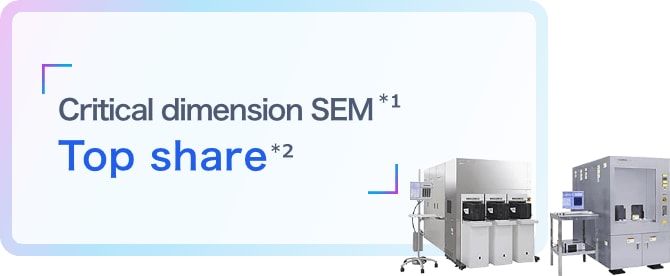
- *1An application equipment of a scanning electron microscope (SEM). Critical dimension SEMs are mainly used on production lines for semiconductors and other electronic devices.
- *2Calculated by our company based on the data of various research companies
-
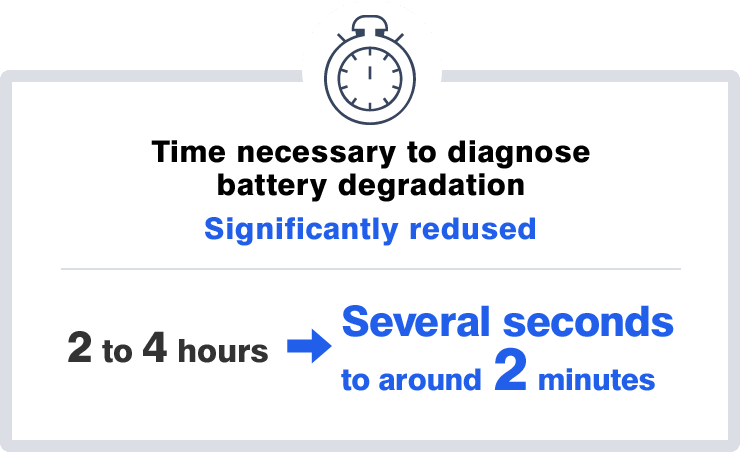
SpeedPrompt observation, analysis, evaluation, and reporting are necessary to ensure safety.

Solutions
Partner with Hitachi High-Tech to help you effectively utilize earth's precious natural resources and achieve a sustainable society.
-
 Development of new materialsforLithium-ion battery materials manufacturersDevelop new materials that offer high levels of safety, performance and availability with our Materials Informatics and analytical technologies.Learn more
 -
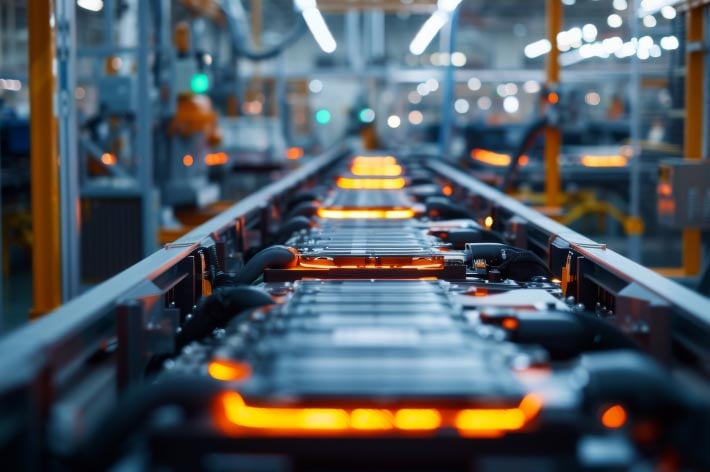 Improve quality and productivityforLithium-ion battery manufacturersAchieve high-quality, cost competitive battery manufacturing with our highly precise contaminant-inspection and production technologies.Learn more
 -
 SafetyforAutomotive and electronics manufacturersEnsure the production of safe lithium-ion batteries by precisely detecting metal contaminants that could cause smoke or fire.Learn more