
Hitachi High-Tech
  1. Home
  2. segments
  3. Environmental Initiatives Website
  4. Government Agencies & Research Institutions
Search by Industry
Government agencies and research institutions
Conducting research and development activities aimed at
advancing science and technology and addressing social issues
Achieving the SDGs is key to sustainable development in addressing environmental issues

The Kyoto Protocol of 1997 and the Paris Agreement of 2015 clarified the global framework for addressing environmental issues. The Kyoto Protocol set clear greenhouse gas reduction targets for developed countries based on 1990 levels, and several nations achieved those goals*1. The Paris Agreement, adopted by more than 150 countries, calls for limiting the rise in global average temperature to less than 2°C*2. The SDGs are closely tied to these international efforts, and achieving the 2030 targets will be essential for sustainable development.

Environmental measures are being strengthened worldwide through international agreements, national policies, and corporate initiatives. Government agencies and research institutions face many environmental challenges that are shared globally, and solving them requires a combination of scientific research, technological development, international cooperation, government planning, and public awareness initiatives.

【Sources】
*1 Ministry of the Environment website:
(https://www.env.go.jp/policy/hakusyo/h10/10598.html)
*2 Ministry of Foreign Affairs of Japan website:
(https://www.mofa.go.jp/mofaj/ic/ch/page1w_000119.html)


Environmental issues for government agencies and research institutions
  • Climate change and global warming countermeasures
    • Reducing emissions of greenhouse gases such as CO2 and methane
    • Promoting carbon-neutral policies
  • Pandemic threats
    • Promoting ICT adoption in healthcare institutions for rapid and efficient diagnosis
    • Developing drugs that suppress virus replication
  • Energy issues
    • Expanding the use of renewable energy
    • Improving energy efficiency and developing energy-saving technologies
  • Air and water pollution
    • Monitoring and addressing air pollutants such as PM2.5 and ozone
    • Preventing deterioration of water quality in rivers, groundwater, and oceans, and advancing purification technologies
    • Strengthening measures to comply with PFAS regulations
    Technologies of interest
    Water quality monitoring
    Development of removal technologies
    Evaluation of alternative chemical substances
  • Waste and plastic issues
    • Reducing waste volume and promoting recycling
    • Preventing plastic waste from entering the ocean
    Technologies of interest
    Recovery technologies for lithium, cobalt, and other materials
    Chemical recycling methods such as pyrolysis
  • Biodiversity conservation
    • Preventing the introduction of invasive species and protecting native species
    • Maintaining and evaluating ecosystem services
Do you face these challenges or requirements?
  • We need to run environmental monitoring faster and with better accuracy so we can keep up with changing regulations
  • We want to understand how far technology development has progressed in addressing the PFAS issue and gain clarity on the current situation
  • We want to advance the development and recycling of materials designed with consideration for both human health and environmental conservation, and we would like to know how much support is available
  • We want to conduct safety evaluations of food and pharmaceuticals more efficiently to better protect people’s health
  • Biodiversity conservation is increasingly threatened by global warming, and we want to begin environmental DNA surveys as soon as possible
Hitachi High-Tech is a strong partner for customers facing these types of challenges
Hitachi High-Tech’s approach to the Government agencies and research institutions
Reducing Environmental Impact Through Environmental Monitoring
Solved IssuesNature Positive
Rapid and Highly Reliable Analysis Is Essential in Regulatory Development and Scientific Evaluation
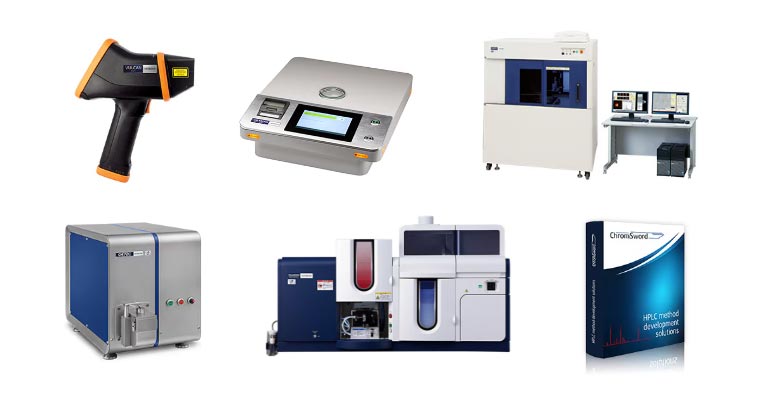
  • Non-destructive, high-precision detection of harmful elements, such as lead and cadmium
  • Offers high-level support for a broad range of operations, including product inspection, market surveillance, evaluation of alternative substances, and screening
Solved IssuesNature Positive
Evaluating Environmental Risks from a Scientific Standpoint and Applying Findings to Climate Change and Pollution Mitigation
  • Enables nanoscale visualization of fine particles, microplastics, volcanic ash, asbestos, and other materials, supporting environmental surveys, regulatory development, and scientific evaluation
  • Greatly supports research aimed at solving social issues, such as material safety assessments and the development of recycling technologies
Solved IssuesNature Positive
Optimized for Environmental Surveys of Water and Air Quality, and Chemical Substance Analysis
  • Usage applications
    • Measuring the concentration of organic matter and heavy metals in river and lake water
      →Checks for environmental pollution and compliance with environmental standards
    • Excels at detecting trace amounts of organic substances
      →Used for product safety assessment
  • Detects physicochemical reactions through changes in absorbance, helping gather scientific evidence for product safety assessments and chemical fate analysis
Solved IssuesNature Positive
Contributing to Material Safety Assessments, Development of Recycling Technologies, and More
  • Detects phthalates and other harmful chemicals contained in products and materials
  • Enables fast and high-precision screening through mass spectrometry of components generated by heating and volatilizing samples
  • Since no organic solvents are used, no waste liquid is generated, thereby minimizing environmental impact
Solved IssuesNature Positive
Accurate Determination of Metal Content in Environmental, Food, and Other Samples
  • Usage applications
    • Analyzing harmful metals such as lead and cadmium contained in rivers, groundwater, and soil
    • Analyzing the amount of harmful substances in food to assess its safety
    • Rapidly analyzing the presence of environmental pollution
  • Enables precise measurement, from lower to higher concentrations
Solved IssuesNature Positive
Measuring pH and Residual Chlorine, etc. in Industrial Wastewater and Drinking Water
  • Enables to measure pH and Residual Chlorine etc. in industrial wastewater and drinking water.
  • Contributes to environmental conservation and public health protection through environmental monitoring and water quality management
  • Effective in situations requiring accurate and efficient analysis, such as analyzing the composition of food or pharmaceutical ingredients
Solved IssuesNature Positive
Accurately Measuring the Composition of Food, Water, Blood, and Other Substances
  • Usage applications in food and environmental sectors
    • Investigating and analyzing additives, harmful substances, and nutritional components in food to assess its safety
    • Measuring pollutants contained in water, soil, or the atmosphere
  • Usage applications in pharmaceutical and chemical research sectors
    • HPLC verifies the purity and stability of ingredients
    • The amino acid analyzer measures the amino acid composition of pharmaceuticals and food
Solved IssuesNature Positive
Entire Value Chain Approaches to PFAS
  • PFAS raise concerns regarding the potential negative impacts they could have on human health and ecosystems, and movements toward tightening regulations on these substances are accelerating around the world
    • The Stockholm Convention prohibits the manufacture, use, and import and export of certain PFAS (PFOA, PFOS, and PFHxS)
    • The United States announced regulatory limits for PFAS in drinking water in 2024
  • We promote the implementation of PFAS countermeasures along the entire value chain, from detection to removal, destruction, and disposal, with analytical instruments and inspection technologies at the core
Close
Supporting the Development of Eco-Materials
Solved IssuesCircular Economy
Supporting Environmental Surveys, Resource Management, and Technological Development
  • A high‑sensitivity elemental analysis tool for on‑site use
  • Enables the immediate analysis of a wide range of elements, including light elements
  • Usage applications
    • Screening for heavy metals in soil or sediment
    • Evaluation of waste composition
    • Identifying recycled materials
    • Analyzing precious and rare metals in urban mines
  • Enables non-destructive, immediate analysis
Solved IssuesCircular Economy
Performing Nanoscale Processes and imaging While Enabling High-Precision Structural analysis
  • Used for imaging and analyzing microstructures in materials science and nanotechnology
  • Enables non-destructive imaging, ideal for scientific research and conserving cultural assets
  • Usage applications
    • Cross-sectional imaing and analysis of nanostructure and magnetic materials with an electron microscope
      →Supports the development of energy-saving, high-efficiency materials, contributing to reduced energy consumption
    • Microstructural analysis of catalyst materials
      →Improved reaction efficiency, contributing to reduced energy consumption and emissions
    • New materials research, etc.
Close
Related information