

Hitachi High-Tech
  1. Home
  2. segments
  3. Environmental Initiatives Website
  4. Mobility
Search by Industry
Mobility industry
Technologies and services for transporting people and goods,
including automobiles, rail, buses, and aviation
Advancing decarbonization and the reduction of CO2 emissions across the entire supply chain

In the mobility sector, structural transformation is accelerating under the twin drivers of GX and DX. As initiatives around SDVs, autonomous driving, and data utilization advance globally, competition to create and capture new markets is intensifying.

These developments are driven not only by the growing adoption of electric vehicles and advances in autonomous driving technologies, but also by technological innovation responding to environmental challenges and societal demands, including carbon neutrality.

For GX, achieving carbon neutrality across the entire automobile lifecycle has become a global challenge, and a wide range of innovations is accelerating to meet this goal.

For DX, business models are undergoing major changes with the emergence of software‑defined vehicles (SDVs). Autonomous driving technologies are being implemented in society in the United States and China, while Europe is expected to see increased activity in the development of data collaboration infrastructure and data driven initiatives.


Environmental challenges in the mobility industry
  • Greenhouse gas emissions
    CO₂ emissions from vehicle operation are the primary contributor. Transportation‑related emissions are estimated to account for roughly 15–20% of global CO₂ emissions
  • Challenges in procuring materials for battery production
    Rare metals such as lithium, cobalt, and nickel are essential, but their supply is concentrated in a limited number of countries, and the mining and refining processes carry significant environmental impacts
  • Resource consumption and increasing waste
    Manufacturing and disposing of vehicle bodies, as well as processing tires, require large amounts of energy. Expanding the use of recycled materials and finding effective ways to repurpose used batteries have become urgent priorities
Do you face these challenges or requirements?
  • We want to develop technologies that enable the use of clean energy such as hydrogen, and building the neccesary infrastructure remains a major challenge
  • We want to enhance the performance of automotive electronic components and batteries, and improve energy efficiency by reducing vehicle weight
  • How should we respond to increasingly stringent environmental regulations such as the ELV Directive, the REACH Regulation, and PFAS regulations?
  • Procuring and recycling battery materials are significant challenges, and there are growing concerns about long‑term sustainability
Hitachi High-Tech is a strong partner for customers facing these types of challenges
Hitachi High-Tech’s approach to the Mobility industry
Reducing Environmental Impact Through Environmental Monitoring
Solved IssuesNature Positive
Effective in Detecting Harmful Substances Contained in Automotive Electronics and EV-Related Components
  • Compliant with the REACH Regulation (information disclosure on chemicals in components)
  • Compliant with the RoHS Directive (restrictions on the use of lead, cadmium, and other elements)
  • Non-destructive and rapid detection of harmful elements
  • Used for on-site material selection and quality control
Solved IssuesNature Positive
An Essential Tool for Addressing Environmental Particulates
  • Enables nanoscale analysis of forms, structures, and compositions
  • Analysis examples
    • Evaluating particles in exhaust gases
    • Verifying filter performance
    • Evaluating impacts from the external environmental factors
Solved IssuesNature Positive
Effective in Inspecting Harmful Substances Contained in Automotive Components
  • Quickly detects phthalates contained in wire insulation and interior materials in compliance with environmental regulations such as the RoHS Directive
  • Since no organic solvents are used, no waste liquid is generated
  • Measurement can be completed in about 10 minutes per sample
  • Multiple samples can be measured automatically and consecutively
  • Can be used to verify the presence of harmful substances in materials supplied by component manufacturers
Solved IssuesNature Positive
Utilized in Quality Management with Environmental Standards and Management of Workplace Environment in Compliance
  • Can be used for environmental regulations, quality control, and safety assurance, and supports a broad range of subjects for metal analysis (analysis examples)
    • Analysis of harmful metals contained in chemicals and cleaning solutions used in the manufacture or surface treatments of automotive components
    • Analysis of harmful metals contained in exhaust gases and wastewater
    • Analysis of harmful substances contained in materials and coatings
    • Analysis of metals contained in materials and electronic components for batteries used in electric and hybrid vehicles
  • Supports the management of restricted substances required under the ELV Directive
Solved IssuesNature Positive
Entire Value Chain Approaches to PFAS
  • PFASs are widely used as sealants, lubricants, coating agents, and other such substances used in automotive and electrical components. We support the development of alternative materials and the establishment of more effective and economical treatment technologies
  • We aim to develop PFAS countermeasures along the entire value chain, from detection to removal, destruction, and disposal, with analytical instruments and inspection technologies at the core
Close
Supporting the Development of Eco-Materials
Solved IssuesCircular Economy
Helping to Create High-Performance Recycled Materials, Including Recycled Polymers
  • Recycled polymers are gaining attention as a next-generation mobility material. This equipment is effective in evaluating their quality and optimizing their processing conditions
  • Accurate identification of thermal stability and mechanical properties
Solved IssuesCircular Economy
Supporting the Sorting of Metals Recovered from End-of-Life Vehicles
  • Supports the sorting of platinum and other valuable precious metals contained in exhaust gas catalytic converters recovered from end-of-life vehicles
  • Enables the immediate identification of materials containing light elements, such as aluminum and magnesium
  • Enables non-destructive, immediate analysis
  • Supports quality control of alloys used to reduce vehicle weight and enables material traceability on production lines
Solved IssuesCircular Economy
Contributing to Reducing Plastic Waste and CO2 Emissions
  • We turn used plastics into high-quality recycled materials
  • Enabling variations in molding to be visualized helps improve yield and reduce waste in the design and manufacturing processes
Close
Supporting the Development of High-Performance Materials
Solved IssuesDecarbonization
Critical Analysis Tools for Reducing Vehicle Weight While Ensuring Safety
  • By observing the internal structures of automotive components and batteries at the nanoscale level, the causes of failure and degradation can be identified, thereby reducing unnecessary waste
  • Through structural analysis of functional materials such as aluminum alloys and carbon fiber, FIB-SEM support the achievement of both safety and vehicle weight reduction
Solved IssuesDecarbonization
Higher Performance of Lightweight and High-Strength Reinforced Resin Materials
  • Effective in evaluating materials used for enhancing the environmental performance of automobiles (such as high-performance resins containing glass fiber and inorganic fillers)
  • Evaluation of thermal stability and mechanical properties
Solved IssuesCircular Economy
Supports the Development of Lightweight Materials for Vehicles
  • Enables material design and quality control for achieving both strength and weight reduction through composition analysis of aluminum alloys and high-tensile steel
  • Supports composition verification of recycled metals and scrap materials, helping improve resource efficiency and reduce waste
  • High-precision detection of harmful elements and compliance with regulations like RoHS
  • Suitable for immediate on-site decision-making and process management
Solved IssuesDecarbonization
Enabling Streamlined Material Development and Support Ranging from R&D to the Establishment of Technologies for Mass Production
  • New materials under development
    • Weight reduction of components for improving fuel efficiency and reducing CO2 emissions of vehicles
    • Improving battery performance in electric vehicles
    • Developing bioplastics and biodegradable plastics
    • Using clean energies such as hydrogen fuel and biomass fuel
  • Developing methanation technology to encourage CO2 reuse, etc.
  • Streamlining material development using data to accelerate the practical application of environmental technologies
Close
Supporting Catalyst Development
Solved IssuesDecarbonization
Supporting the Practical Application of Clean Energy with High-Performance Catalysts
  • High-performance catalysts are a foundational technology underpinning the adoption of fuel cell vehicles (FCVs) and hydrogen engine vehicles
  • The system enables nanoscale analysis of morphology, structure, and composition across a range of applications, including detection of harmful substances in automotive electronics and EV-related components, evaluation of particles in exhaust gases, and verification of filter performance
  • This foundational technology supports the adoption of clean energy vehicles through the development of high-performance catalysts. Nanoscale observation of catalyst surface microstructures and particle distribution, as well as post-reaction changes, is essential for evaluating material performance and identifying degradation mechanisms
  • Also supports compliance with measures addressing particulates in urban environments and increasingly stringent exhaust gas regulations, thereby encouraging the development of environmentally friendly mobility
Solved IssuesNature Positive
Developing Catalysts for Removing Harmful Substances in Response to Stricter Exhaust Gas Regulations
  • Supports nanoscale structural control and interface design to maximize the performance of next-generation exhaust gas purification materials such as Mo3VOx, Au-CeO2, and Pt-CeO2
  • Enables high-precision visualization and analysis of catalyst particle dispersion, crystalline structures, and elemental composition
  • An essential tool for identifying active sites on catalysts and elucidating degradation mechanisms
Close
Supporting the Practical Application of Clean Energy
Solved IssuesDecarbonization
Reducing CO2 Emissions Through the Creation of a Hydrogen Society
  • We are working to contribute to the entire hydrogen value chain
    • Providing components for fuel cells used in fuel cell vehicles (FCVs)
    • Foreign object control to identify iron (Fe) using inline X-ray transmission inspection devices in the manufacturing process of fuel cell stacks (the main part of an FCV), etc
Close
Technology and Equipment for Enhancing the Performance, Safety, and Quality of EV Batteries
Solved IssuesDecarbonization Solved IssuesCircular Economy

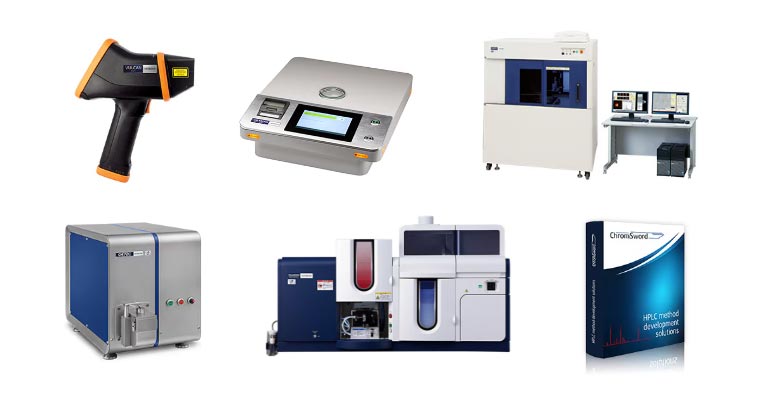
Supporting the Entire Process, from R&D to Unit Quality Control
  • A diverse lineup of manufacturing equipment for each manufacturing process, all of which help to enhance battery cell performance
  • Provides safety assessments vital for unit development and quality control, as well as non-destructive structural observation, etc.
  • World-class contamination analysis equipment contributing to battery safety assurance
Close
Related information