
from smartphones to AI
The global semiconductor market continues to expand and is projected to reach a market size of $1 trillion by 2030*1.
Amid rapid technological innovation and shifting geopolitical dynamics, this growth is being reinforced by large‑scale support policies across multiple countries and regions. Japan, the United States, and Europe have each introduced measures to strengthen domestic semiconductor manufacturing from an economic‑security perspective, while China is working to build a self‑sufficient supply chain.
Looking ahead, the AI revolution is expected to be a major driver of growth. Advances in generative AI and the increasing use of AI in data centers are accelerating demand, positioning the semiconductor industry for steady, long‑term expansion.
【Sources】
*1 Website of the Ministry of Economy, Trade and Industry of Japan:(https://www.chubu.meti.go.jp/c31seizo/semicon/20240913/pr_pamphlet.pdf).

-
High energy consumptionSemiconductor manufacturing processes, especially lithography, etching, and film deposition, consume enormous amounts of electricity and contribute significantly to greenhouse gas emissions -
Excessive power consumption by semiconductorsAs AI adoption accelerates, reducing the power consumption of the semiconductors themselves has become an urgent priority. -
Large-scale water usageUltrapure water is essential for chip cleaning, and a single factory can use thousands of tonnes of water each day. Reducing water consumption and increasing recycling have become critical priorities -
Use of hazardous gases and chemical substancesChemical substances such as nitrogen trifluoride and carbon tetrafluoride raise concerns about air and soil pollution. With PFAS regulations now in place, reducing the use of hazardous materials and ensuring proper treatment have become essential -
Resource burden from increasing size of manufacturing equipmentThere is an urgent need to use resources sustainably and to develop manufacturing equipment with high energy efficiency
Solved IssuesDecarbonization- Since FY2016, the Hitachi High-Tech Group has been promoting the simultaneous implementation of eco-design (Hitachi's environmentally conscious design assessment) and life cycle assessment (LCA) in the design phase of newly developed products. With these two assessments, we are working to standardize parts, extend service life, utilize recycled materials, and design in a way that facilitates recycling, thereby reducing waste.
- For example, the GT2000, our latest CD-SEM launched at the end of 2023, was designed with full awareness of eco-design from the conceptual stage. By going back to the drawing board, we were able to design a CD-SEM excellent at high-speed, stable measurements for cutting-edge devices at the 2-nanometer level, while also offering a high level of environmental performance
Solved IssuesDecarbonization- Contributes to the development and manufacturing of next-generation semiconductors through advanced packaging manufacturing technology
- Improved performance and miniaturization of semiconductor devices
- Shorter development times and reduced manufacturing costs
- Supports advanced packaging manufacturing processes with processing, inspection, and measurement technologies
Solved IssuesDecarbonization- Used for anomaly detection and predictive maintenance of semiconductor manufacturing equipment
→Stabilizes manufacturing processes
→Reduces energy losses caused by semiconductor manufacturing equipment failures
Solved IssuesDecarbonization- Supports high-quality semiconductor manufacturing by enabling environmental control and the observation and analysis of airborne particles and contaminants within equipment
- Observation and analysis examples
- Structural analysis of airborne particles
- Identifying deposits within equipment
- Evaluation of contaminants on material surfaces
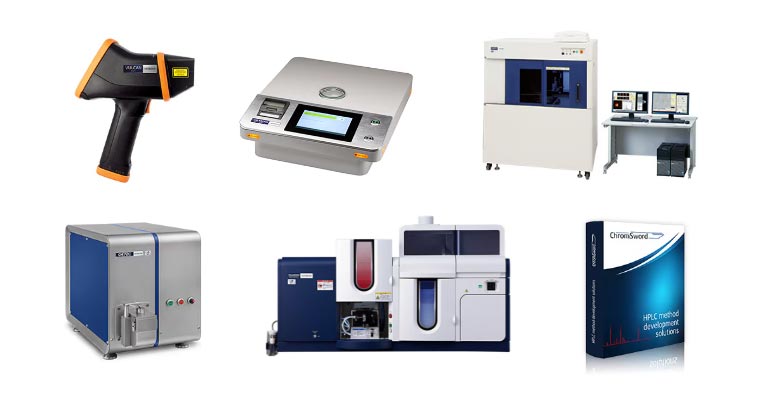
Solved IssuesNature Positive- Detects chemicals used in packaging materials and manufacturing processes
- Non-destructive and rapid analysis of harmful elements during material selection, receiving inspections, and in-process control
Solved IssuesNature Positive- Measures the concentration of harmful substances in wastewater, such as heavy metals, fluorine, and phosphorus, supporting environmental conservation and regulatory compliance
- Three-dimensional fluorescence analysis contributes to identifying environmental water dynamics and verifying treatment processes at water purification plants and sewage treatment facilities
- Controls the concentration of chemicals such as photoresists and etch solutions, contributing to stable manufacturing and reduced environmental impact
- Used to evaluate the spectral characteristics of functional optical thin films, reducing material loss through process and quality control
Solved IssuesNature Positive- High-precision measurement of trace metals contained in ultrapure water, and etching and cleaning solutions
- Measures metal components contained in wastewater generated by manufacturing processes, used chemicals, and waste liquids, thereby enabling their safe discharge or reuse
- Inspects metal contaminants adhering to equipment and materials, thereby helping to maintain clean manufacturing environments and prevent the occurrence of defective products
Solved IssuesNature Positive- Accurately analyzes the compositions of harmful substances and surfactants contained in cleaning and etching solutions
- Can also be used to measure water quality at public waterways (rivers) as a way of identifying environmental impacts before and after operations at semiconductor-related factories
Solved IssuesNature Positive- We work to solve social issues by implementing PFAS countermeasures along the entire value chain, from detection to removal, destruction, and disposal
- Development of alternative materials
- Industrial wastewater management
- Establishing more effective and economical treatment technologies
Solved IssuesDecarbonization- Effective for evaluating particle distributions and structures of environmentally friendly materials, as well as next-generation power device materials such as GaN nanowires
- Supports the reduction of environmental impact while enhancing performance through advanced analytical capabilities
Solved IssuesDecarbonization- Accurately evaluates the properties of glass fiber-reinforced epoxy resin (GF-Epoxy), an essential material for high-density mounting and high-frequency compatibility
- Supports the creation of highly reliable electronic components that demonstrate outstanding electrical insulation, dimensional stability, and heat resistance even under harsh conditions
- Contributes to extending the lifespan of insulating materials, as well as improving manufacturing yield and reducing weight
- Measurement of glass transition temperature by DSC, analysis of thermal degradation behavior by TGA, evaluation of temperature-dependent mechanical properties by TMA, DMA, etc.
Solved IssuesCircular Economy- AI makes predictions on optimal materials, formulations, and chemical structures, thereby significantly reducing the huge number of prototypes and experiments once required
- Helps with selecting materials compliant with environmental regulations and streamlining the exploration of alternative materials
- Supports streamlined designs that maximize performance while minimizing the amount of scarce resources and expensive raw materials used
Solved IssuesCircular Economy- In-situ nanoscale processing and imaging in the same equipment enables high-precision analysis of chip structures and faliure sites, thereby contributing to improved product quality and reducing waste
- Meeting the high positional accuracy and high-speed processing demands in S/TEM lamella preparation required by advanced semiconductor devices
Solved IssuesDecarbonization- By adopting optical communication technologies (photonics technologies), it is possible to achieve low power consumption, high quality, large-capacity, and low-latency transmission
- Expanding usage applications by leveraging the advantages of miniaturization, lower power consumption, and cost reduction enabled by the introduction of photonic integrated circuits (PICs)
- Utilizing photonics-based technologies across the entire ecosystem, from networks to end devices
- We provide highly efficient cooling solutions using liquid immersion cooling technologies, which greatly contributes to reducing environmental impact due to improved power usage effectiveness (PUE)
- Stable cooling performance and improved long-term operational reliability through establishing coolant degradation diagnosis mechanisms and maintenance systems