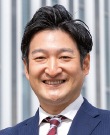
Shingo Ebata
PhD
Professor, Senior Aide to the Provost, Strategic Management Section, Office of Strategy and Planning, Tokyo Institute of Technology
Assistant to the Director, Open Facility Center Dean of TC College
Representative Director and Chairman of the Council of Research Infrastructures and Research Environment
(General Incorporated Association)
The importance of discussions concerning research infrastructure, which in this paper refers to research facilities and equipment, as well as related personnel and systems, has long been recognized. However, best practices have remained elusive, and past efforts have primarily focused on improving the physical infrastructure.
As Japan’s national fiscal situation worsened, various challenges emerged, prompting the adoption of policies centered on promoting the shared use of research infrastructure under the direction of the Ministry of Education, Culture, Sports, Science and Technology (MEXT). These policy discussions were first addressed by Ebata (2020),1) who highlighted both the importance of such forums and the challenges involved in developing innovative research and development (R&D) environments to enhance research capabilities. Ebata (2020) explicitly outlines the issues related to research infrastructure strategies in universities. Subsequently, gradual progress has been made through the efforts of the Innovative Research Infrastructure for STI Subcommittee (IRIS) of the Japan Society for Research Policy and Innovation Management2) and the Council of Research Infrastructures and Research Environment (CORE).3) These efforts have focused on organizing key points of discussion, enhancing the understanding of on-the-ground conditions, and developing appropriate policies to address these challenges.
In the Sixth Basic Plan for Science, Technology, and Innovation,4) research infrastructure policies are considered important pillars of research environment reform. Within this context, university-based technical staff are now receiving significant attention as key personnel for collectively advancing Japan’s research capabilities.
The Tokyo Institute of Technology has been at the forefront of new management reforms for national university corporations in Japan, initiating changes ahead of national trends. In FY2019, Tokyo Tech was selected for MEXT’s National University Management Reform Promotion Project, which saw the launch of innovative systemic reforms, including the Next-Generation Personnel Strategy. A key initiative was the establishment of the university’s Open Facility Center (OFC), which centralized facility management and significantly enhanced the training of technical personnel.5)
In particular, the OFC’s two-dimensional focus on integrating facility management with the training of highly skilled technical professionals (Figure 1) has earned national recognition as a unique and innovative strategy. This approach places Tokyo Tech at the forefront of next-generation research infrastructure strategies.
Building on these cutting-edge strategies, Tokyo Tech was selected in FY2020 for the Core Facility Construction Support Program, which is part of MEXT’s Advanced Research Infrastructure Sharing Promotion Project. This selection spurred the creation of the TC College, a Japan-wide collaborative project partnering academia with the government and industry to develop highly skilled technical professionals (Figure 2).
This paper outlines the objectives, current state, challenges, and future directions of TC College, with a focus on its strategy for developing highly skilled technical professionals. It situates TC College within a new paradigm for industry–academia–government collaboration and proposes a grand design to reinvigorate Japanese science by training skilled professionals. I hope that this paper will serve as an opportunity to introduce TC College’s initiatives to a wider audience and illustrate how research institutions and private companies can effectively collaborate to address global and local challenges in fostering highly skilled technical personnel.
For a more in-depth discussion of TC College and its activities, please refer to Ebata (2024).6)
![Fig. 1 Tokyo Institute of Technology’s Next-Generation Research Infrastructure Strategy (2019) (modified from Ebata [2024])](/image/global/sinews/si_report/130236/index_02.jpg)
Fig. 1 Tokyo Institute of Technology’s Next-Generation Research Infrastructure Strategy (2019) (modified from Ebata [2024])
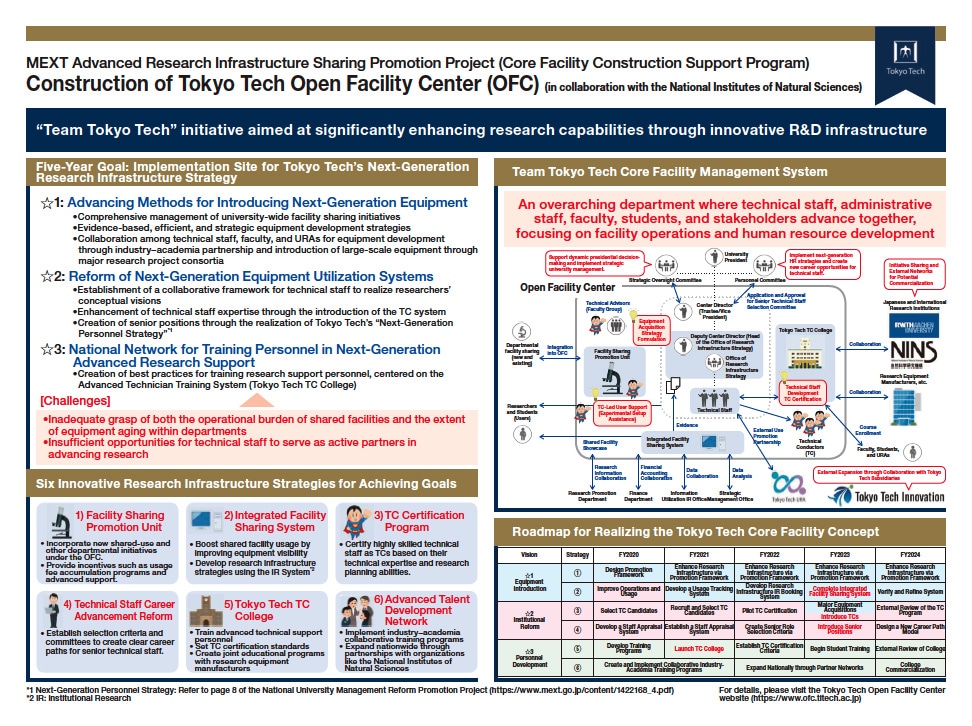
Fig. 2 Tokyo Institute of Technology Core Facility Initiative (https://www.mext.go.jp/content/20200729-mxt_kibanken01-000008419_3.pdf)
The Tokyo Institute of Technology introduced a credential system that recognizes highly skilled professionals with advanced technical and research-planning abilities as Technical Conductors (TCs). Within the TC framework, research planning is broadly defined to include support for the development of research initiatives. As an innovative approach that enables technical staff to contribute to enhancing researchers’ capabilities, the system envisions certified TCs understanding how researchers plan their research. Certified TCs are expected to provide valuable insights into future research plans.
Figure 3 illustrates the four key characteristics of the TC-certified personnel. The university rigorously evaluates technical staff with TC credentials based on several criteria, including high-level technical proficiency, broad-based knowledge, robust communication skills, technical knowledge transfer, and organizational management capabilities. As highly specialized experts in research infrastructure and leaders among their peers, TCs are pivotal in boosting an organization’s research capacity and advancing its overall performance (see Figure 4 for further details).
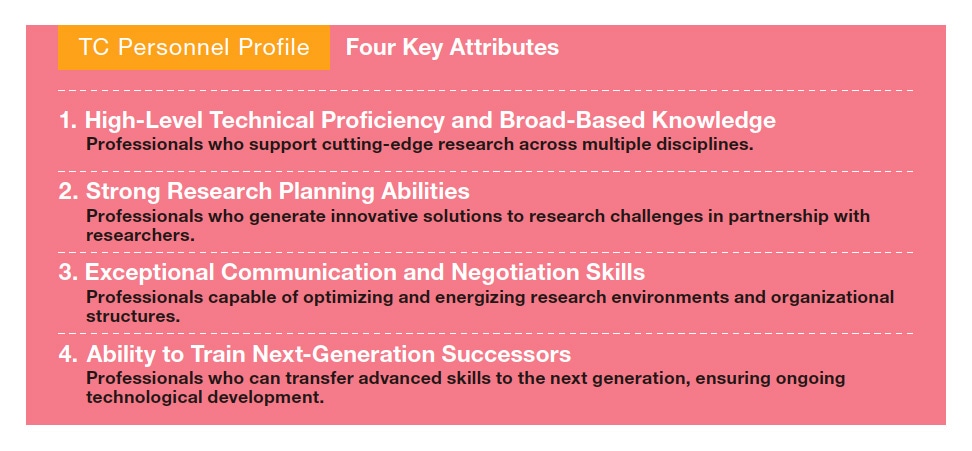
Fig. 3 Four characteristics of TC personnel (from Tokyo Tech TC College brochure)
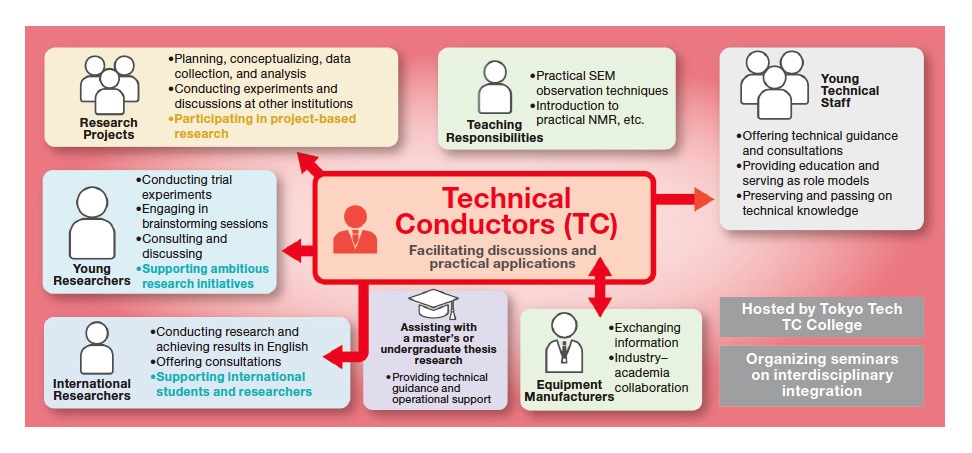
Fig. 4 Roles and contributions of TC personnel (from Tokyo Tech TC College brochure)
The TC College was established at Tokyo Tech’s OFC in 2021. In its first year (2021), it catered exclusively to Tokyo Tech students. However, in its second year (2022), it began accepting participants from outside the university, including professionals from private companies. To date, the college has enrolled 55 participants from 16 institutions nationwide, both academic and corporate, producing 29 Technical Masters (TM) and five Technical Conductors (TC). By March 2024, it had grown into a program with 46 participants from 16 institutions (Figure 5). Currently, TC College offers nine courses and establishes a robust network of partners. The satellite campuses include Nagaoka University of Technology, Okayama University, and Yamaguchi University. The National Institute of Natural Sciences (NINS) serves as a cooperating institution. In addition, eight organizations are actively engaged as corporate partners: JEOL Ltd., Shimadzu Corporation, and Hitachi High-Tech Corporation.
Figure 6 shows a simplified illustration of the TC certification pathway. In principle, TC College is designed to be completed within three years. Students enroll in the program, complete the requisite curriculum, and acquire the necessary credits to achieve a Technical Master (TM) status. Subsequently, they write a TC thesis, which, if successfully defended during the TC Thesis Review Meeting, results in the conferment of TC certification. TM designation is conceived as a standard benchmark for technical staff at national research institutions and represents the latest system for evaluating technical staff based on their past experience. Currently, the program is being refined to better accommodate the specific circumstances of participants from private companies, and efforts are underway to provide meaningful certification to technicians nationwide.
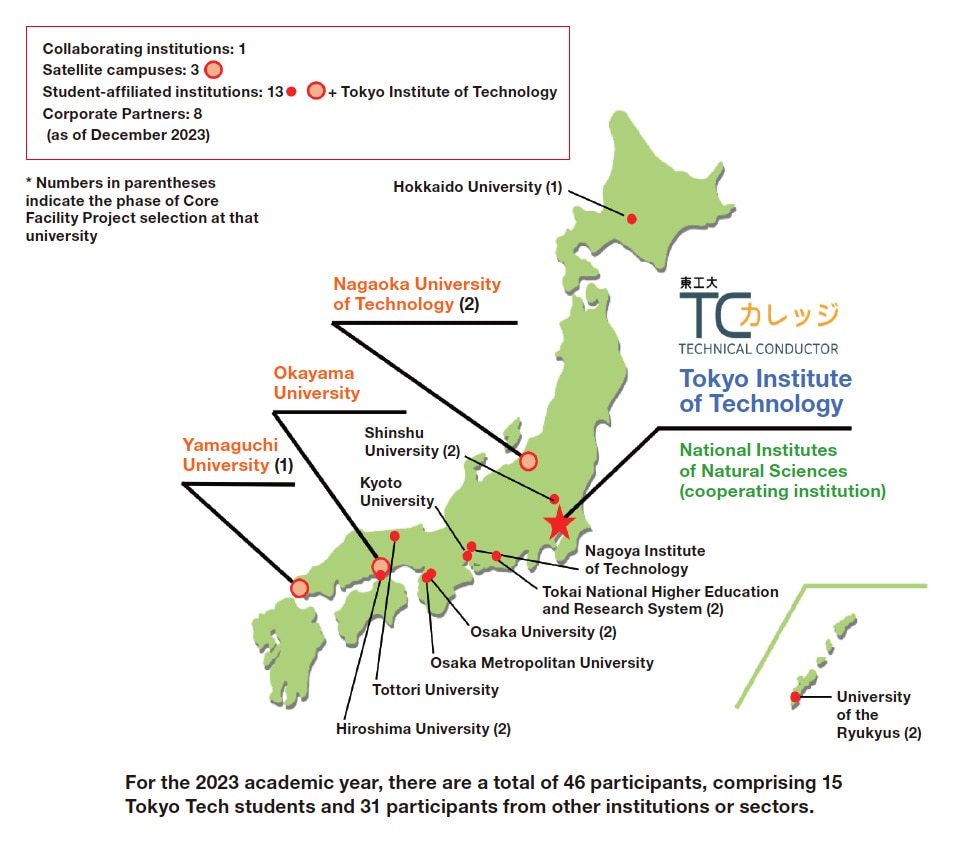
Fig. 5 TC College students and nationwide collaboration networks through industry–academia partnerships
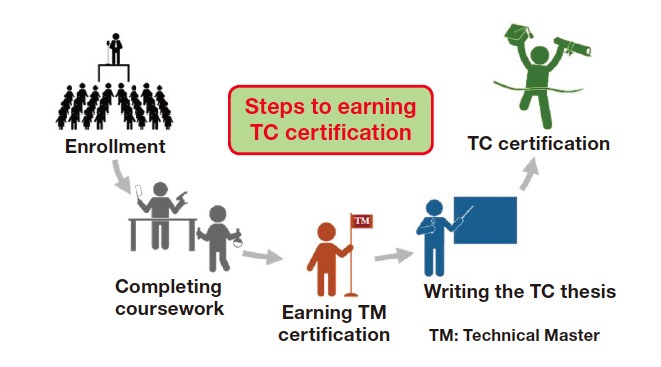
Fig. 6 Path from TC College enrollment to earning TC certification
A major feature of Tokyo Tech’s TC College is the development of curricula through industry–academic collaboration. In partnerships with various private companies and other institutions, colleges developed original programs based on existing corporate programs. Moreover, TC College offers numerous unique experiences unavailable elsewhere, including tours of research laboratories and factories and discussions with company presidents.
Among the most popular programs is the Used Equipment Disassembly Caravan. Many research institutions, including universities, are equipped with numerous devices that complicate researchers. This project seeks to repurpose these tools as teaching aids. As a cosmochemist, I studied the formative processes of the primordial solar system using tools such as electron microscopes, optical microscopes, and some of the world’s most advanced mass spectrometers. Working alongside my mentors, Professor Hiroshi Nagasawa, Professor Hisayoshi Yurimoto, and my laboratory colleagues, I routinely analyze meteorites while maintaining our equipment. Through tasks, such as installing electron microscopes, adjusting them from ultrahigh vacuum back to atmospheric pressure for maintenance, and developing state-of-the-art devices that represent some of the most advanced technologies in the world, we realized the importance of dismantling equipment to understand their inner workings. This insight, which significantly enhanced our technical and creative skills, became the impetus for developing the program.
Currently, with support from JEOL Ltd. and Shimadzu Corporation, the program is conducted using two devices: scanning electron microscopy (SEM) and matrix-assisted laser desorption/ionization time-of-flight mass spectrometry (MALDI-TOF MS). Figure 7 shows a group photo captured after a session of the equipment disassembly caravan. The participants’ responses clearly indicated that they found the program highly rewarding. In this session, the equipment used was a JEOL SEM that was over ten years old. For various reasons, handling this type of equipment in university laboratories and similar settings is becoming increasingly difficult. By promoting the utilization of used equipment as educational materials through initiatives such as the Used Equipment Disassembly Caravan and fostering technicians through industry–academia collaboration, it may be possible to facilitate further advancement of technical expertise among engineers in Japan. Moving forward, I am confident that by continuing to develop programs that incorporate proposals and donations of used equipment from an increasing number of companies and establishing new hubs for industry–academia collaboration through human resource development, we can construct an ecosystem geared towards enhancing Japan’s scientific, technological, and innovative capabilities. When visiting Tokyo Tech, we cordially invite you to stop using the TC College Disassembly PLAZA.
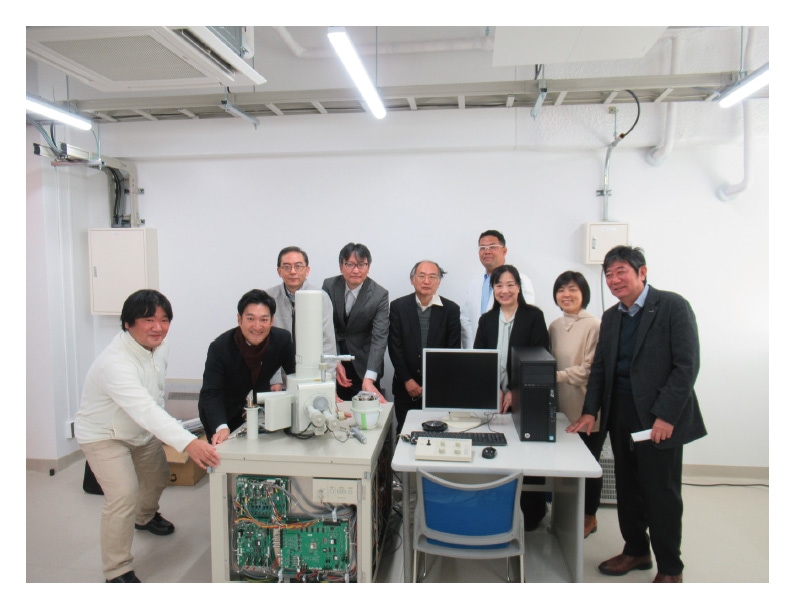
Fig. 7 Group photo taken after a session of the Used Equipment Disassembly Caravan (at the TC College Disassembly PLAZA at Tokyo Institute of Technology Suzukakedai Campus, 2021).
Over the years, the research infrastructure has benefitted from significant national investments. In the recent midterm evaluation of the MEXT Core Facility Construction Support Program, several initiatives, including Tokyo Tech’s TC College, received the highest rating (“S”).7) The evaluation committee noted, “The TC system is evolving into a nationwide initiative intended to foster professional talent through enhanced collaboration with industry and other institutions.” There are high expectations for TC College’s efforts to develop into a Japan-wide collaborative endeavor involving industry, academia, and the government.
We propose creating an ecosystem that situates TC College as part of a grand design to revitalize Japanese science by training technical personnel (see Figure 8). However, this initiative cannot be accomplished solely by Tokyo Tech, which will be rebranded as Institute of Science Tokyo in October 2024.8) The founding of CORE i n January 2023, with the participation of over 20 research institutions, marked a significant step towards creating a nationwide system for training highly skilled technical professionals, addressing a common challenge shared by industry, academia, and government. We hope that the various initiatives discussed in this study contribute to fostering a shared vision across these sectors.
Developing talent is an urgent issue that requires both short-term solutions and long-term strategic planning. This initiative is expected to continue to evolve into a new model for industry–academia collaboration. Moving forward, TC College will continue to embrace new challenges in realizing this grand design.
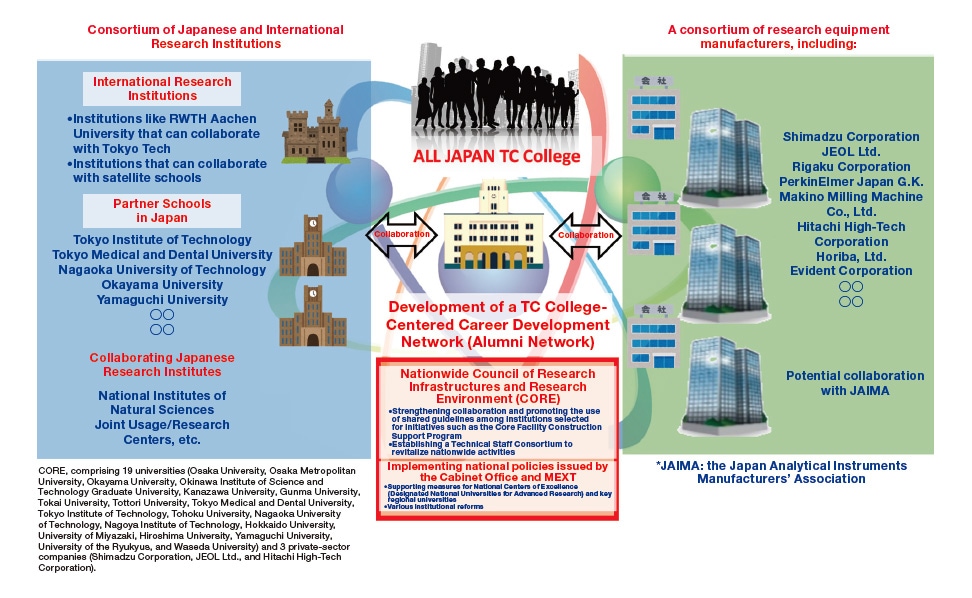
Fig. 8 A grand design for revitalizing science in Japan through a nationwide approach to training technical personnel through industry–academia collaboration
References
See more