Takeshi Goto
Scanning electron microscope (SEM), instrument for observing the fine-grained structure of sample surfaces, has become widely-used tools spanning a broad range of industrial sectors, from materials science to biotechnology. Given the growing diversity of this user base, the trend in SEM technology has been toward increasingly complex systems offering wide-ranging capabilities tailored to specific fields and objectives. It was against this backdrop that Hitachi chose to develop a new type of SEM system, occupying a smaller physical footprint and presenting a simplified control interface, that would be easy to use even for first-time SEM users. This was the origin of the Miniscope series of tabletop microscopes, which went on to find applications not only in R&D settings, but also for quality control at manufacturing sites and as educational tools in school science classrooms.
Instruments in the Miniscope series—whose development was guided by the motto cutting-edge microscopes, made friendlier and easier to use—were electron microscopes designed to be as easy to use as optical microscopes. This vision, which represented a reversal of conventional paradigms, was received enthusiastically. In the years since the release of the first-generation TM-1000 instrument in 2005, more than 5,000 Miniscope systems have been shipped to customers in Japan and overseas.
Most recently, 2024 witnessed the release of the 7th-generation instrument in this series: the Miniscope TM4000PlusIII. In this article, we survey the key features of the TM4000PlusIII and present a number of applications illustrating its capabilities.
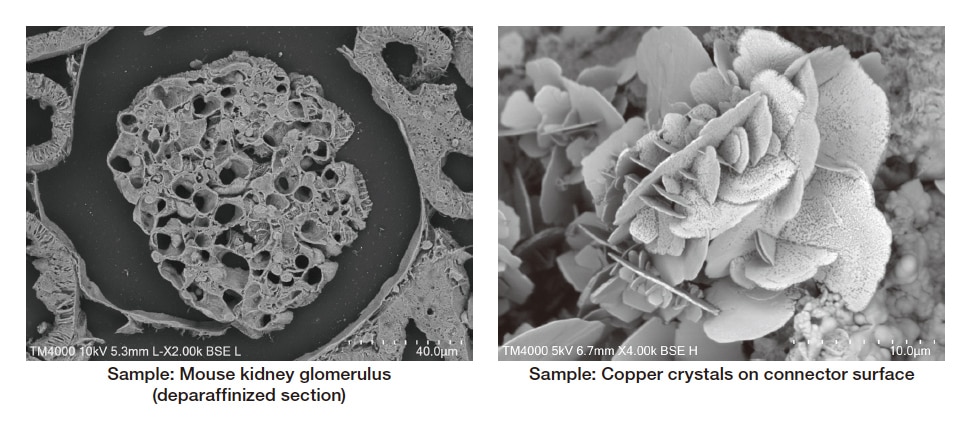
Fig. 1 Examples of images obtained using the TM4000PlusIII.
In recent years, Miniscope instruments have been used to develop environmentally-conscious materials and processes for producing them, as well as to analyze air pollutants and toxins in workplace environments—thus helping preserve the global environment and protect human health. At manufacturing sites, the ongoing trend toward the miniaturization of materials, together with increasingly stringent quality-control standards and growing lists of new regulations, have increased the number of sites at which products must be observed via SEM. One consequence has been to expand the pool of SEM users, which is no longer limited exclusively to expert practitioners; instead, the duties of maintaining and operating tabletop microscopes for observational tasks are increasingly shouldered by individuals with a broad range of backgrounds.
In view of this development, modern SEM instruments must be capable of producing high-quality results that do not depend on the expertise of the instrument operator—and that do not vary from one operator to the next. This requires streamlining observation workflows and simplifying instrument controls, and the TM4000PlusIII was developed with these goals in mind.
The TM4000PlusIII also carries forth a tradition dating back all the way to the original Miniscope instruments: it is specifically intended for use as a tool to support science education, including efforts to dissuade students from abandoning the study of science. Thus the TM4000PlusIII is not simply an instrument for microscopic observations, but also incorporates new features allowing the system to be used as an advanced educational tool.
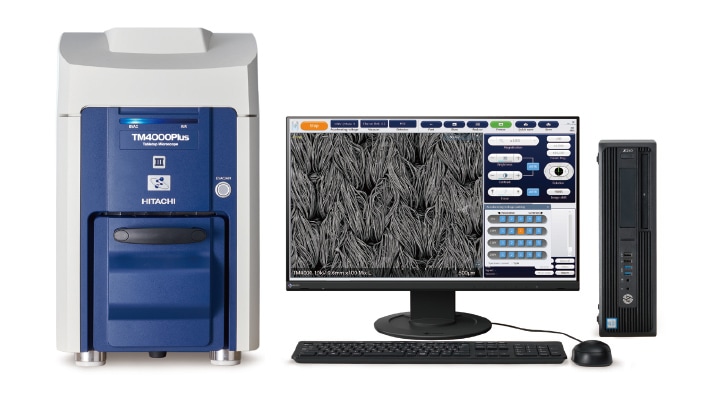
Fig. 2 The TM4000PlusIII main unit.
The TM4000PlusIII features new capabilities to assist in automating observation workflows. These tools allow sequences of observation procedures such as translating the stage, adjusting the magnification, and capturing images, to be saved in the form of recipes. Once a procedure has been recorded, it may be executed automatically with just a few clicks. In addition to streamlining observations, this has the advantage of making the instrument more approachable to novice users by making the same observation techniques accessible to all users, regardless of their familiarity with sophisticated analytical systems. This is particularly valuable for users whose duties include lengthy lists of tasks unrelated to making observations, as well as users intimidated by the complexity of configuring observation conditions.
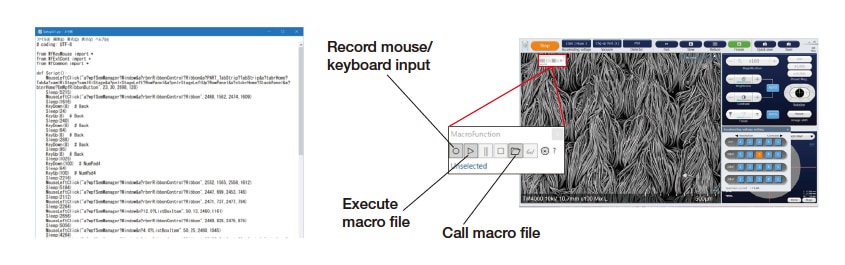
Fig. 3 The TM4000PlusIII’s capabilities to assist users in automating observation workflows.
The TM4000PlusIII also boasts two new capabilities to facilitate stable, high-speed measurements covering wide areas: (1) a high-current mode, and (2) a display showing the magnitude of the beam current irradiating the sample. These features shorten measurement times and allow checks on the stability of the beam current. As a result, procedures requiring time-consuming observations at a large number of measurement points—such as quantifying the cleanliness of industrial products or performing automated particulate analysis of replacement filter components—can now be carried out more rapidly with good reliability and less effort on the part of human operators.
The figure below shows results obtained by using the instrument to analyze microscopic impurities trapped in a filter. In standard-current mode (mode 4), the instrument requires more than 2 hours to analyze about 16,000 particles. By contrast, in the new high-current mode (mode 5), the instrument can analyze about 20,000 particles in just 45 minutes.
This analytical technique is likely to yield significant speedups for cleanliness-control processes based on ISO16232/VDA19, which are implemented at production plants for automotive components.
Meanwhile, when conducting repeated measurements during inspection processes, the new ability to check the beam current with just a glance at the instrument screen will allow instrument operators to monitor the beam current in real time, and note any major fluctuations that may occur.
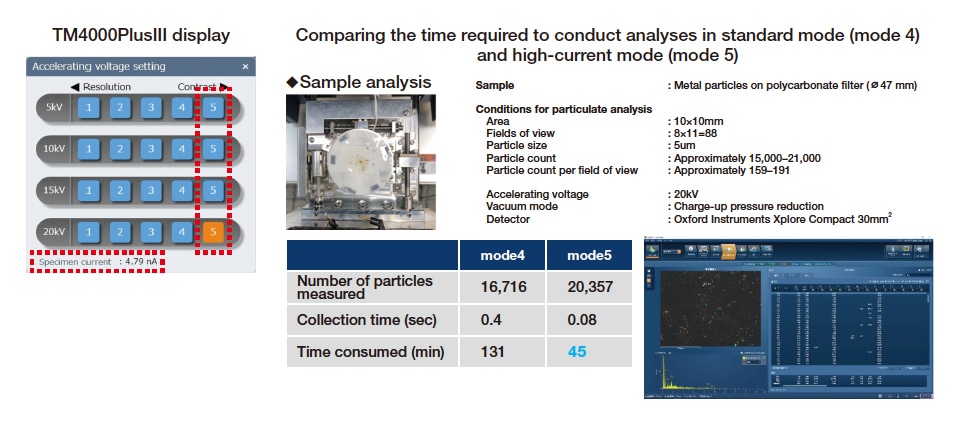
Fig. 4 Verifying the effects of the new high-current mode in automated analysis of impurity particles.
The TM4000PlusIII offers a new support feature—the filament indicator—designed to maximize uptime and instill confidence that the system will be available for use at any time.
A key consumable in any electron microscope is the filament used as an electron source. The TM4000PlusIII new filament indicator is an on-screen display allowing users to see at a glance when the filament will need to be replaced. To understand the utility of this feature, note that the filaments used as electron sources in conventional SEMs are constructed in such a way as to exhibit an unfortunate tendency to fail suddenly. Moreover, recognizing the signs that a filament is about to fail is a skill available only to seasoned practitioners after years of continual instrument use. Consequently, attempts to execute sequential observations spanning long periods of time have often been interrupted by sudden filament failures demanding urgent filament replacement. The filament indicator eliminates such catastrophes by allowing users to check—before initiating an observation—whether the filament is near the end of its useful lifetime and should be replaced to avoid interruption.
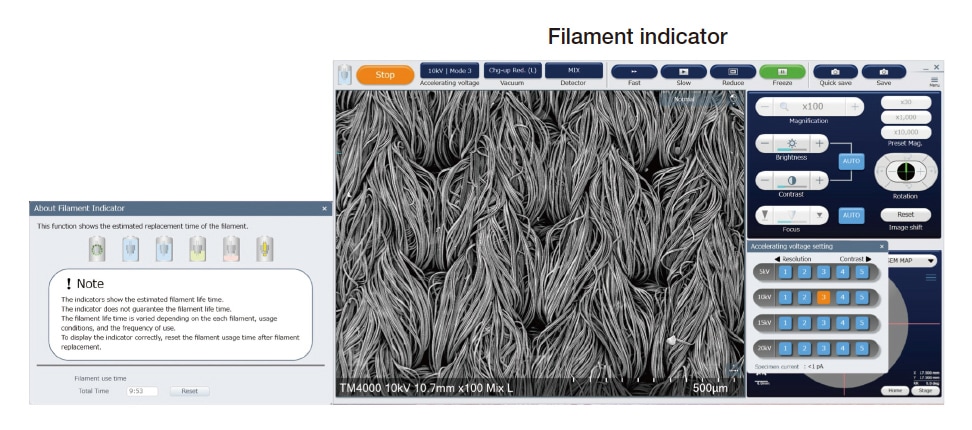
Fig. 5 New feature of the TM4000PlusIII: filament indicator
Like other instruments in the Miniscope series, the TM4000PlusIII supports low-vacuum observations. Such observations simplify the task of preprocessing samples and are relatively easy to perform, making them appropriate for applications in educational settings.
In Japan, training in digital skills is considered an important goal for educational institutions—for example, "Information I" course is a mandatory component of the high-school curriculum. The Python scripts used to assist in automating observation workflows in the TM4000PlusIII offer a valuable opportunity to promote this type of education: by writing Python programs to control the TM4000PlusIII, students acquire first-hand experience while learning key programming concepts such as sequential execution, looping, and conditional branching.
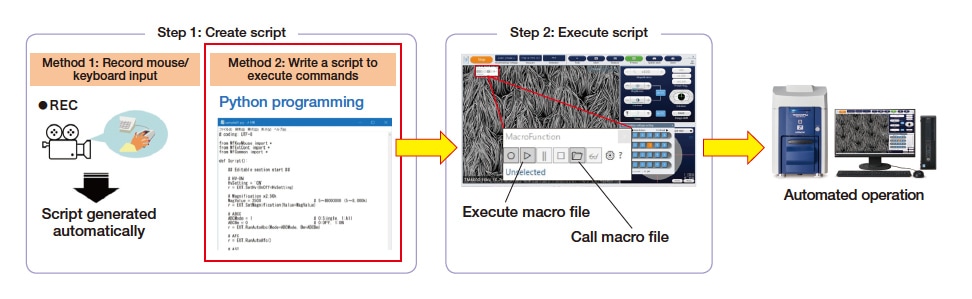
Fig. 6 Using macros to define operational procedures.
The new features of the TM4000PlusIII for assisting the automation of observation workflows will reduce the effort required to operate the system—and level the playing field to allow operation by users with varying levels of technical expertise. Furthermore, the addition of programming capabilities to automate operational commands will allow the TM4000PlusIII to serve as a powerful educational tool for training future generations of skilled professionals. We expect this new system to be widely adopted as a product capable of meeting a diverse spectrum of customer needs.
Going forward, Hitachi High-Tech will continue not only to advance the capabilities of observation and analysis systems, but also to meet the needs of the increasingly diverse community of electron-microscope users.
About the authors
Takeshi Goto
Global Sales Planning Department
Beam Technology & Analytical Systems Business Division
Core Technology & Solutions Business Group
Hitachi High-Tech Corporation
See more