
Aiming to become a city-building mobility company: Evolving from improving construction site environments to disaster prevention and regional hubs
Industry & Social Infrastructure Solutions ×
OFF-GRID FIELD
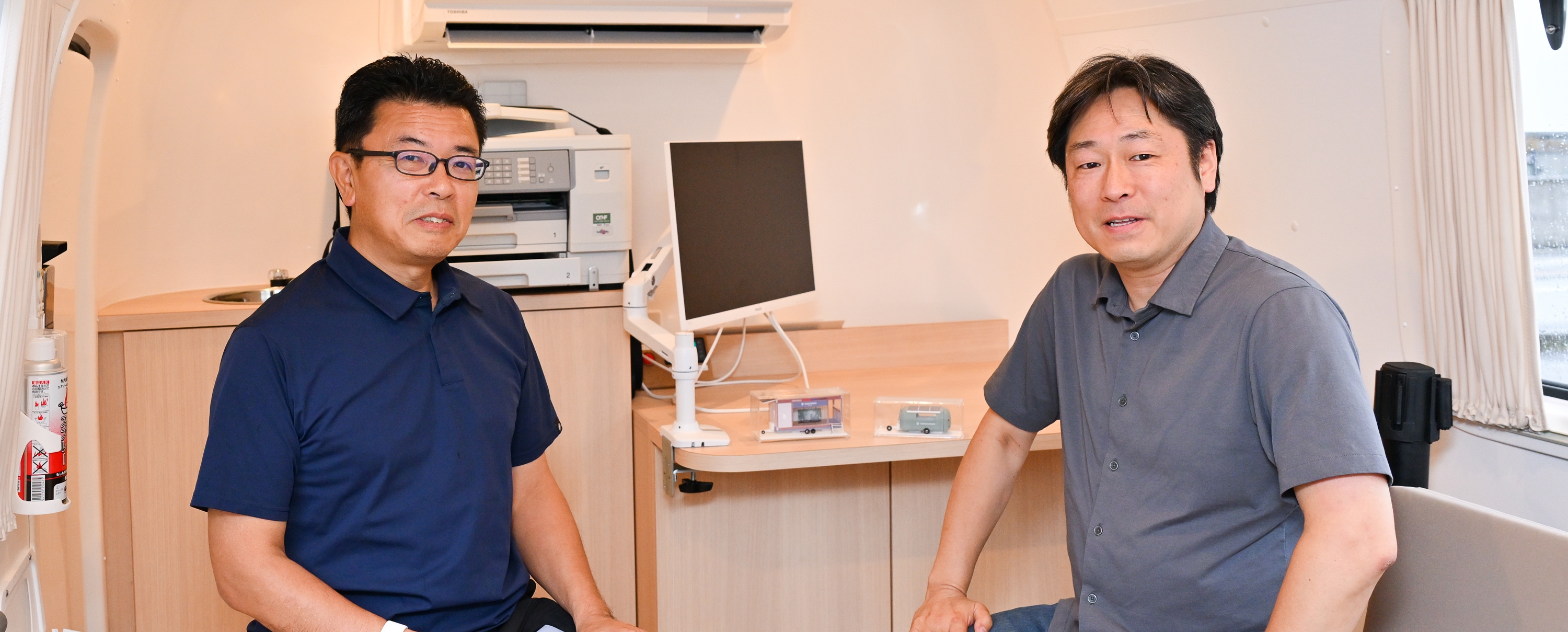
Right: Takahisa Yashiro Manager Life Cycle Management Solutions Dept. Battery Solutions Business Div. Industrial & Social Infrastructure Business Group Hitachi High-Tech
Helping to resolve environmental problems at construction sites off-grid mobile houses
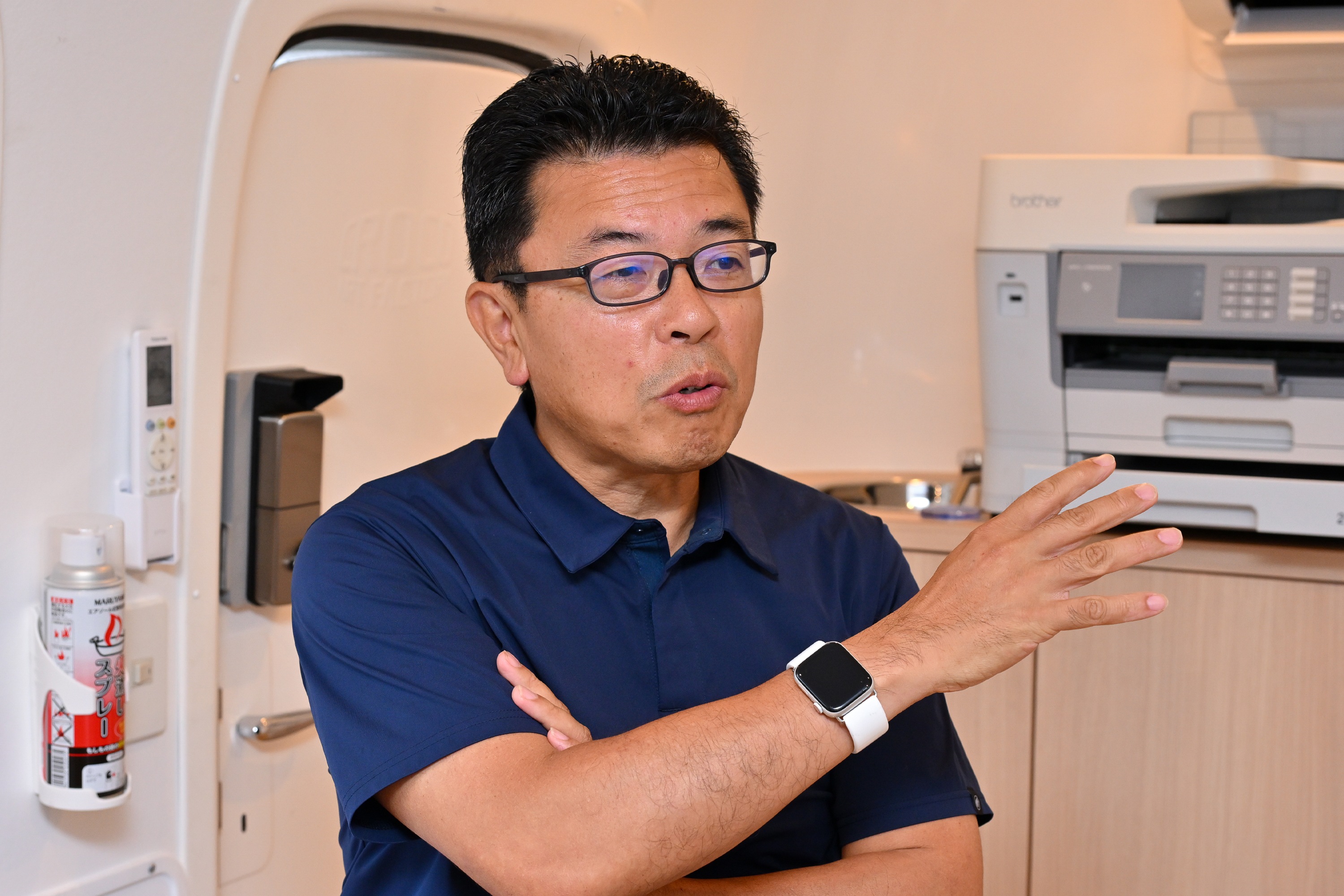
Hirosato The construction industry still has a persistent image of being a harsh and dangerous working environment, and for younger generations and women, it is difficult for them to even consider it as a career option. The desire to help change that situation, even a little, was the starting point for establishing OFF-GRID FIELD. By first improving on-site environments, we hope to increase interest and willingness to participate in the industry.
Yashiro Recently, the impact of labor shortages and overtime restrictions due to work style reform has also become an issue.
Hirosato That’s right. On site, temporary offices such as prefabs are often used, and preparation of air conditioning, toilets, communication equipment, and procurement of supplies takes considerable effort to create a basic working environment. Supervisors who should be focusing on construction management end up spending their time on these peripheral tasks, resulting in longer working hours.
Yashiro And those temporary offices can’t really be called comfortable environments.
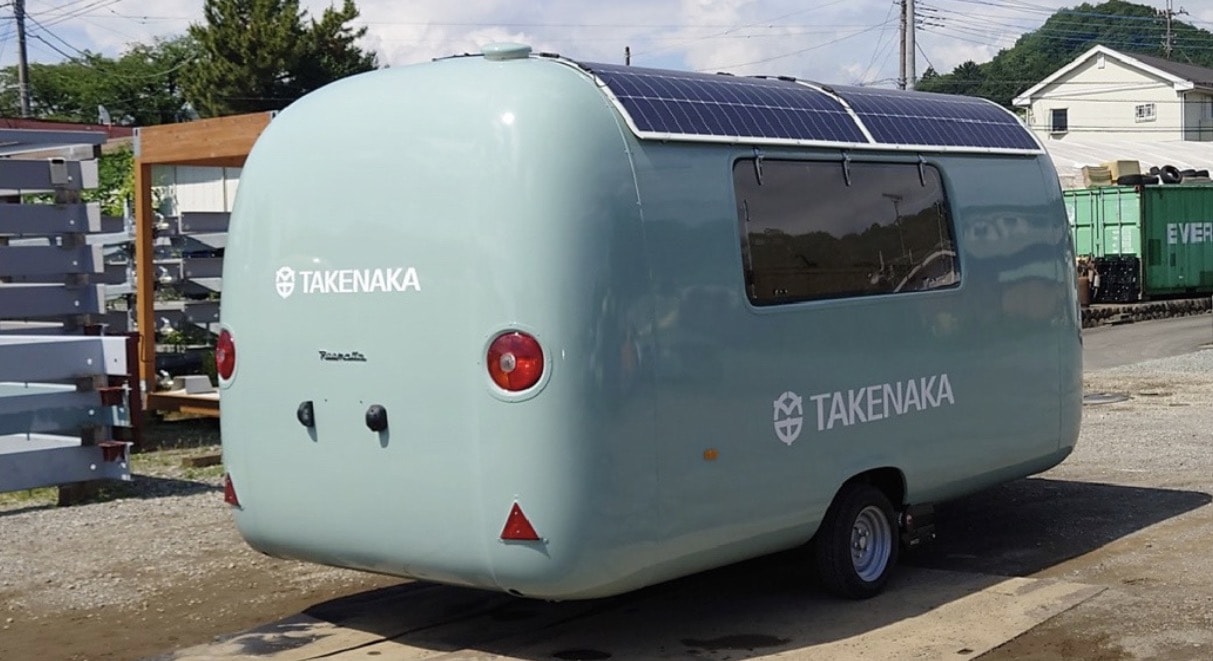
Hirosato In summer, the risk of heatstroke is higher and it’s hard to secure private rooms for changing clothes. Searching for a way to improve such on-site challenges and provide a comfortable space for workers, we arrived at the concept of an off-grid mobile house. These mobile houses have facilities like air conditioning and toilets, with the necessary supplies incorporated from the start. By creating a system where a mobile house can be set up a site with just a phone call, we’ve significantly reduced the setup time and effort. Not only is setup simple, but because the house is insulated, it’s highly energy-efficient and offers sufficient cooling even in summer.
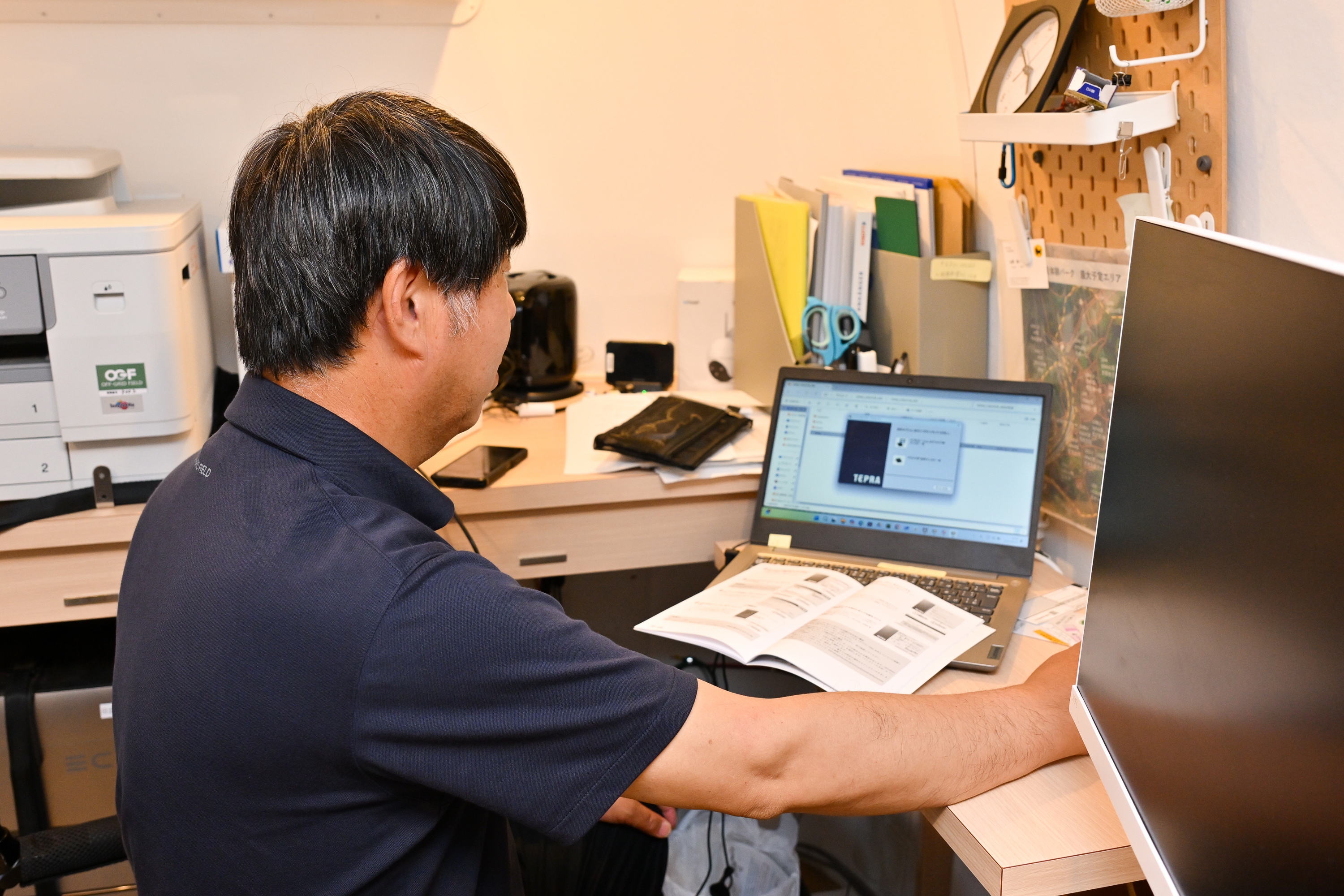
Comfortable office work is possible inside the air-conditioned vehicle
Experiencing flexible collaboration and quick response through the implementation of self-sustaining power systems
Yashiro An off-grid mobile house requires a system that can provide power without relying on external sources. The key issue was how to build an inexpensive and safe system within the constraints of limited indoor space and location. Initially, we ran a trial with a combination of battery storage using so-called ‘B-grade cells’—which didn’t meet vehicle standards but were sufficient for light use—and solar panels. However, once we began operation, we found concerns about the reliability of charging and output stability.
Hirosato Hitachi High-Tech responded quickly to the issues that arose, and ultimately replaced all battery storage with vehicle-grade Class A cells. Since we are still in the phase of market development while watching what kind of demand there is, what we seek is more of a trial-and-error style—acting first while anticipating some uncertainties. If we aim for perfect precision from the start, both size and costs go up, and it tends to become over-designed. In that regard, your proposal and responsiveness were a real help.
Yashiro Actually, it all began when we at Hitachi High-Tech provided the self-sustaining power system for mobile houses and unmanned mobile convenience stores introduced to Takenaka Corporation’s construction site at the Expo 2025 Osaka, Kansai, Japan.
Hirosato Regarding the introduction of mobile houses and trailers at the Expo 2025, we received a lot of positive feedback as a new kind of mobility that changes the image of conventional onsite offices. Additionally, through the mobile convenience store initiatives, we’ve discovered that there is high demand not only at construction sites but also in other fields. There are many other possibilities, such as providing public services as a mobile community center to communities lacking transportation infrastructure. On the other hand, I feel that more suggestions are still needed regarding operating costs, especially rental fees. We hope to take such feedback into account for future improvements and deployments.
Off-grid park concept that balances disaster preparedness and facilitating interaction
Hirosato When it comes to introducing mobile houses, I believe it is also important to consider their use in times of disaster. The off-grid mobile houses we are developing serve as temporary offices or rest areas at construction sites during normal times, but have the potential to be used as evacuation shelters or support hubs during disasters. Being able to secure electricity and communications even when lifelines are cut off is a major advantage.
Yashiro From the perspective of disaster response, standalone power supplies and portability are big advantages, but the Off-Grid Park concept that you are working on also has an aspect as a community hub in addition to disaster preparedness, doesn’t it?
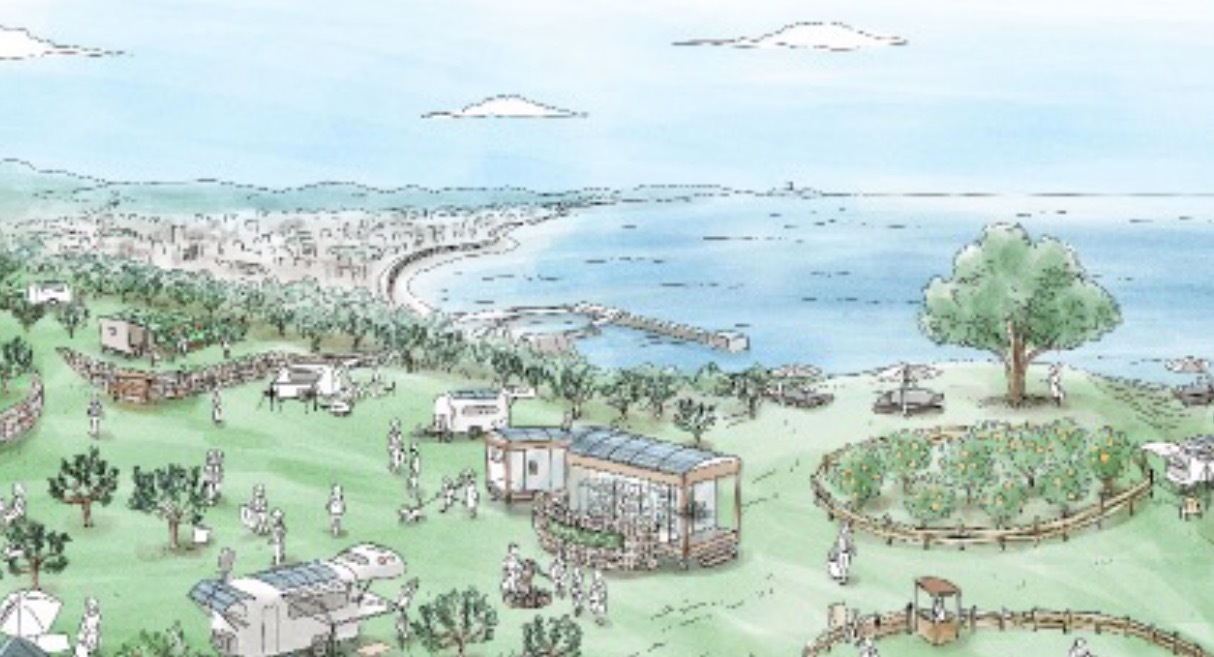
Hirosato Currently, our company is developing rental and sales businesses for off-grid mobility, and the Off-Grid Park serves not only as a parking facility for rentals, but also as a demo site for companies wanting to test disaster countermeasures and off-grid technologies, as a place for students and local residents to experience and learn, and as a community space for everyday use. We hope to utilize it as an attractive space for people to gather and as a place to increase public awareness.
Yashiro The Off-grid Experience Park Odawara, scheduled to open in the Odawara Hayakawa area, will be a facility that embodies exactly that concept. We at Hitachi High-Tech are also beginning efforts to expand this Odawara model to underutilized lands and unused parks throughout Japan. As an independent area with infrastructure for electricity, water, and communications, we hope it can serve as a disaster prevention base, a place for community interaction and agricultural experiences, and a gathering place for children—expanding its potential as a multipurpose local asset.
Creating a sustainable future with partners who tackle social issues
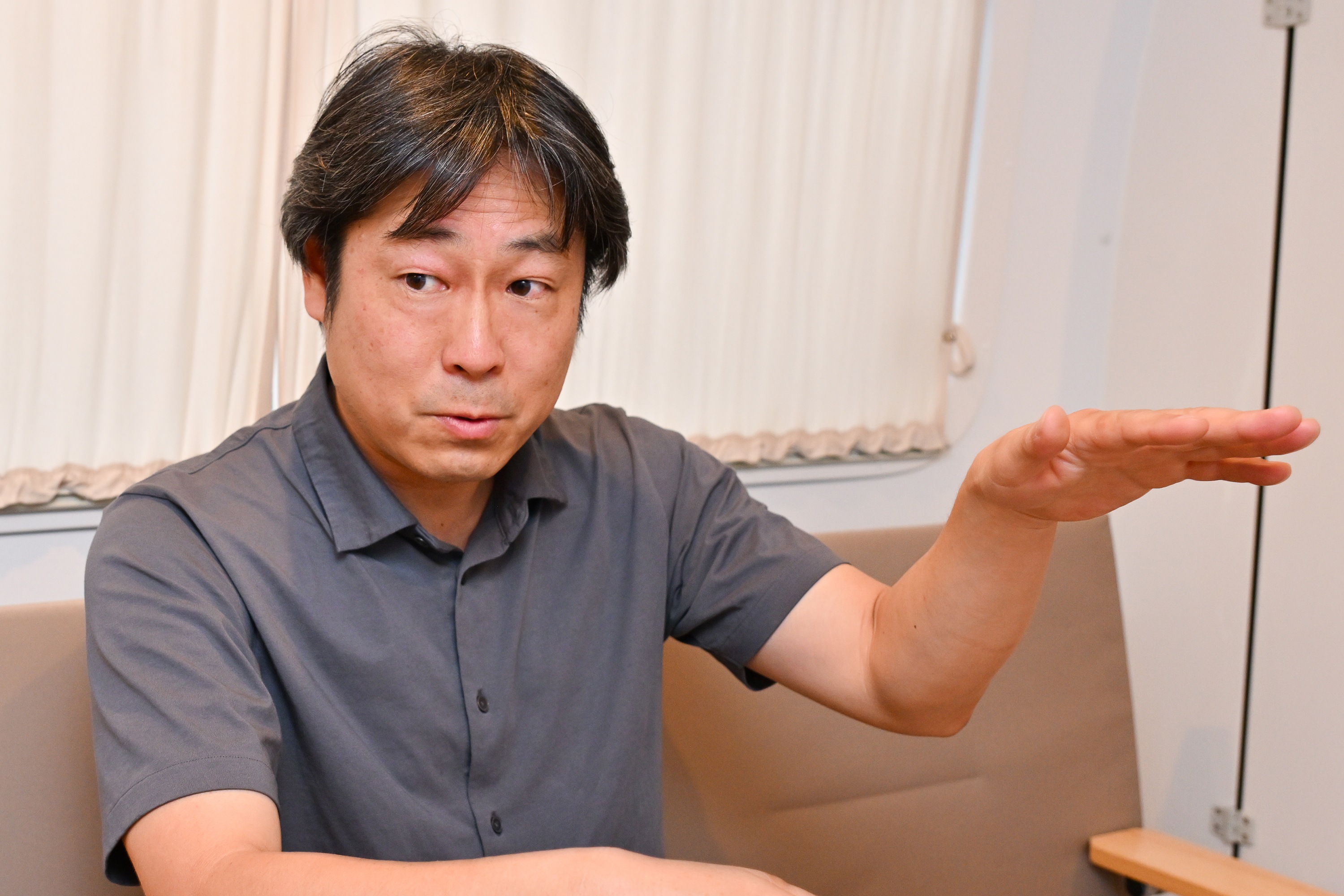
Yashiro For Hitachi High-Tech, opportunities to collaborate with clients like you—who face social issues head-on and tackle them concretely with partners—are extremely valuable. We find great fulfillment not only in providing solutions but also in forming partnerships that can accompany clients from the initial stages of business concept development.
Hirosato Actually, we are now planning our “third vehicle" after the currently deployed mobile house and trailer house. Unlike traditional one-off production, we are aiming for future mass production, and we continue to receive support from Hitachi High-Tech—such as being introduced to production partners.
Yashiro Our company has a network of more than 3,000 clients in Japan and overseas. We hope to leverage this strength and continue collaborating with OFF-GRID FIELD.
Hirosato What I am aiming for is a community-building mobility company. Of course, our solutions help during disasters, but in usual times, I want to create sustainable, open community hubs where people gather and interact. Through our collaboration with Hitachi High-Tech, I hope to continue delivering such new value to society.