


Tackling challenges and innovation with foreign matter inspection technology supporting the future of fuel cells
Nano-Technology Solution ×
TOYOTA MOTORS CORPORATION
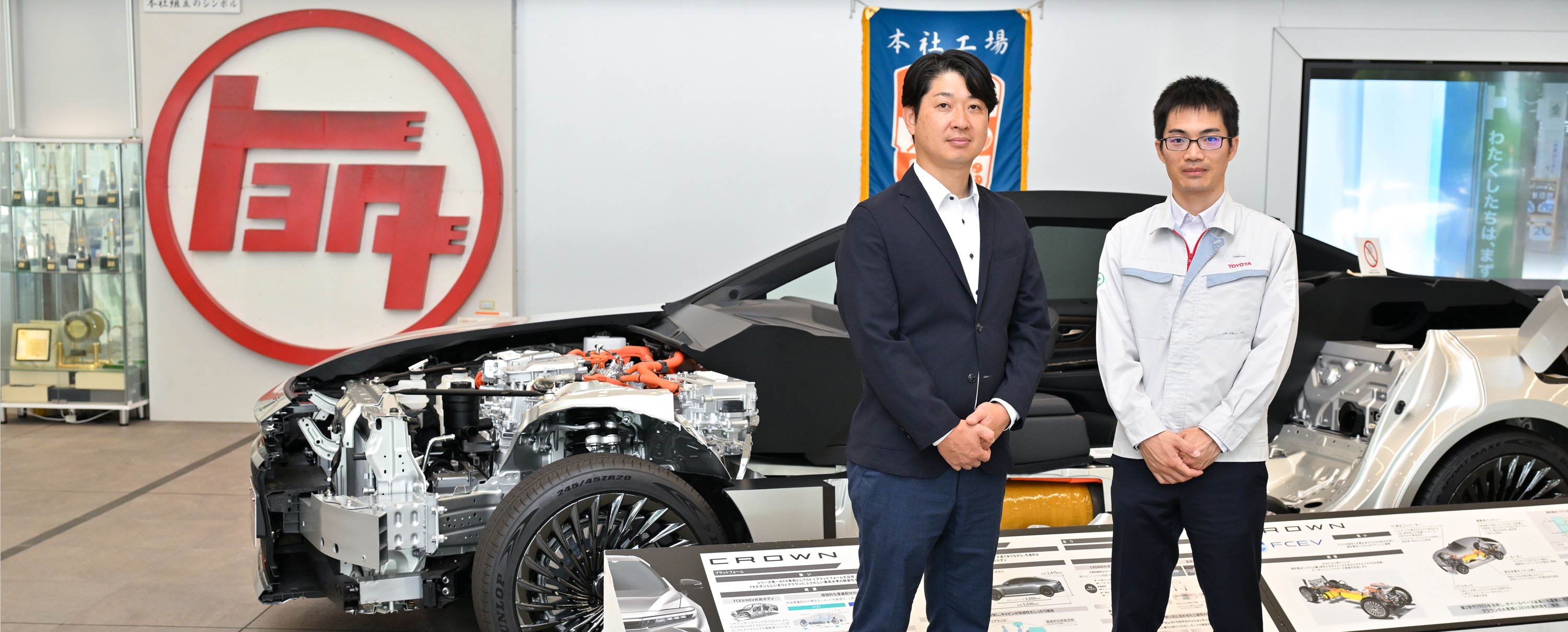
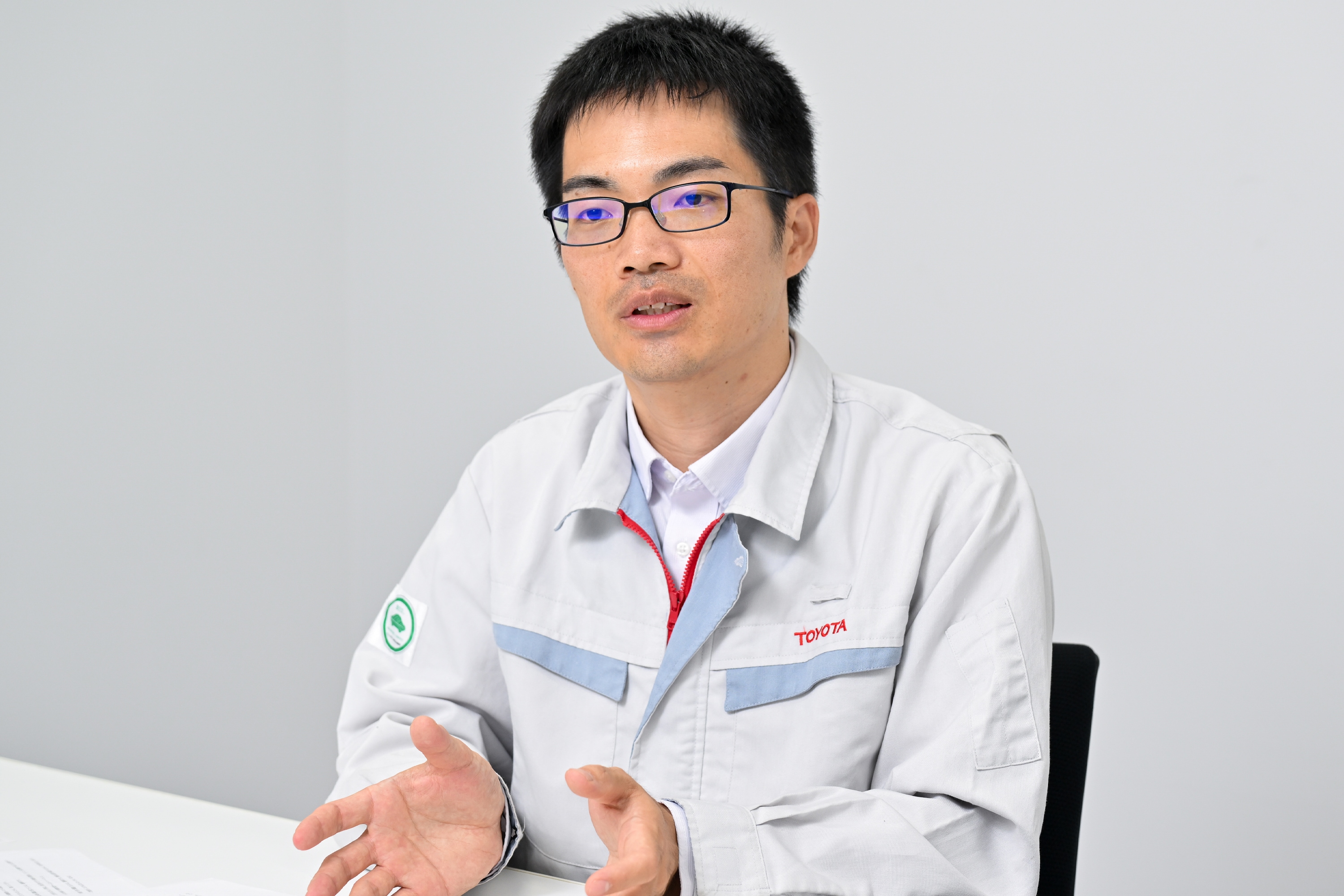
Right: Tatsuo Hoshino Assistant Manager Production & Development Dept. Honsha PLant Hydrogen System Development & Manufacturing Div. Hydrogen Factory TOYOTA MOTOR CORPORATION
New challenges for foreign particle inspections of fuel cells, aimed at improving performance and mass-production
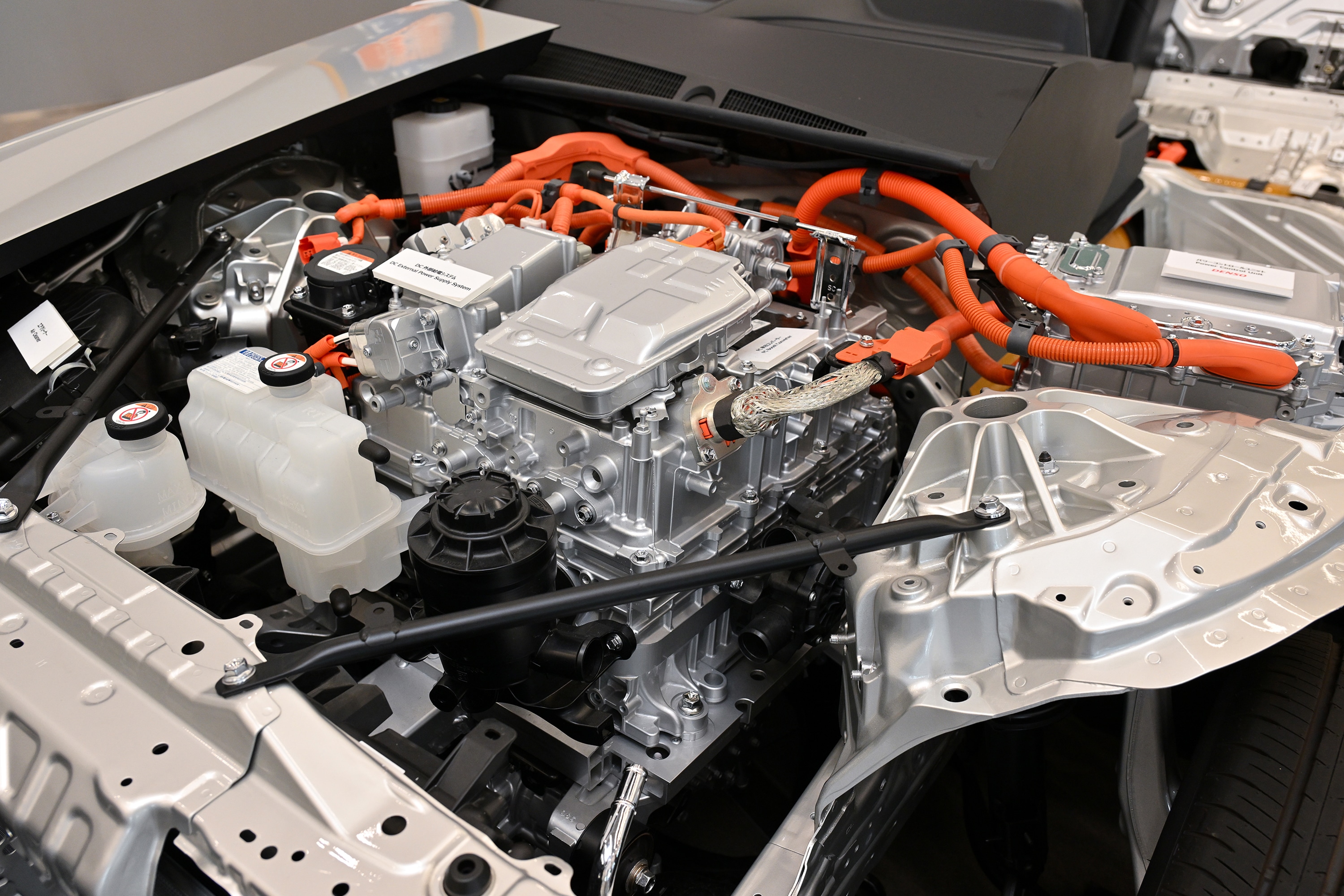
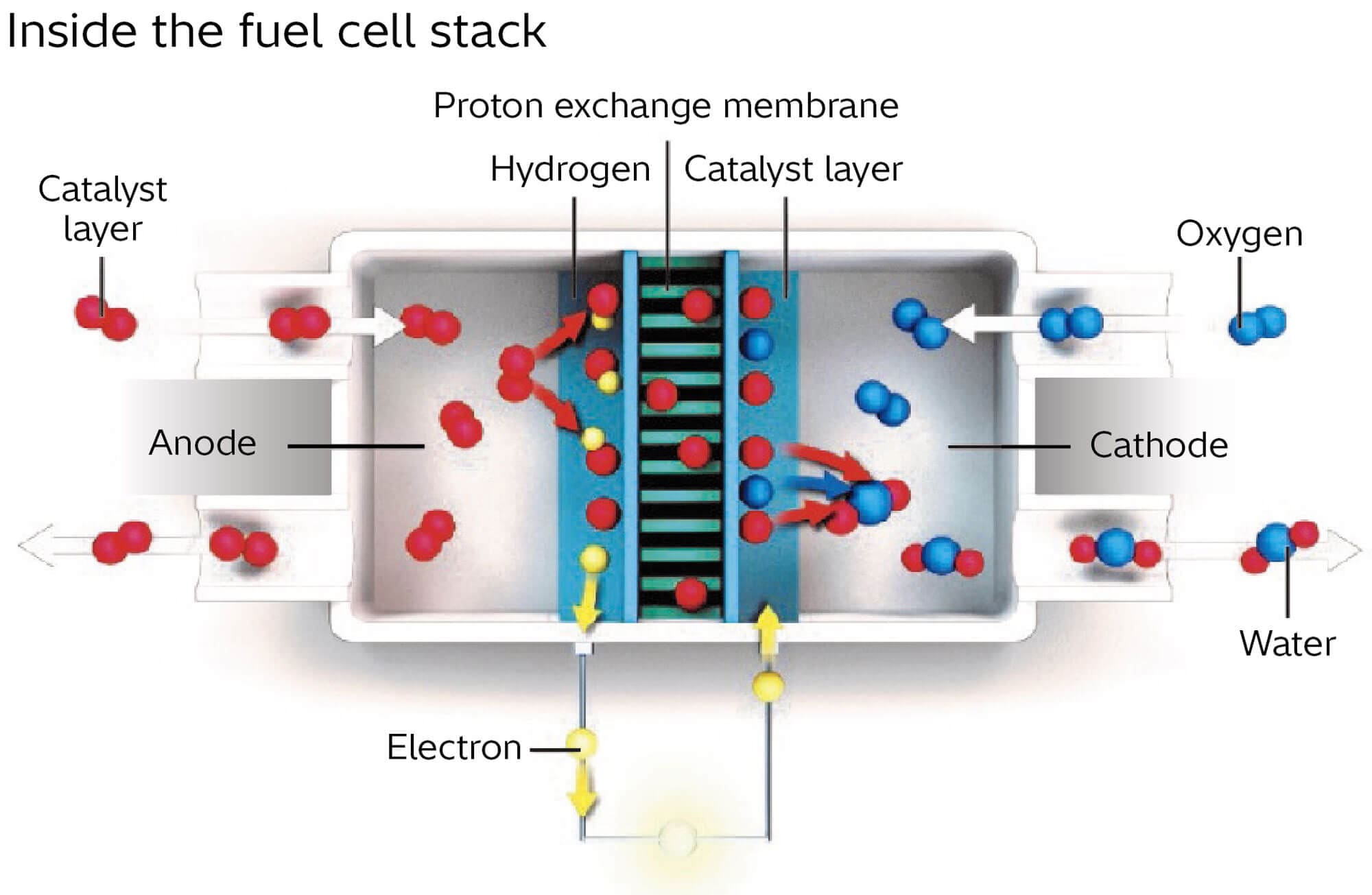
Hoshino Fuel cell vehicles generate electricity by inducing a chemical reaction between hydrogen and oxygen using fuel cells, and use the generated electric energy to drive. TOYOTA develops, manufactures, and provides fuel cells to society. In the development of the second-generation MIRAI, we set a target of making fuel cells higher output, more compact, and lower cost. To achieve this, the proton exchange membrane, which is the core of the fuel cell, was designed to be thinner. However, while making it thinner improved the performance itself, a new issue emerged: it became more susceptible to adverse effects from minute metallic foreign matter that can enter during the manufacturing process.
To ensure the quality of the cell, even the presence of extremely small metallic foreign matter at the 100 μm level cannot be allowed. If metallic foreign matter is mixed in, the power generation capability decreases. Because fuel cell units have a multilayer structure, if foreign matter gets between layers, it was difficult to detect minute foreign matter with existing optical inspection equipment.
Additionally, since production delays and extended delivery times were issues with the first-generation model, there was strong demand for improved production speed and enhanced mass production capability for the second generation. Therefore, inspection also required technology capable of detecting foreign matter both quickly and with high precision.
Takahara It was due to this background that Toyota consulted with us about “whether it would be possible to use X-rays to detect foreign matter inside the cells.” This was the beginning of our collaboration. After that, you were put in charge, and since the development of the equipment, we have been working together on continuous improvement and refinement. The first time we met was in the clean room, wasn’t it? I remember we went to check up on conditions there when we were both dressed from head to toe in cleanwear, making it almost impossible to see anyone’s face.
Hoshino From that moment, you always worked so carefully, and I was impressed by your sincerity, even with technical aspects. I think we made quite a few requests on our side, but the way you were able to respond in a flexible manner was a huge help.
Achieving high-speed, high-precision X-ray inspection technology
Takahara When we first started working together, what was required of X-ray inspection was both speed and accuracy—to reliably detect even finer foreign matter at high speed. Moreover, the information provided by traditional two-dimensional X-ray images was insufficient, and a new method was needed to capture foreign matter in three-dimensional structures.
Hoshino High-precision 3D imaging such as CT takes a long time for inspection, which is not realistic for mass production processes. I heard from my predecessor that a major topic was how to acquire 3D information quickly.
Takahara At first, even we thought it would actually be very difficult to calculate 3D information in such a short time, but you wanted to calculate the “surface area” as an inspection index more accurately frmo 2D images. With that request, we saw the potential in an approach that estimates the thickness and area of the foreign matter from density variations in the 2D images.
Hoshino Based on the hypothesis that there might be a correlation between image density and the surface area of foreign matter, Hitachi High-Tech Science (now Hitachi High-Tech Analysis Corporation) provided several metal samples with different thicknesses, created using FIB (Focused Ion Beam) technology. By imaging these samples and verifying the correlation between density differences and actual surface area, we gained confidence that surface area could be estimated with a certain degree of accuracy.
Takahara From there, we began the process of incorporating that estimation algorithm into the inspection system. This technology, which made it possible to determine the 3D size of foreign matter within a few seconds of imaging, proved to be a major turning point in the development project.
Hoshino With improved foreign matter inspection accuracy, we were able to relax the standards, which had been set higher in consideration of safety margins. As a result, over-detection was suppressed, enabling more accurate assessments, which also contributed significantly to yield improvement.
Takahara Achieving such inspection technology was not made possible by Hitachi High-Tech alone. We were able to achieve this outcome because TOYOTA clearly shared specific on-site requirements, and we worked together to break down the issues step by step.
Becoming a partner for overcoming on-site challenges to achieve a hydrogen-based society
Takahara Introducing the equipment on-site is not the end— continuous adjustments are necessary even during the operational phase afterward. For example, if the environment around the production line changes, noise can enter inspection images, causing them to become distorted and making proper inspection impossible. Each time that happens, we review the imaging conditions and processing parameters to ensure stable inspection results.
Hoshino We also value the perspective of connecting inspection results to manufacturing improvements. When foreign matter is discovered by inspection, how can we prevent contamination, and how can we feed this back into the process? Rather than simply removing foreign matter, our goal is to create mechanisms that prevent it from occurring in the first place—in order to achieve this, inspection devices should not merely be determination tools, but should act as a “trigger for awareness” that helps improve manufacturing at the production site.
Takahara It’s exactly because you approach things with that attitude that we also feel we can evolve the equipment together as we consider each issue. In the development of nextgeneration technologies as well, we hope to further collaborate with TOYOTA’s production sites to provide even more effective inspection solutions.
Hoshino At TOYOTA, our goal is not only to improve the performance and quality of our products, but also to achieve a hydrogen-based society in the future. We want to expand applications not only to passenger cars, but also to large trucks, construction machinery, and ships. To make fuel cell vehicles more familiar and accessible, technological advancements as well as a stable mass production system are essential. Having partners like this who can overcome on-site challenges together with us through inspection technology is extremely significant.
Takahara At Hitachi High-Tech, we also recognize that continually developing technologies rooted in on-site needs is ultimately the path to contributing to society. TOYOTA has elevated our standards. That’s how I feel. We want to continue deepening our co-creation while always maintaining a forwardlooking perspective.