


EV Battery Recycling and Reuse: What’s the Best Approach? — Regulatory Readiness, CO2Reduction, and Market Strategies
This article provides practical strategies for EV battery manufacturers and companies that rely on EV batteries, offering market forecasts, regulatory insights, and methods to extend value at end of life through recycling and second life reuse.
Why EV Battery Recycling Matters — and What the Future Holds
As the global shift toward electric mobility accelerates, the recycling of end of life EV batteries has become a critical issue for automakers, battery manufacturers, and fleet operators. Recycling is essential not only for minimizing environmental impact but also for improving cost competitiveness and keeping up with increasingly stringent regulations.
Why Recycling EV Batteries is Essential
1. Environmental Impact
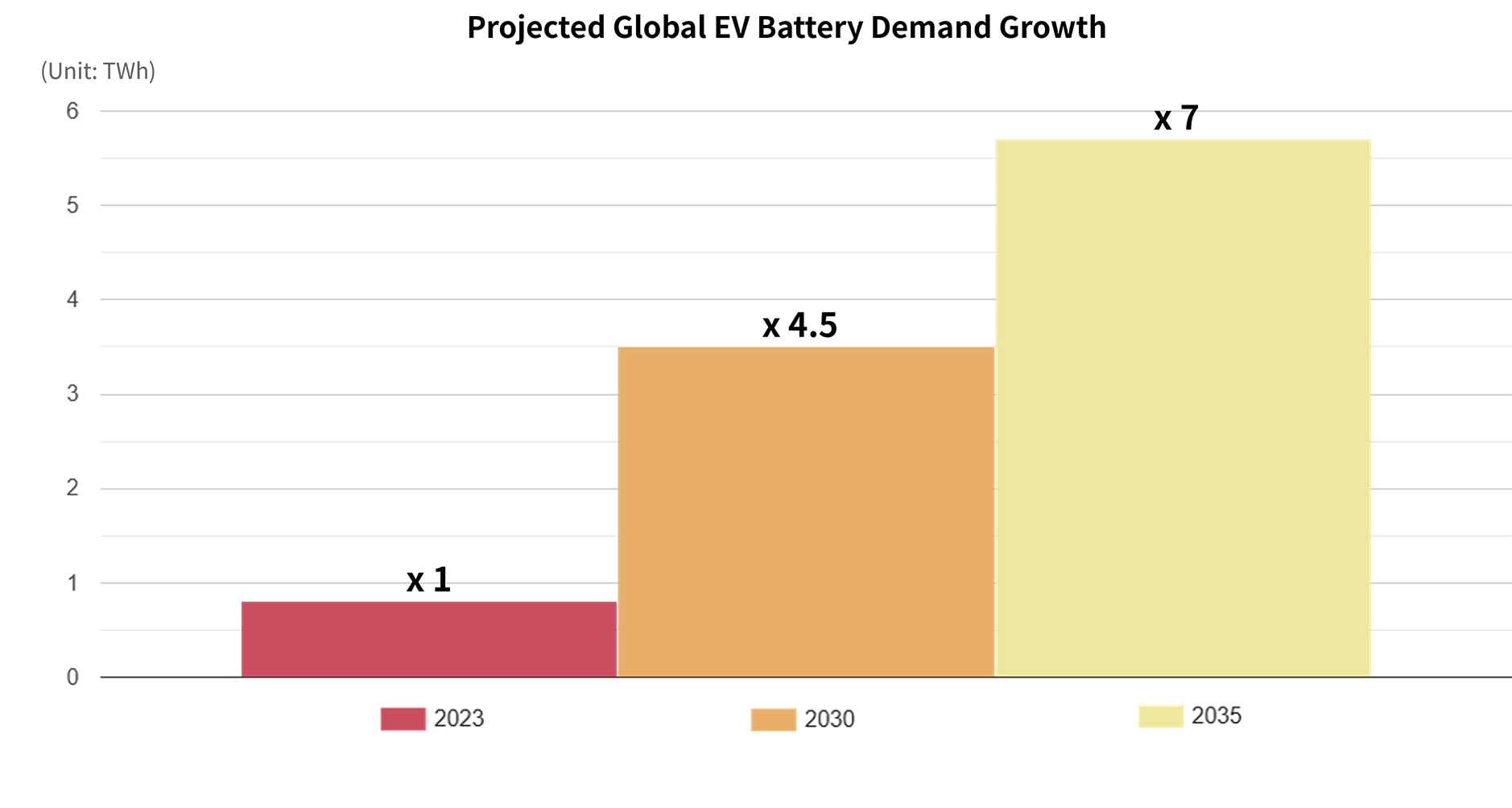
Global demand for EV batteries is rising rapidly. According to the International Energy Agency, demand is expected to grow to 4.5 times the 2023 level by 2030, and to seven times by 2035 under current policy conditions.1
From the late 2030s onward, the volume of retired batteries will also increase rapidly. Without effective recycling systems in place:
2. Cost Competitiveness
Key minerals such as nickel, cobalt, and lithium continue to rise in price as global demand grows.
Recycling helps stabilize procurement costs and reduce exposure to market volatility. As a result, building a sustainable battery supply chain is increasingly important for both manufacturers and companies that rely on EV batteries.
3. Global Regulatory Requirements
Regions such as the EU have already introduced mandatory EV battery recycling requirements. Under the EU Battery Regulation, manufacturers and companies operating EV fleets must meet specific recovery rate and recycled content targets for materials including lithium, cobalt, nickel, and lead (Tables 1 & 2).2
For any company active in the EU market, strengthening recycling capabilities is now essential.
Similar regulatory trends are emerging in the U.S., China, India, and other major markets, making coordinated global strategy increasingly important.
Obligations for Achieving Material Recovery Rates from End-of-Life Batteries
| By the end of 2027 | By the end of 2031 | |
|---|---|---|
| Lithium | 50% | 80% |
| Cobalt | 90% | 95% |
| Copper | 90% | 95% |
| Lead | 90% | 95% |
| Nickel | 90% | 95% |
Table 1
Obligations for the Use of Recycled Content in Battery Raw Materials
| From August 18, 2031 | From August 18, 2036 | |
|---|---|---|
| Lithium | 6% | 12% |
| Cobalt | 16% | 26% |
| Lead | 85% | 85% |
| Nickel | 6% | 15% |
Table 2
Note: The information in Tables 1 and 2 reflects the EU Battery Regulation values as of July 31, 2025.
Key Challenges in EV Battery Recycling
1. Limited Collection Infrastructure
A reliable recycling system depends on consistent collection of end‑of‑life batteries. However, significant issues remain:
- ・Collection frameworks vary widely across regions
- ・Logistics costs are high due to fragmented networks
- ・Multiple processing steps (pre treatment, crushing, refining) require transportation between facilities Without coordinated national frameworks, manufacturers are forced to develop their own efficient collection networks, which is both costly and resource‑intensive.
- ・Advanced disassembly technologies
- ・Chemical and thermal processing
- ・Specialized equipment and extensive safety measures
- ・Technological innovation
- ・Higher extraction efficiency
- ・Larger processing scales
2. Difficulty of Disassembly and Material Recovery
EV batteries are structurally complex, and recovering critical minerals efficiently requires:
3. Challenging Business Economics
In many cases, the value of recovered materials is not enough to offset the full cost of recycling. Efforts to improve economic viability typically focus on:
Second-Life (Reuse): A Growing Alternative to End-of-Life Recycling
Second life reuse is increasingly gaining attention as an alternative to end-of-life recycling.
Instead of processing batteries that are no longer suitable for EVs, they can be repurposed as stationary or portable energy storage systems.
Typical applications include:
- ・Solar and wind energy storage for homes and commercial buildings
- ・Peak shaving and backup power for data centers
- ・Emergency power supply during disasters
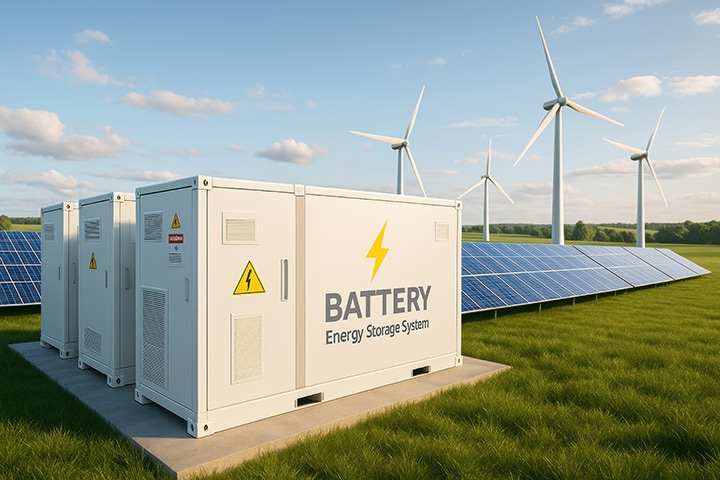
This approach aligns well with renewable energy systems and contributes to business continuity planning (BCP).
Second-life solutions also offer environmental and economic advantages:
- ・Potential CO2 reductions depending on system configuration
- ・Lower resource consumption and extraction needs
- ・Reduced short-term pressure on recycling and logistics workloads
- ・Greater overall lifecycle value for EV batteries
Global expectations for the second-life market continue to rise. Many forecasts anticipate full‑scale growth beginning in the late 2020s and accelerating toward 2030. Meanwhile, advances in remote State of Health (SoH) diagnostics and operational management systems – enabled by IoT and cloud technologies – are making it increasingly feasible to monitor safety and optimize battery performance in second-life applications.
These developments are expected to steadily lower barriers to reuse, making this an area where companies should carefully monitor both technological progress and future market trends.
Future Outlook and Recommended Actions for Companies
A widely recommended approach is to:
- 1. Maximize second‑life use while the battery remains serviceable
- 2. Recycle only after reuse is no longer feasible
Hitachi High‑Tech supports these efforts by providing X‑ray fluorescence (XRF) analyzers and other solutions essential for material‑composition analysis – critical steps in the recycling process.
FAQ
- Q1. Why are EV battery recycling and reuse increasingly important?
- Global demand is projected to grow 4.5× by 2030 and 7× by 2035.
As demand rises, the number of retired batteries, resource price volatility, and environmental impacts will all intensify – making circular battery use essential. - Q2. What obligations are included in the EU Battery Regulation?
- The EU Battery Regulation requires manufacturers and operators to meet specific recovery‑rate and recycled‑content targets for materials such as lithium, cobalt, and nickel.
For example, the lithium recovery‑rate targets are:- ・50% by the end of 2027
- ・80% by the end of 2031
- Q3. What are the main challenges in EV battery recycling?
-
- ・Fragmented collection systems and high logistics costs
- ・Technical difficulty of disassembly and refining
- ・Economic hurdles due to high investment and operating costs
- Q4. What is second-life reuse?
- Second life reuse refers to repurposing retired EV batteries as stationary or portable energy storage systems.
This approach reduces CO2 emissions and resource consumption compared with direct end of life recycling. - Q5. What areas might companies consider focusing on at this stage?
-
- ・Develop a second life market-entry strategy
- ・Introduce reuse models for end of life batteries
- ・Build recycling capabilities for the post reuse stage
- ・Prepare a regulatory compliance roadmap
- ・Establish a SoH based data platform for effective battery management