
Hitachi High-Tech
  1. Home
  2. segments
  3. Environmental Initiatives Website
  4. Circular Economy
Search by Environmental Issue
Circular
Economy
Balancing limited resources with economic growth

The Circular Economy is an economic system designed to preserve the value of products, materials, and resources for as long as possible while minimizing waste. The familiar “3Rs” (Reduce, Reuse, and Recycle) have long served as core principles of waste reduction, but the circular economy goes further. It not only focuses on reducing the volume of new resources used and consumption but also supports job creation in emerging industries. Building a fully circular economy is challenging and will depend on continued technological progress.

An economy built on a linear flow of mass production, mass consumption, and mass disposal places a heavy burden on both resources and the environment. In contrast, a circular economy aims to achieve sustainability by decoupling resource use and environmental impact from economic activity. It does this through efficient, circular use of resources and by making better use of existing materials and products already in circulation.

Leveraging its strengths in “Observation, Measurement, and Analysis,” Hitachi High‑Tech helps customers advance the Circular Economy by developing technologies that address and reduce environmental challenges.


Global trends driving the Circular Economy
  • Material and product redesign technology (Eco-design)
    Development and modular design of lightweight, highly durable materials
  • Advanced recycling technology
    Hydrometallurgical recycling that reduces CO2 emissions through aqueous processing, and chemical recycling that breaks down plastics for reuse
  • Reuse / Repurpose technology
    Promoting reuse and repurposing through second‑life batteries, functionality testing, and degradation analysis
  • Biomaterials and biotechnology
    Developing biodegradable materials to replace petroleum‑based plastics, and advancing waste breakdown and resource recovery through biodegradation technologies
Hitachi High-Tech's
Circular Economy
solutions
Creating environmental value through the lithium-ion battery business
Building a circular value chain for lithium‑ion batteries
Value provided to customers
  • Visualizing and optimizing lifecycle costs for EV deployment and operation
  • Optimizing operation and maintenance through remote degradation diagnostic services
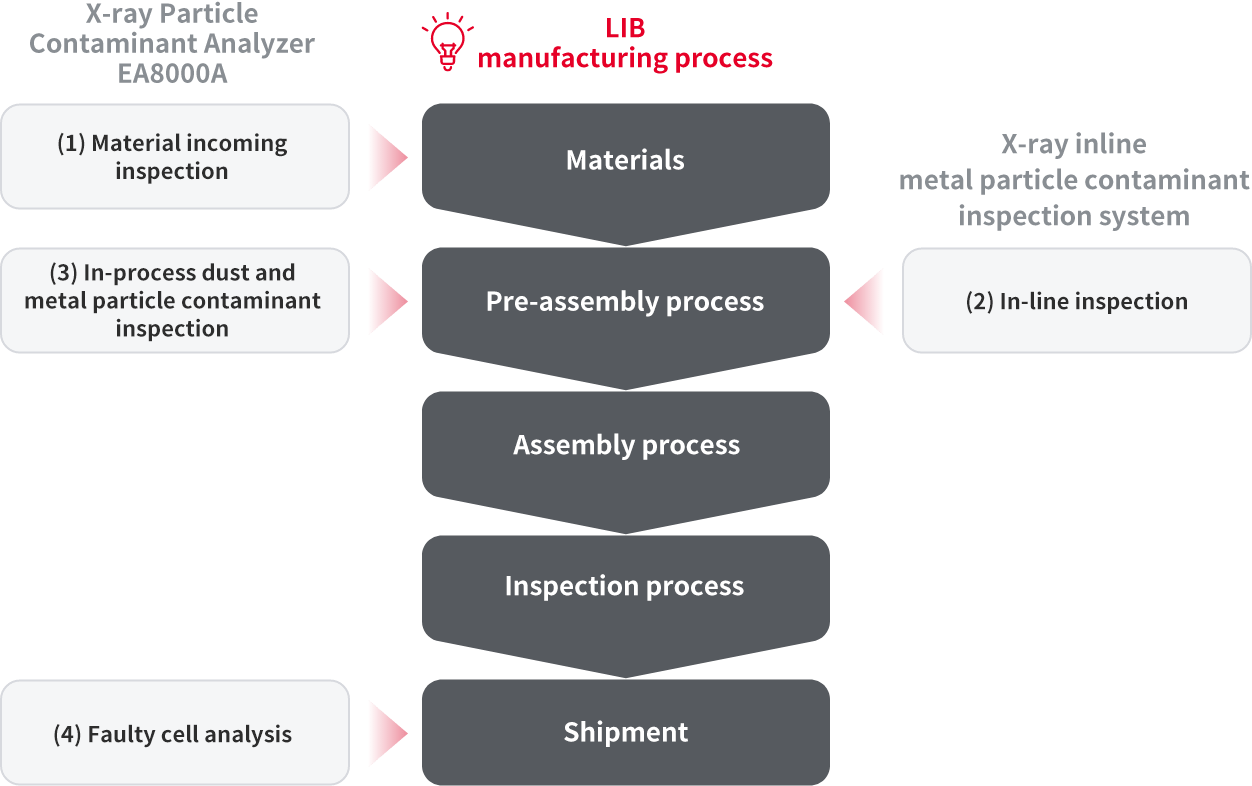
  • Supporting LIB manufacturing with cutting-edge contaminant detection technology
Achievement 1
  • This solution provides digital support for visualizing complex EV lifecycle cost calculations and formulating optimal business plans.
  • Real‑time battery condition data supports efficient operation and maintenance, while also enabling detailed planning for EV renewal and battery replacement. The technology further helps identify issues related to battery reuse and recycling, supporting secondary use.
Achievement 2
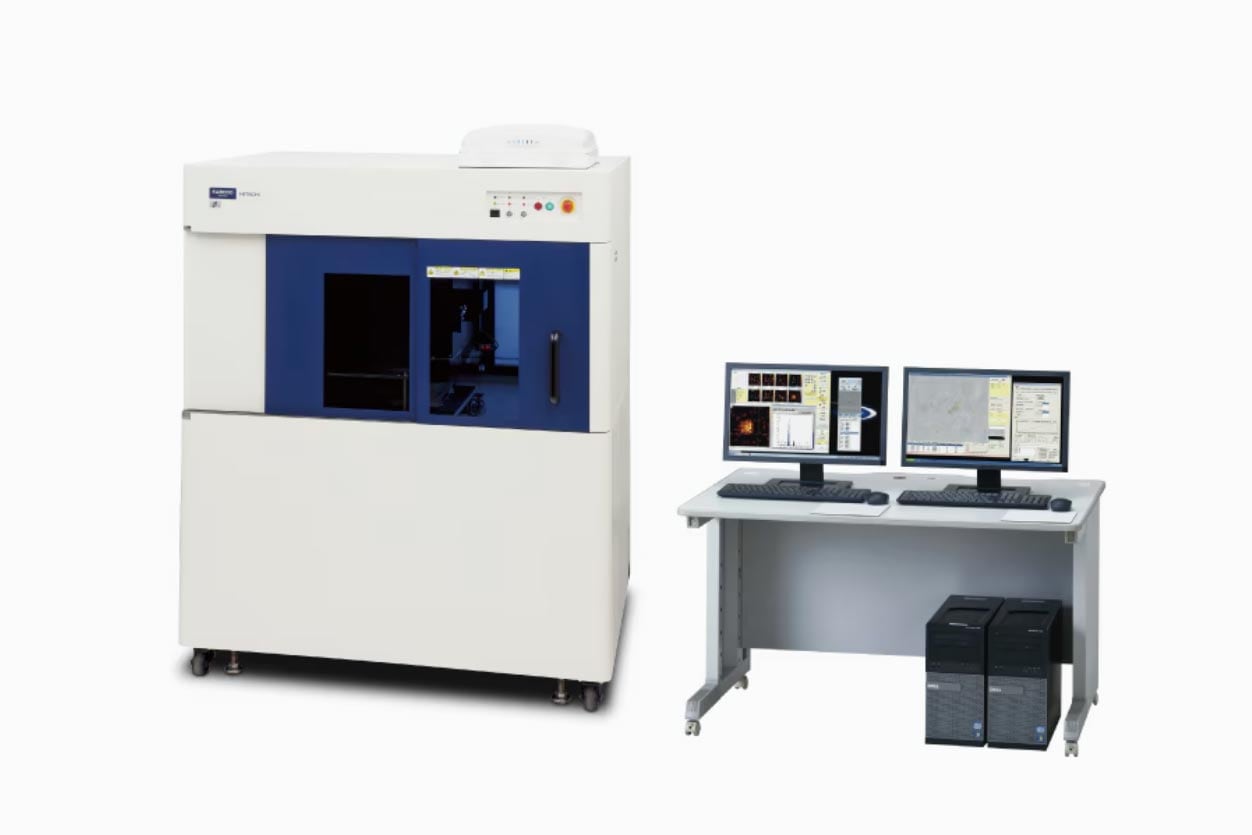
  • Hitachi High-Tech’s X-ray Particle Contaminant Analyzer quickly detects and identifies the elements in 20 μm-class microscopic metal particle contaminants. By supporting the manufacturing sites of LiBs that contribute to the transition to EVs, it contributes to building a more sustainable future.
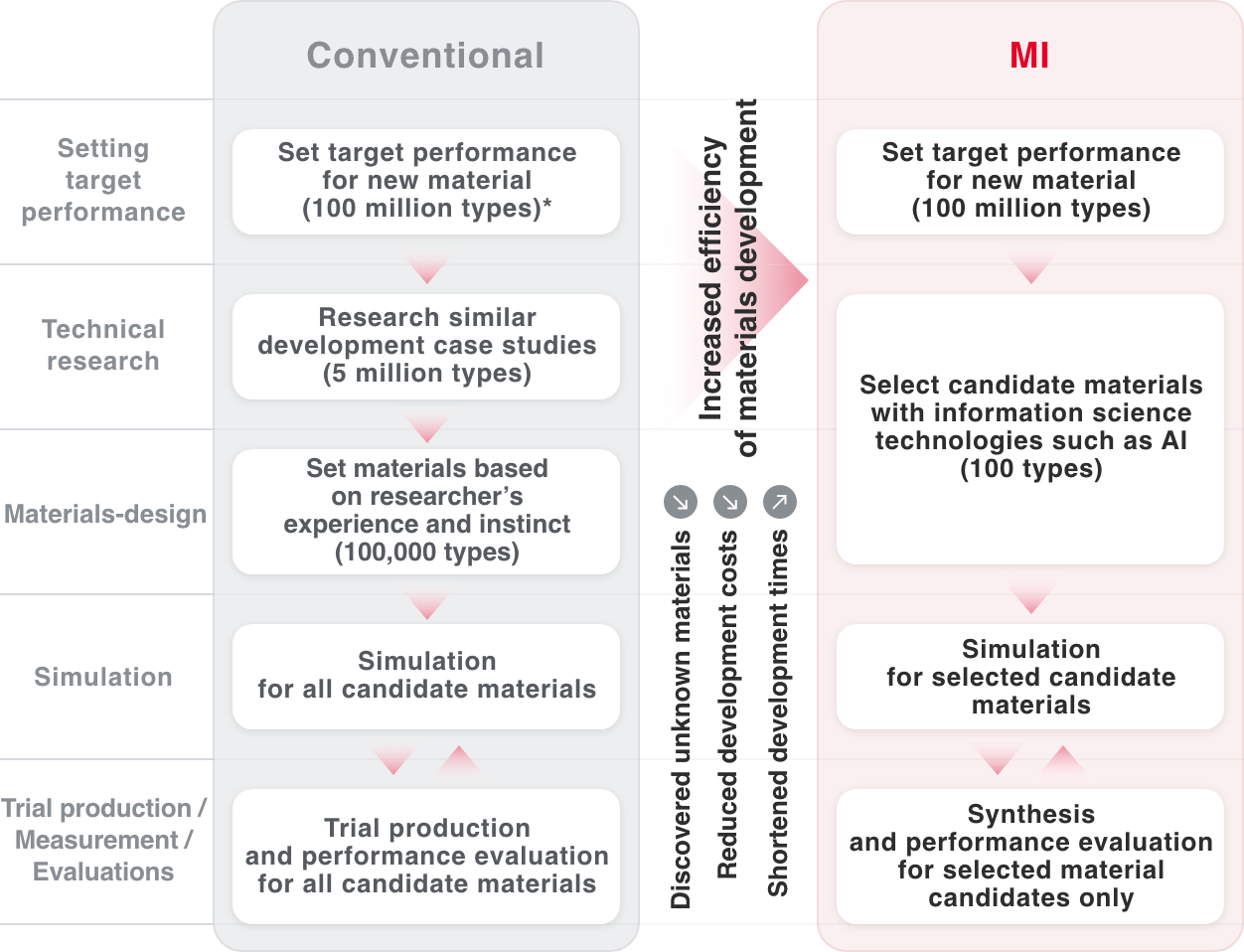
Developing materials by leveraging Materials Informatics (MI) technology
Promoting the development of high-performance materials that reduce environmental impact, while reducing material waste and achieving high-quality, low-cost, and low-carbon products
Value provided to customers
  • Minimizing material waste
  • Reducing environmental impact
  • Promoting development of high-performance materials
Results
  • This solution facilitates the rapid discovery of new additives that enhance the strength of biodegradable plastics while allowing them to break down more easily in natural environments.
  • Compound Discovery AI is utilized to dramatically transform the process of developing materials. The selection of candidate compounds and length of simulation cycles are shortened to 1/60 of their original duration. The number of prototype iterations and volume of material waste from experiments are reduced to one-fifth.
MI: Materials Informatics AI: Artificial intelligence
*The values in parentheses indicate examples of the number of material candidates.
Hitachi High-Tech's
Circular Economy initiatives
Resource recycling initiative
The challenge of going plastic-free: Changing
transport packaging materials
Changing to environmentally conscious cushioning material while maintaining shipping quality
in FY2023 we reduced 271 tons of CO2 emissions during air shipping
Value provided to customers
  • Reducing and reusing equipment packaging materials
  • Reducing environmental impact of materials used in manufacturing
Results
  • The plastic cushioning material that has been used for many years for shipping spare parts for biochemical and immunoanalyzers to our partners has been replaced with recyclable recycled paper cushioning material.
  • As a result of reviewing packing methods and switching to recycled paper cushioning materials, in FY2023 we reduced the length of plastic cushioning materials by approximately 93 km, equivalent to 271 tons of CO2 emissions during air shipping.
  • Our partners are reusing the recycled paper cushioning materials sent from us as new packaging, leading to further reductions in packaging materials.
Effect of reducing CO2 emissions (271 t)
Air flights (Haneda⇄Frankfurt economy)Equivalent to about 212 round-trips
Annual CO2 absorption by cedar treesEquivalent to about 30,795 trees
Shipping costApprox. ¥25 million