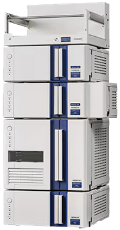

Remote sensing technology
Used for continuous monitoring of atmospheric conditions, water quality, and soil conditions, as well as the early detection of deforestation and soil degradation
“Nature Positive” refers to halting the loss of biodiversity and setting it on a path to recovery. This initiative has emerged as a new global goal alongside Decarbonization and the Circular Economy, and it is rapidly gaining attention among companies as a critical management priority.
Biodiversity provides essential ecosystem services that support our lives in countless ways. For example, the oxygen we depend on is produced through photosynthesis, and plants help regulate temperature and humidity by absorbing carbon dioxide and releasing water vapor. However, biodiversity, which maintains ecosystems in a delicate balance, is now declining at an unprecedented rate, raising concerns about the disruption of these vital relationships.
Leveraging its strengths in “Observation, Measurement, and Analysis,” Hitachi High-Tech supports customers in advancing Nature Positive initiatives by developing technologies that address and mitigate environmental challenges.









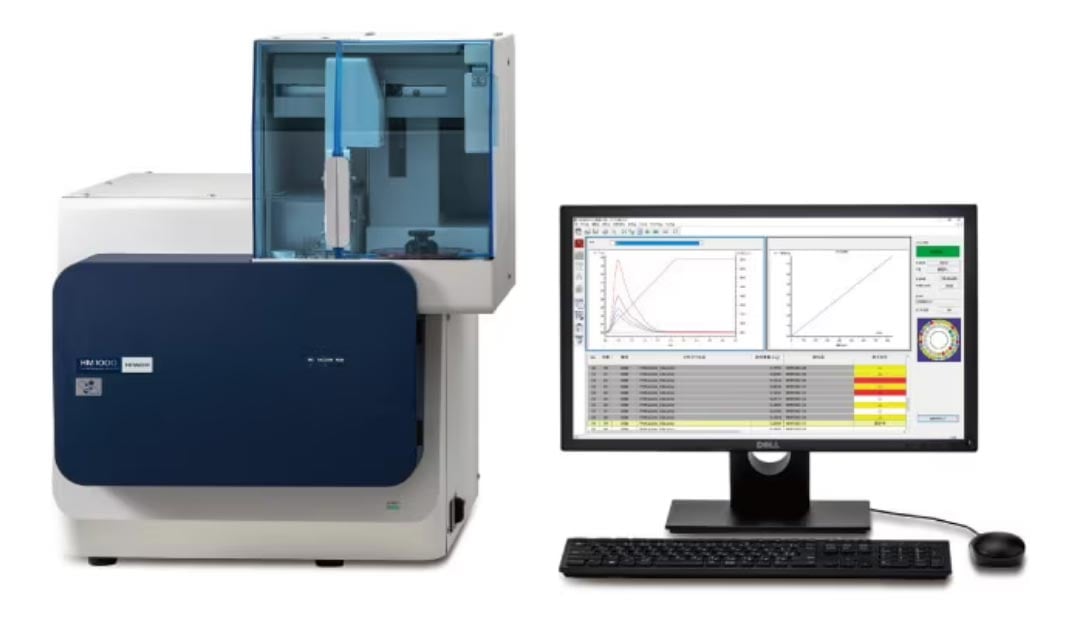
The RoHS Directive by the European Union (EU) was revised, and four types of phthalate esters were newly added to the list of regulated substances.
However, measurement devices used to detect such polymeric compounds are expensive and difficult to operate, and analysis requires advanced skills, making them unsuitable for regular inspections at factories.
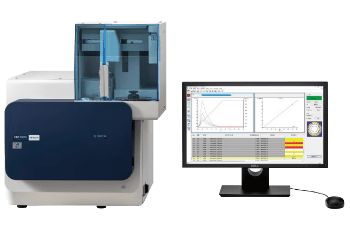
The HM1000A Phthalate Screening Device developed by Hitachi High-Tech enables rapid and easy detection of these substances and is a thermal desorption mass spectrometer with unprecedented features.
Measurement of one sample takes less than 10 minutes, and 50 samples can be automatically evaluated continuously in approximately eight hours.
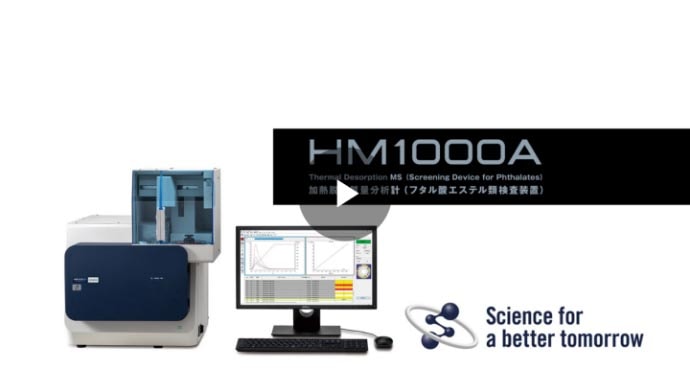
Demonstrating operation of measurement with HM1000A
Leveraging peptide‑based synthetic polymer detection and identification technology developed by Institute of Science Tokyo, and integrating it with Hitachi High-Tech’s “Chemicals Informatics” compound discovery support service, we aim to efficiently discover and generate peptides useful for PFAS detection.