Jun Horigome
A fluorescence spectrophotometer is an instrument that measures fluorescent light emissions from samples irradiated by excitation light at ultraviolet or other wavelengths. In comparison to absorption spectrophotometers, which measure the light absorbed by samples, fluorescence spectrophotometers measure only light emissions from fluorescent substances present within samples—and thus offer significantly greater analytical sensitivity. By pre-processing samples appropriately to ensure that only specific components of interest are rendered fluorescent, minuscule quantities of trace components can be analyzed with excellent selectivity. Fluorescence spectrophotometers are used to analyze pharmaceuticals, to characterize various types of vitamins and additives in foods, to analyze amino acids, and for various other purposes in biochemistry and clinical medicine. They are also used to analyze many types of materials, including dyes, fluorescent whitening agents, white LEDs, display devices, and plastics, and in general have proven to be powerful tools in a broad range of applications.
The F-2710—the successor model to Hitachi High-Tech's previous-generation F-2700 instrument—is an entry-level fluorometer designed for research, quality control, education, and other applications spanning a wide range of disciplines, including industrial materials, environmental science, food testing, and life science.
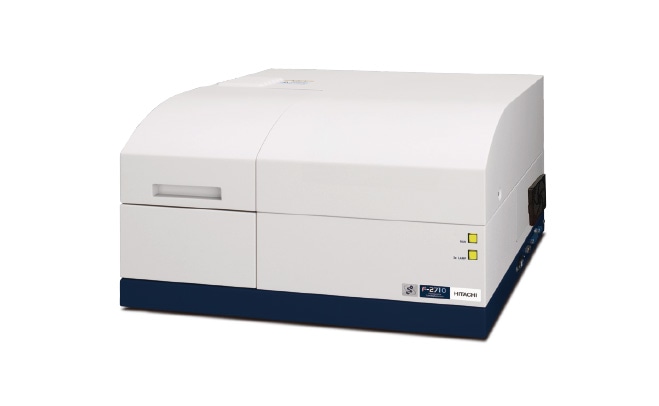
Fig. 1 The F-2710 fluorescence spectrophotometer.
In this section we describe three key features of the F-2710.
The F-2710 achieves signal-to-noise ratios above 300 (peak-to-peak) and above 1,000 (RMS). This represents a sensitivity improvement of approximately 1.2× over the previous-generation F-2700 system.
Hitachi High-Tech's proprietary high-efficiency diffraction grating and low-noise detector system allow measurement of extraordinarily low concentrations. This capability is especially powerful for measuring trace components in samples—and samples for which only minuscule volumes are available to analyze. Fluorescence-intensity values in the range 0.001-9999 are displayed, and accurate calibration curves may be obtained even for low fluorescence intensities. Fluorescein at minuscule concentrations on the order of 1×10-12 can be successful detected. Note that, over the ultra-low concentration range of 1×10-12–1×10⁻¹⁰ mol/L, the measured calibration relation exhibits an excellent R2 value of 0.9998.
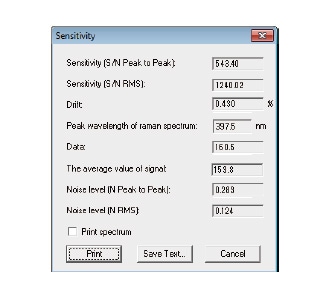
Fig. 2 Typical measurement results for signal-to-noise ratio.
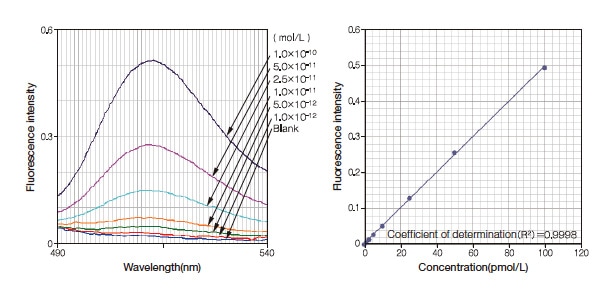
Fig. 3 Measured fluorescence spectra and calibration relation for fluorescein solutions of ultra-low concentration.
A standard feature of the F-2710 is the long-lifetime xenon lamp that serves as its light source. The 2,500-hour service lifetime of this lamp represents a fivefold increase over the 500-hour lifetime of the standard optical source installed in the previous-generation F-2700 system. The adoption of this long-lifetime lamp, together with improvements in the lamp power supply, allow the F-2710 to achieve simultaneous improvements in both the brightness and the lifetime of the optical source. In particular, the significantly reduced frequency of lamp replacements slashes consumable costs and reduces the operational burden associated with replacing and calibrating lamps.
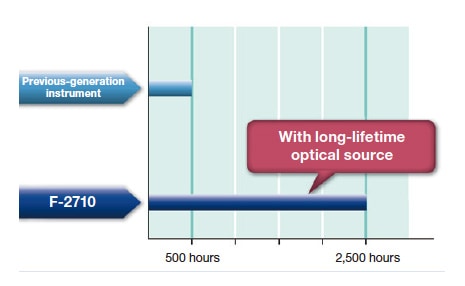
Fig. 4 Comparison of lifetime of F-2710's new long-lifetime optical source to that of previous-generation instrument.
*The "previous-generation instrument" in this comparison is the F-2700 fluorescence spectrophotometer equipped with a standard xenon lamp (part number 650-1500).
Note: As a safety precaution, lamps should be replaced before reaching the end of their service lifetimes.
The FL Solutions software tool tracks lamp usage time and restricts use of the instrument when the lamp has exceeded its service lifetime. (Lamp operation and performance are guaranteed for 6 months or for the duration of the guaranteed service lifetime listed in the table.)
The F-2710 supports the full catalog of more than 30 instrument accessories developed for the F-2700 and adopted enthusiastically by its users. The use of specific accessories, chosen appropriately for particular measurement samples and analytical objectives, allows the system to support specialized measurements required for specific fields and disciplines. The accessory lineup also features a variety of tools for increasing operational efficiency, including autosamplers, sippers, and turrets.
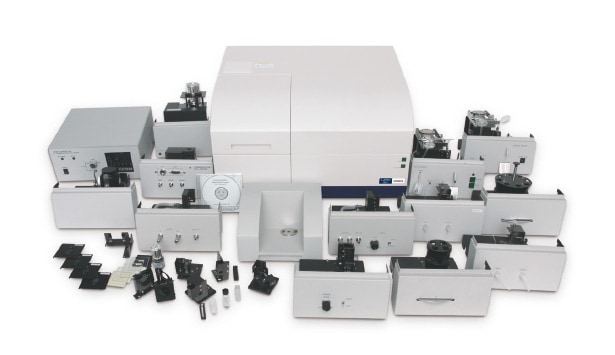
Fig. 5 Extensive catalog of more than 30 instrument accessories.
In this article, we surveyed key advantages and innovative new features of the F-2710. Fluorescent analysis is used in a diverse array of scientific and technological fields, from applications in advanced industrial materials—such as identifying recyclable plastics and developing novel solar-cell components—to food testing, to research and development in fields such as life sciences, pharmaceuticals, and biotechnology. Going forward, Hitachi High-Tech is committed to developing and commercializing accessories, software, and applications to meet the needs of this diverse and growing market.
About the author
Jun Horigome
Global Sales Strategy Planning Dept.
Hitachi High-Tech Corporation
See more