

Polarized Zeeman Atomic Absorption Spectrophotometer ZA4000 Series
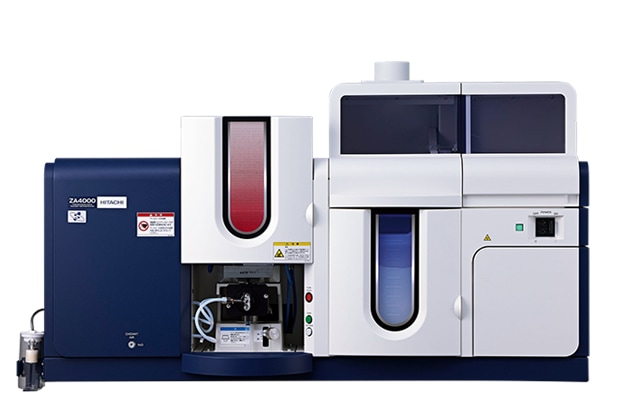
High Sensitivity and Accurate Analysis with Exceptional Resistance to Spectral Interference
The ZA4000 Polarized Zeeman Atomic Absorption Spectrometer (AAS) is designed for the quantitative analysis of metallic elements. Its permanent magnet-based polarized Zeeman background correction technology and dual-detector system enable highly sensitive and accurate elemental analysis while minimizing the effects of spectral interference.
The newly added rapid sequential mode* for flame analysis further improves sample throughput, enabling fast, accurate, and highly reproducible measurements across a wide range of applications, including research and quality control.
* A mode that sequentially analyzes multiple elements
Features
-
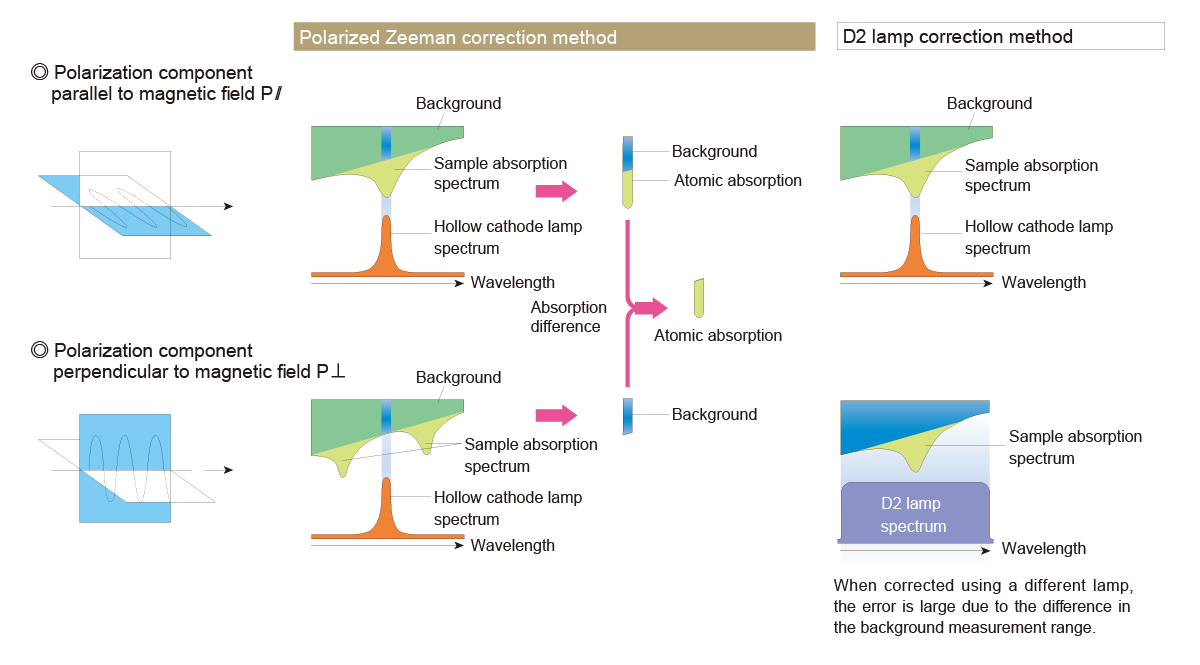
Background Correction Using Only Hollow Cathode Lamp
The polarized Zeeman correction method, which uses a permanent magnet, provides a stabilized baseline, suppresses the effects of coexisting materials that have absorption of adjacent wavelengths, and facilitates highly reliable analysis.
-
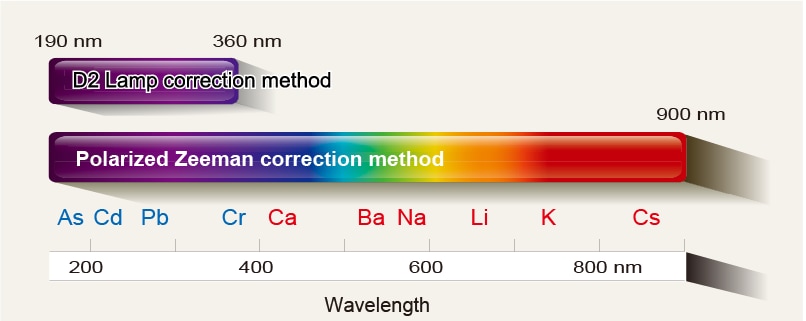
All Elements are Covered by the Polarized Zeeman Correction Method
Background correction can be performed for elements that have absorption in the ultraviolet range or visible range. The polarized Zeeman correction method is one choice of correction method and has the advantage that it does not need to be selected for each element. It can also correct elements that cannot be corrected by the D2 lamp correction method, such as sodium and potassium.
-
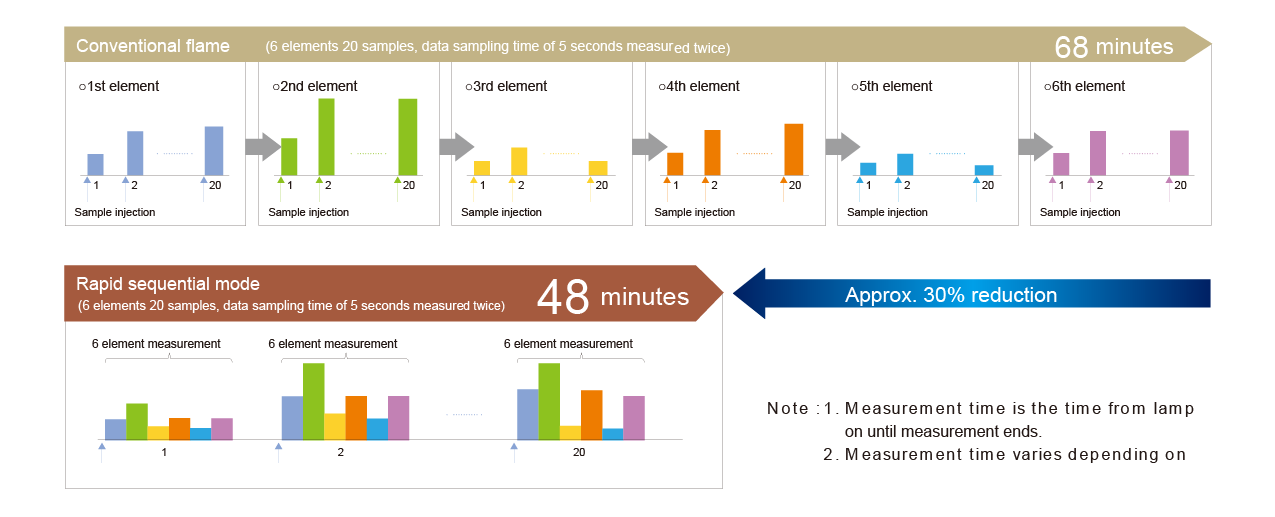
Offering Sequential Measurement of a Maximum of 12 Elements and Faster Speed
Hitachi has achieved even higher speed in measurements by combining the existing polarized Zeeman correction method with a newly developed diff raction grating drive mechanism. This provides much faster measurements for users who are measuring multiple elements in the same sample using the fl ame method.
-
Automatic Bumping Detection Function (ZA4000 and ZA4700)
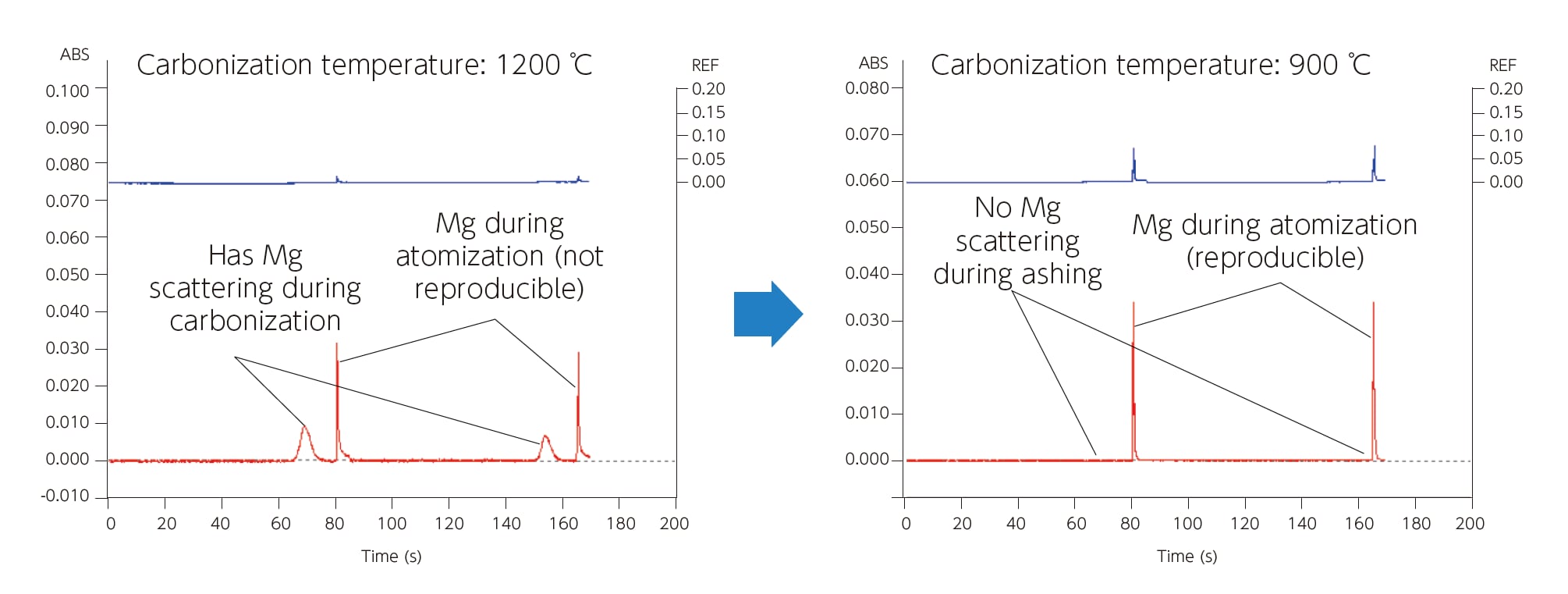
In Hitachi‘s graphite furnace AAS, background correction and signal monitoring are performed throughout all heating stages, including drying, ashing, and atomization. This enables automatic detection of bumping, allowing users to confirm its occurrence after measurement without continuously monitoring the furnace in real time.
In addition, signals are continuously monitored during the ashing stage, making it possible to evaluate analyte loss due to volatilization and optimize heating conditions for reliable analysis.Evaluation of Analyte Loss due to Volatilization during Ashing
-
Intuitive Software and Voice Guidance for Easy Operation
The software uses a wizard-based workflow for method creation, allowing users to create measurement conditions step by step. Its intuitive interface makes operation easy, even for first-time AAS users.
In addition, the voice guidance function informs users of measurement timing and instrument status, ensuring smooth and efficient operation.
Analysis Examples
The ZA4000 Series supports elemental analysis across a wide range of fields, including environmental, food, agricultural, metal, and materials analysis.
- Environmental : Industrial wastewater, River water, Seawater, Soil, Drinking water
- Food : Rice and grain products, Dairy products, Beverages, Food additives, Seasonings
- Agriculture : Fertilizers, Animal feed
- Metals : Steel, Non-ferrous metals, Rare earth elements, Plating solutions
- Materials : Batteries, Plastics, Cellulose materials, Bottle leachates, and more
Environmental
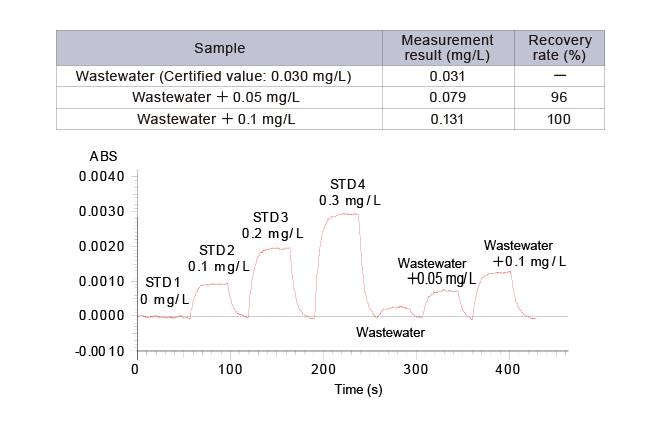
The ZA4000 Series supports the analysis of heavy metals, including lead (Pb), in industrial wastewater and a wide range of environmental water samples. Its exceptional sensitivity enables the accurate determination of trace levels of heavy metals.In many applications, even ppb-level cadmium (Cd) and lead (Pb), which would typically require graphite furnace AAS, may be rapidly determined using the flame method, enabling faster and more efficient analysis.
Analysis of lead in wastewater
Food
The ZA4000 Series supports the analysis of a wide range of elements in food samples, from major components such as sodium (Na), potassium (K), calcium (Ca), and iron (Fe) to heavy metals including lead (Pb) and cadmium (Cd).
Sodium and potassium are particularly susceptible to spectral interference when measured by the flame method using conventional atomic absorption spectrometers. The ZA4000 Series employs polarized Zeeman background correction technology, which provides exceptional resistance to spectral interference, enabling accurate and reliable analysis.
For laboratories performing multi-element flame analysis, the ZA4800 Rapid Sequential Flame Model is also recommended. Its rapid sequential measurement capability enables efficient, high-throughput analysis of multiple elements in a single run.
Agriculture
The ZA4000 Series is ideal for elemental analysis of fertilizers and animal feed. It supports the determination of major nutrients such as potassium (K), calcium (Ca), and magnesium (Mg), as well as hazardous elements including lead (Pb) and cadmium (Cd). Because these samples often contain high concentrations of coexisting elements, conventional measurements can be affected by spectral interference.
The ZA4000 Series utilizes polarized Zeeman background correction technology, providing exceptional resistance to spectral interference and enabling accurate and reliable analysis. The addition of a hydride generation system further extends analytical capabilities, enabling highly sensitive determination of trace elements such as arsenic (As) and selenium (Se).
For laboratories performing multi-element flame analysis, the ZA4800 Rapid Sequential Flame Model is also recommended. Its rapid sequential measurement capability enables efficient, high-throughput analysis of multiple elements in a single run.
Metals
The ZA4000 Series is ideal for elemental analysis of metal materials and plating solutions. It supports the determination of both major components and trace elements in a wide variety of metallic samples.
Metal samples are among the most challenging samples for elemental analysis due to the presence of numerous coexisting components.
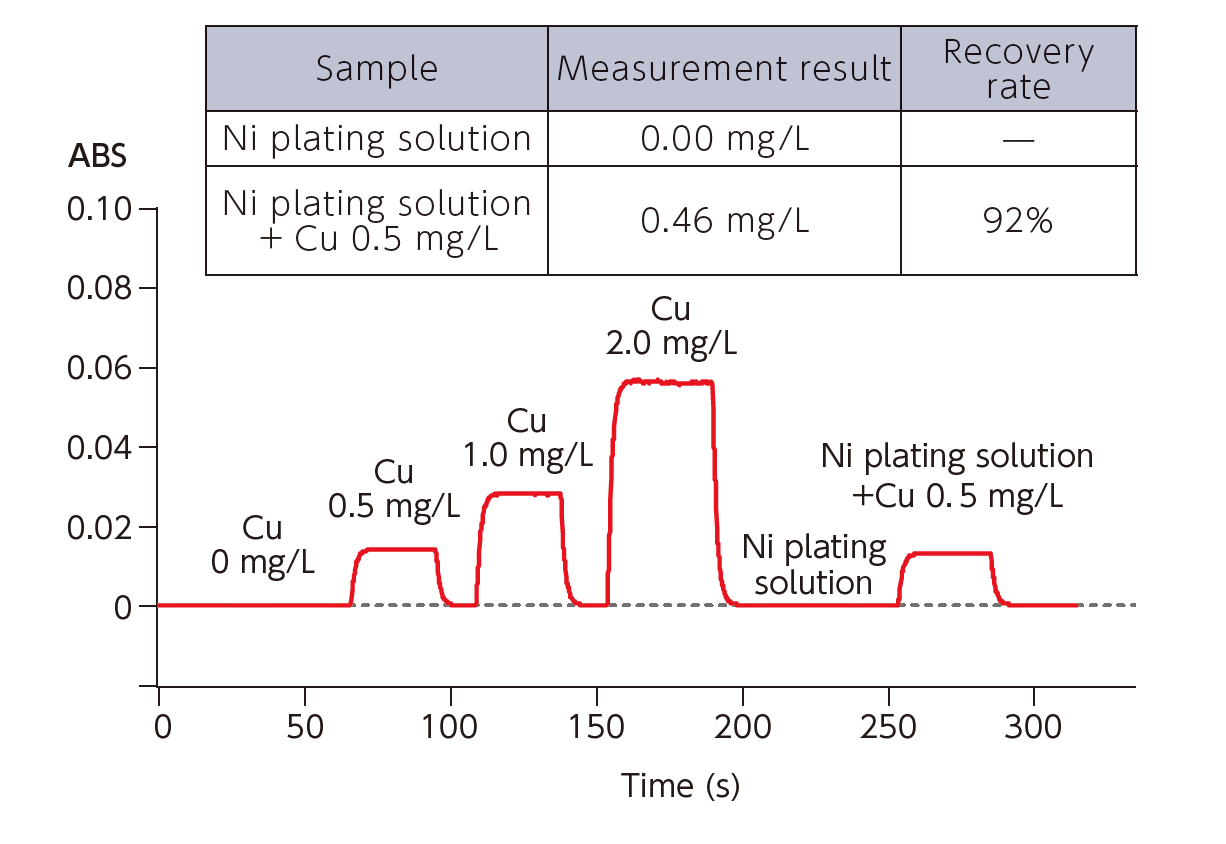
In particular, the determination of copper (Cu) in nickel (Ni) plating solutions is susceptible to spectral interference because the analytical wavelengths of these elements are very close to each other.
The ZA4000 Series employs polarized Zeeman background correction technology, providing exceptional resistance to spectral interference and enabling highly accurate analysis even in complex sample matrices.
For laboratories performing multi-element flame analysis, the ZA4800 Rapid Sequential Flame Model is also recommended. Its rapid sequential measurement capability enables efficient, high-throughput analysis of multiple elements in a single run.
Analysis of Copper in Nickel Plating Solutions
Materials
The ZA4000 Series is ideal for elemental analysis of batteries, plastics, cellulose materials, and other industrial materials. It supports both major component analysis and trace element determination across a wide range of material applications.
The ZA4000 Series employs polarized Zeeman background correction technology, providing exceptional resistance to spectral interference and enabling highly sensitive and accurate analysis even in complex sample matrices.
For laboratories performing multi-element flame analysis, the ZA4800 Rapid Sequential Flame Model is also recommended. Its rapid sequential measurement capability enables efficient, high-throughput analysis of multiple elements in a single run.
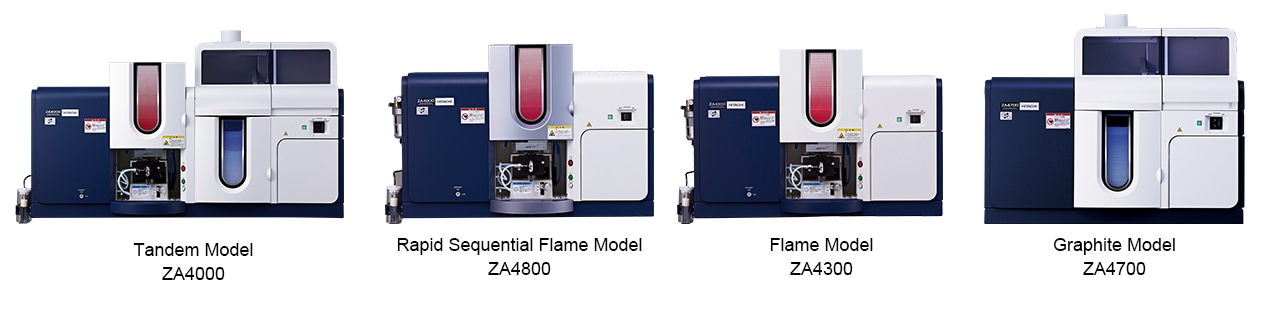
Line up
| ZA4000 | ZA4800 | ZA4300 | ZA4700 | |
|---|---|---|---|---|
| Flame Analysis | ○ | ○ | ○ | |
| Rapid sequential Flame Analysis | ○ | |||
| Graphite Furnace Analysis | ○ | ○ |
* The polarized Zeeman correction is employed for all the analysis methods.