
Initiative 1 for Priority Locations: Hitachi High-Tech Naka Area (882 Ichige, Hitachinaka-city, Ibaraki Prefecture, Japan)
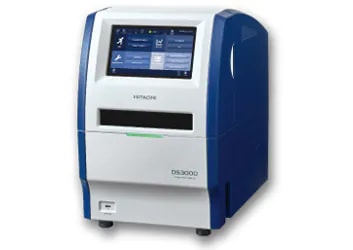
Hitachi High-Tech Naka Area designs, develops, and manufactures clinical analyzers, DNA sequencers, semiconductor metrology and inspection equipment, and electron microscopes that utilize spectroscopic analysis and electron beam technologies.
In its business activities, it uses water for such purposes as cleaning and cooling precision parts and equipment. Since it has the largest water intake among the Hitachi High-Tech Group companies, we are systematically making various measures to improve the efficiency of water resource use.
In addition, as a nature-friendly activity, it has been borrowing a national forest near the Naka area, naming it the Hitachi High-Tech Yasato Forest, and has been engaged in afforestation activities.

Ecosystem Conservation: Hitachi High-Tech Yasato Forest
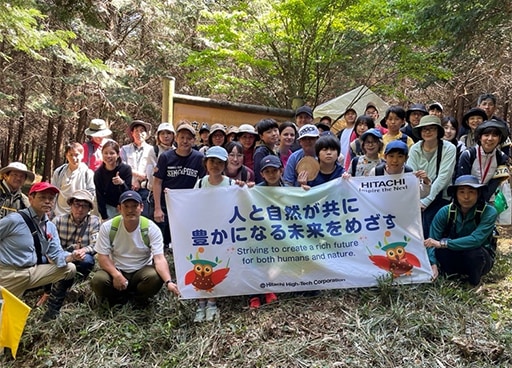
Hitachi High-Tech Naka Area received a loan of approximately 2.3 hectares of national forest in Ishioka City, Ibaraki Prefecture, under the Corporate Forest Program of the Forestry Agency, named it the Hitachi High-Tech Yasato Forest and since 2005, has been engaged in a 60-year program of afforestation activities there.
The Hitachi High-Tech Yasato Forest began in April 2005, when employees and their families planted 5,600 saplings of cypress and other trees. Since the planting of the trees to the present, our Group employees and their families have also volunteered in the clearing of underbrush, pruning of branches, thinning, and other work necessary to nurture the forest.
Forests do not only produce natural resources in the form of timber. Nurturing forests provides various benefits, such as helping to prevent global warming by absorbing and storing CO2, cultivating water sources,* deterring disasters by storing water, and preserving the ecosystem.
| Examples of contribution to the environment | FY2006-2024 cumulative |
|---|---|
| Cultivating water sources (Number of 2-liter PET bottles, m3/year) | 6.808 million bottles' worth (13,610 m3) |
| Preventing landslides (10-ton dump truck, 5.5 m3/truck) | 66 trucks' worth (375 m3) |
| Absorbing and storing carbon dioxide (CO2 emission equivalent per person) | 747 people's worth (CO2 239.4 t) |
* Cultivating water sources: Storing rainwater and regulating water quantity, mitigating flooding, and purifying water.
Actions aimed at addressing climate change challenges: Provision of sustainable menu options at the employee cafeteria
At the employee cafeterias of the Hitachi High-Tech Naka Site and Marine Site, in order to reduce environmental burdens and to foster employees’ familiarity with environmental topics, we offered a sustainable menu using soy meat, which places less environmental burdens. Soy meat is a plant-based ingredient that is environmentally friendly due to its lower water usage compared to livestock ingredients, and offers numerous benefits for both the environment and health thanks to its high protein and low calorie features.
To visualize the environmental effects of this event, we calculated the greenhouse gas emissions reduced by providing the sustainable menu, resulting in an environmental effect equivalent to a reduction of approximately 419 kg of CO2 emissions.
This is equivalent to the amount of CO2 emissions produced by driving a gasoline-powered car for about 2,850 km.
We plan to continue implementing these initiatives on a regular basis in the future.

* The reduction amount above is a reference value based on a proprietary calculation method by an external specialist company.
* The CO2 emissions of a typical gasoline car are referenced from the Ministry of the Environment website.
Nature-related Opportunities in Business Activities: Examples of Potential Contributions to Biological Control Efforts to Achieve Sustainable Agriculture
While there are concerns about future food shortages due to the rapid increase in the world's population, around the world climate change is causing droughts, floods, and damage to crops due to pests. The use of chemical pesticides, which are currently the mainstay of pest control, has led to concerns about soil contamination and pharmaceutical resistance among pests, and there is a need to establish new pest control methods. Biological control, which uses natural enemies to control pests, is expected to be an effective solution.
Professor Norihide Hinomoto of the Graduate School of Agriculture, Kyoto University, who is a leading expert in this field, has analyzed the genomes of natural enemy organisms in agricultural land and surrounding areas to clarify their genetic lineages and understand their migration and distribution. This research is being conducted to control pests using insects and microorganisms that serve as natural enemies of pests, rather than placing a burden on the environment by using pesticides.
Our DNA sequencer is expected to contribute to the conservation of biodiversity and sustainable use of ecosystem services, including this research.