

Part 14
Let's learn the secrets of stationery!



An eraser is a tool used to remove writing. Aside from regular everyday erasers (called plastic erasers),
there are other types called kneaded erasers and sand erasers too.
So, what's the difference? Let's take a look together through the electron microscope!
 Erasing stationery
Plastic erasers
Electron microscope image
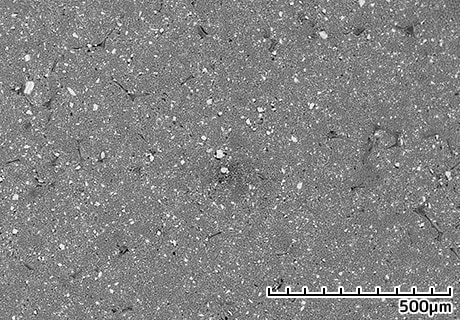
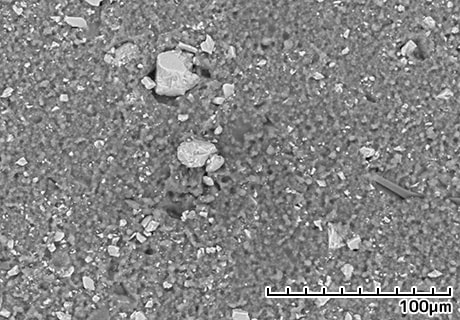
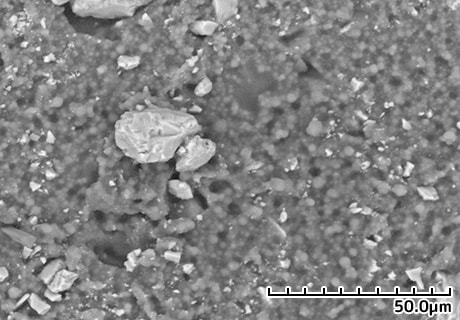
Magnified image of a plastic eraser
What are plastic erasers made of?
The main components of plastic erasers are vinyl chloride resin, a plasticizer (which make them soft), and a fine
abrasive (calcium carbonate).
These materials are mixed together while being heated, then molded into the desired shape.
How do plastic erasers work?
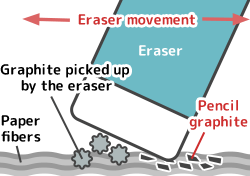
Pencil leads are made up of thin sheets of graphite that peel off and stick to paper.
When rubbed with an eraser, these graphite sheets are picked up by the eraser and become part of the waste eraser dust.
When this happens, the text disappears.

Erasing stationery
Sand erasers
Electron microscope image
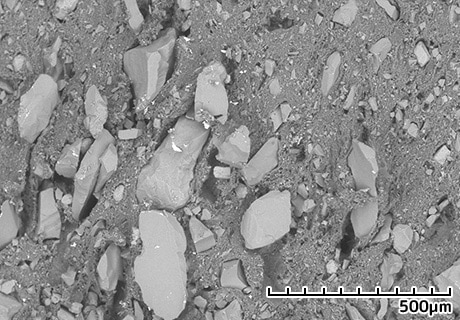
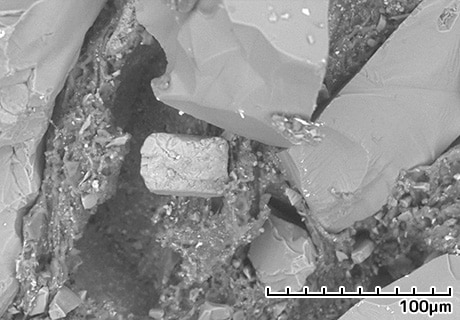
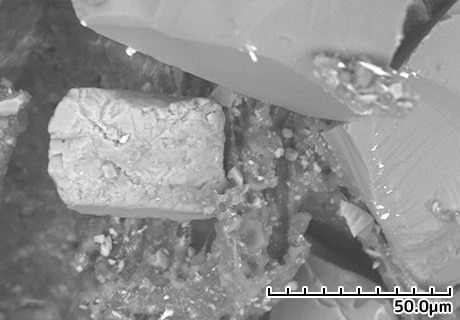
Magnified image of a sand eraser
What are sand erasers made of?
As the name suggests, the main ingredient of sand erasers is sand.
Specifically, a glass-like powder called silica sand that is finer than the sand you would find on a beach.
How do sand erasers work?
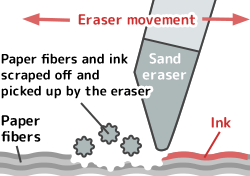
The way ink is erased differs from how pencil markings are erased.
Ink soaks into paper, so it can't be removed just with normal rubbing.
Sand erasers remove ink by scraping it off the page along with the surface of the paper.
Erasing stationery
Kneaded erasers
Electron microscope image
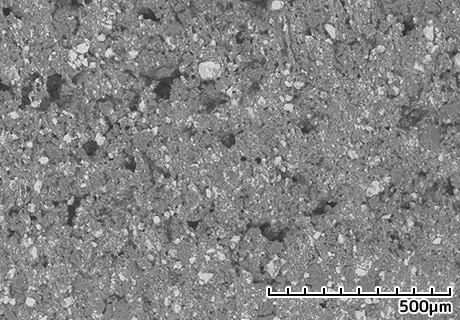
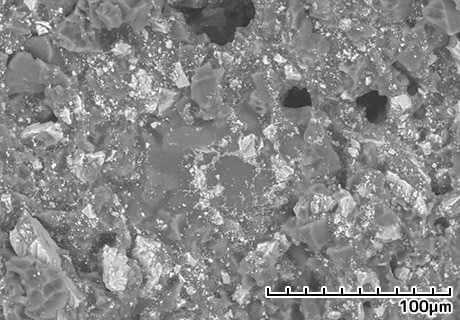
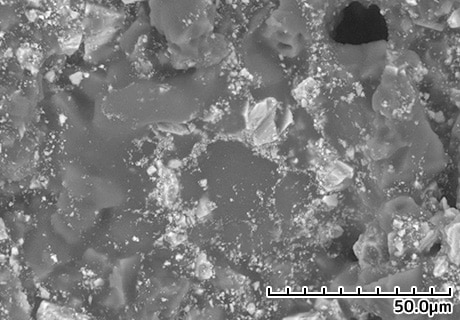
Magnified image of a kneaded eraser
What are kneaded erasers made of?
Kneaded erasers are made from soft and stretchy synthetic rubber mixed with various materials.
They are usually made of synthetic rubber (for molding into shape), factice (a plasticizer), mineral oil (for softening), calcium carbonate (for absorbing oil), fragrances and colors.
How do kneaded erasers work?
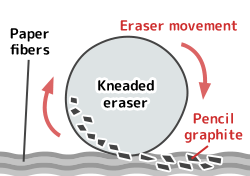
When you roll a soft kneaded eraser over a piece of paper, it picks up any pencil graphite on the page.
Due to being soft and sticky, even if it picks up a large amount of graphite, re-kneading it by hand absorbs the graphite particles into the eraser and allows it to be re-used without leaving marks on the paper.