

Part 14
Let's learn the secrets of stationery!



The go-to tool for sticking is glue. Many centuries ago, people in Japan made glue out of rice.
These days it comes in various different forms, including liquid glue, glue sticks and starch glue, among others.
But how are they different? Let's take a look together through the electron microscope!
 Sticking stationery
Starch glue
Electron microscope image
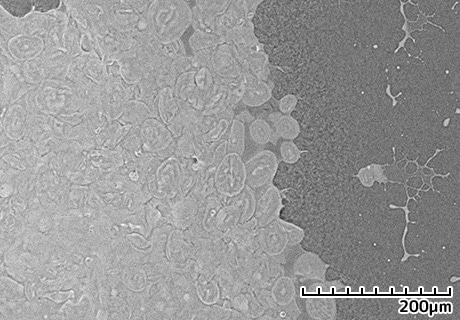
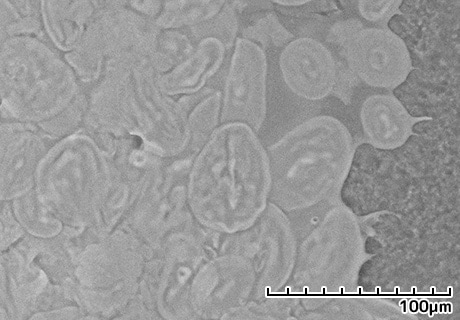
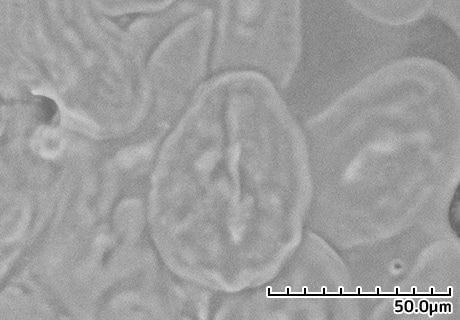
Magnified image of starch glue
What is starch glue made of?
As the name suggests, the main ingredient of starch glue is starch.
Starch is a component that makes up food. It has a white and powdery appearance, and is found in rice and potatoes, along with corn and other grains. When mixed with water, it gelatinizes (turns jelly-like), making starch glue.
How does starch glue stick paper?
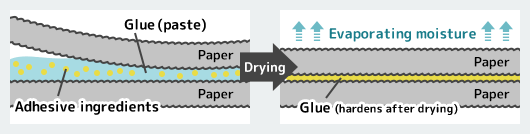
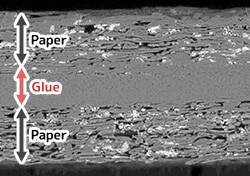
As starch glue contains water, it has a sticky consistency when you use it.
When applied to paper and left to dry, the starch hardens and sticks the sheets of paper together.

Sticking stationery
Glue sticks
Electron microscope image
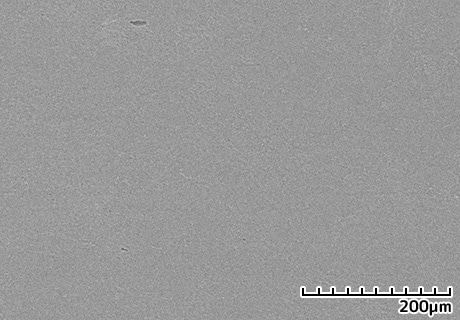
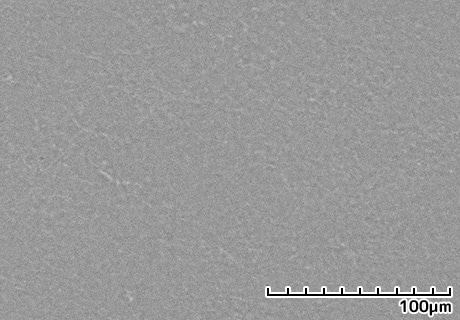
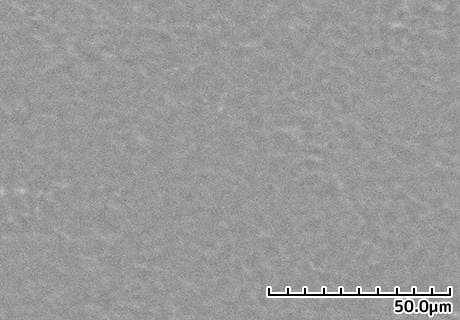
Magnified image of a glue stick
What are glue sticks made of?
Glue sticks are mainly made from a synthetic resin called PVP (polyvinylpyrrolidone).
They are made by mixing PVP with water, alcohol and a gelling agent (to help it solidify) at a high temperature, then forming the mixture into a stick shape.
How do glue sticks stick paper?
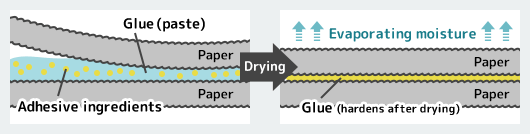
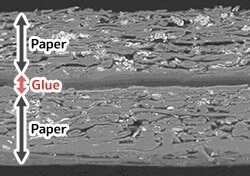
Glue sticks are a semi-solid paste and contain some water, which allows the PVP to stick to the surface of paper.
When the moisture evaporates, the PVP hardens between the sheets of paper, sticking them together.
Compared to starch or liquid glue, it is less likely to stain paper.
Sticking stationery
Liquid glue
Electron microscope image
Magnified image of liquid glue
What is liquid glue made of?
Liquid glue is made from a synthetic resin called PVA (polyvinyl alcohol). When PVA is mixed with water at a high temperature, it forms a liquid.
A small amount of preservative is also added to prevent mold growth.
How does liquid glue stick paper?
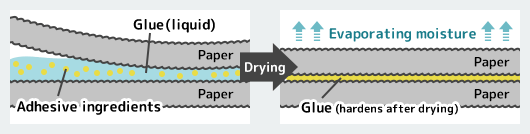
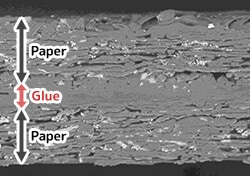
The PVA and water solution used in liquid glue is runny and not too sticky, so it soaks into paper. When the water content evaporates, the PVA hardens within the paper, sticking the sheets together.