

Part 14
Let's learn the secrets of stationery!



We all use pencils, ballpoint pens and markers to write, but do you know how they actually work?
Each one has its own unique mechanism.
Let's take a look together through the electron microscope!
 Writing stationery
Pencils
Electron microscope image
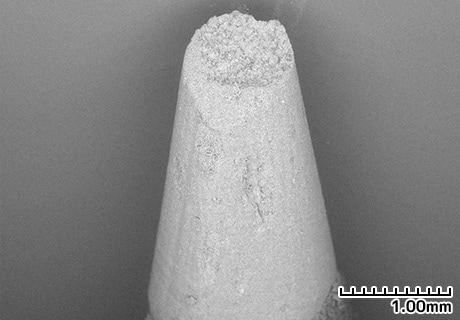
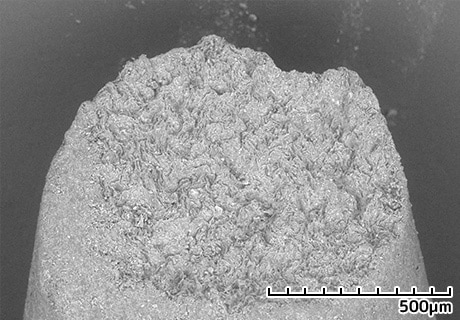
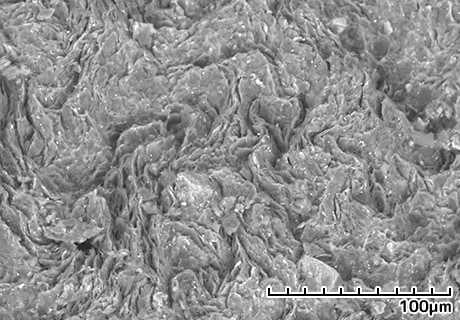
Magnified image of a pencil tip
What are pencils made of?
The "lead" at the core of a pencil is actually made of graphite and clay.
Graphite consists of many flat sheets stacked on top of each other, each one made from an element called carbon.
The higher the graphite content of the pencil, the darker and softer the lead. The higher the clay content, the lighter and harder the lead.
How do pencils write?
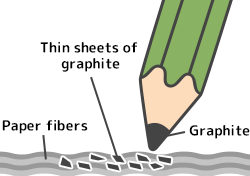
One of the key features of the stacked layers of graphite in pencil lead is that they are slippery.
When you rub a pencil across the surface of paper to write, thin sheets of graphite peel off from the tip.
These sheets stick to the paper, forming letters and pictures.

Writing stationery
Ballpoint pens
Electron microscope image
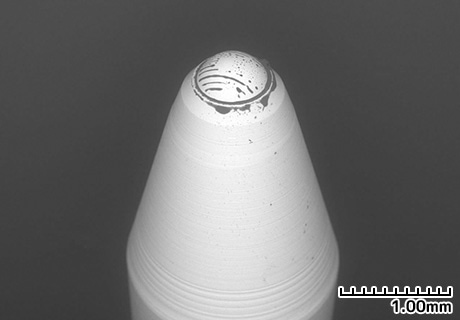
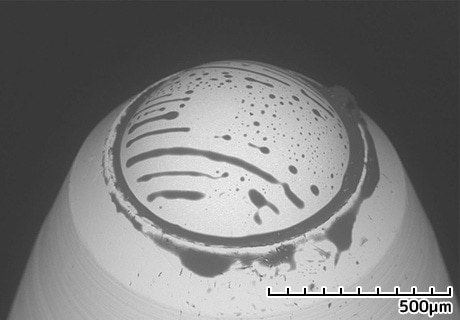
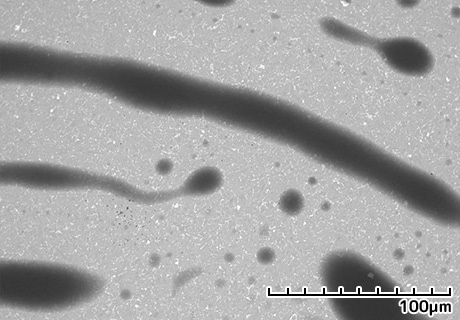
Magnified image of a ballpoint pen tip
What are ballpoint pens made of?
Ballpoint pens contain an oil-based ink.
This ink is slightly thicker than normal and does not bleed easily in water. At the tip of the pen is a very small ball.
How do ballpoint pens write?
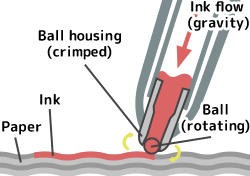
When you press a ballpoint pen against paper and move it around, the ball at the tip rolls.
Ink drips down from inside the tip due to gravity, and the ball transfers the ink to the paper to form writing.
Writing stationery
Markers
Electron microscope image
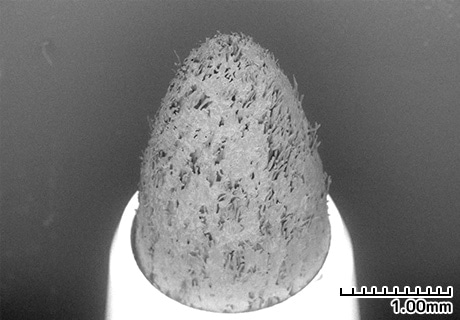
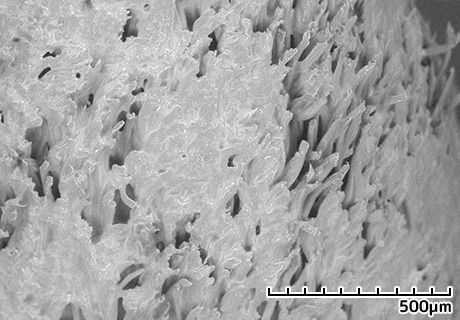
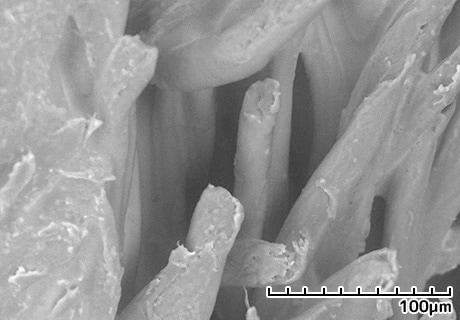
Magnified image of a marker tip
What are markers made of?
Markers contain liquid (water-based) ink.
Their tips are made from hardened fibers such as felt and nylon.
How do markers write?
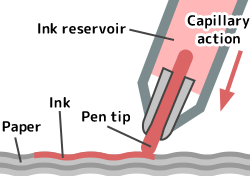
When you press a marker against paper, ink travels to the tip of the pen and soaks into the paper.
The ink passes through gaps in the felt and nylon fibers at the pen tip. This mechanism is called capillary action.
This capillary action causes ink to flow naturally to the tip of the pen, where it soaks into the paper to form writing.