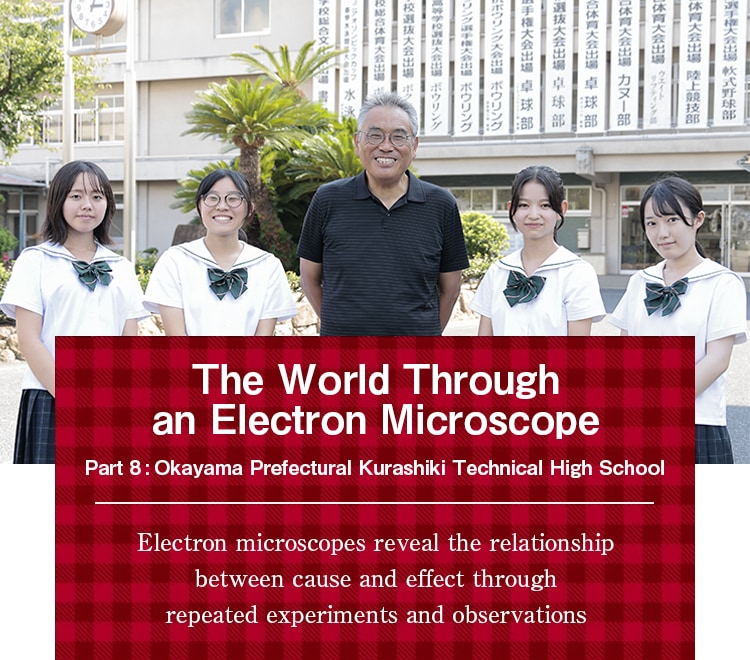
Since its founding in 1939, Okayama Prefectural Kurashiki Technical High School has emphasized regional and community cooperation. In recent years, it has introduced new perspectives such as the SDGs and PBL (problem-based learning), repeatedly devising ways to foster self-reliance and inquisitiveness in students by practicing independent, interactive and in-depth learning. Teachers also actively provide opportunities for students to experience new fields and challenges, and always welcome fresh topics and ideas from the students themselves.
In addition, through their research activities, the students experience the difficulty of raising funds in the same way they would in society, helping them feel the importance of research and how it connects with the world around them. The students introduced in this article have worked to build their own relationships with companies and organizations, receiving various types of support and guidance as a result, while gaining an awareness of how their research could be useful to society.
In this article, we interviewed Ayano Yamanoi and Ayaka Shimizu, third-year students working on the development of model rocket coating technologies that use natural resin, as well as Natsumi Yasuhara and Yui Watadani, second-year students researching the correlation between plying and weaving methods used to make fabrics and the lint they produce during laundry.
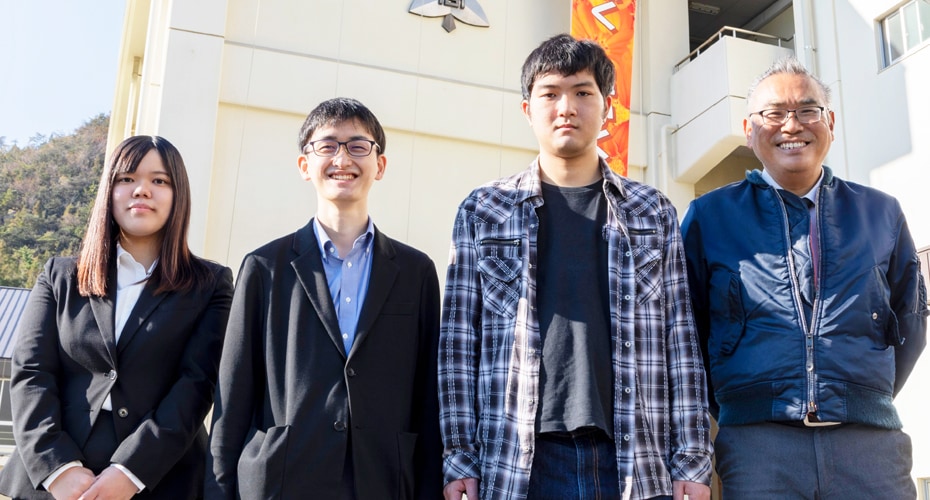
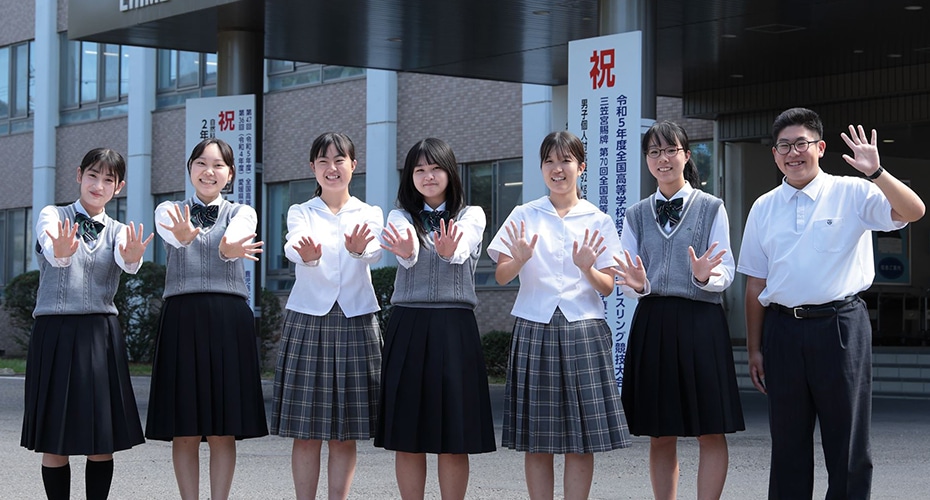
(All participants from the group)
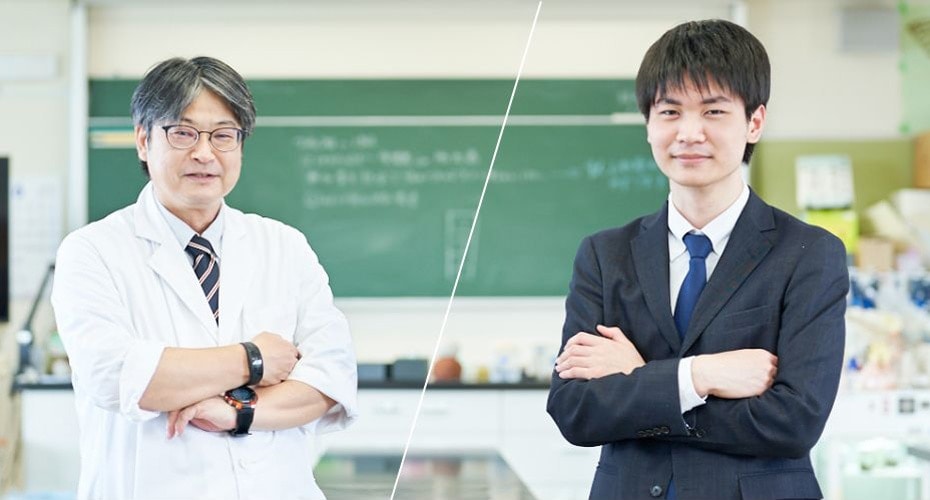
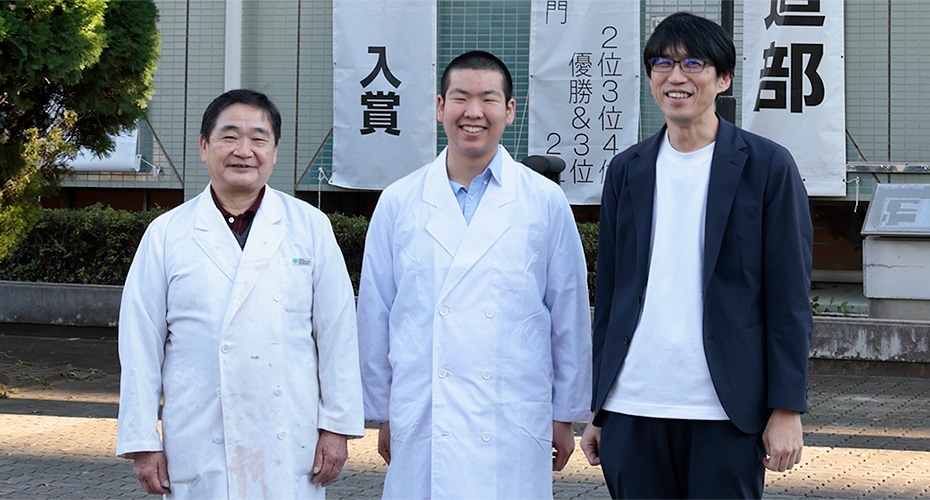
Manabu Fujita (Teacher)
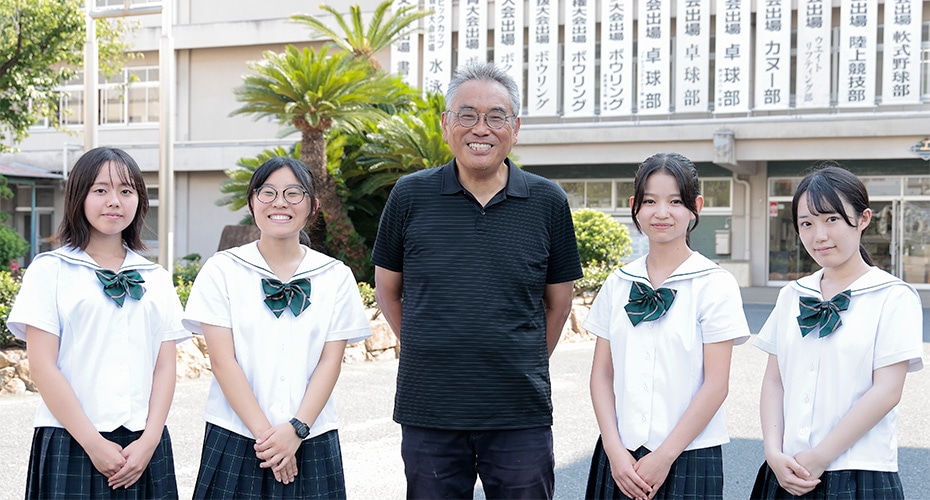
Ayano Yamanoi (3rd year), Ayaka Shimizu (3rd year): Development of model rocket coating technologies using natural resin
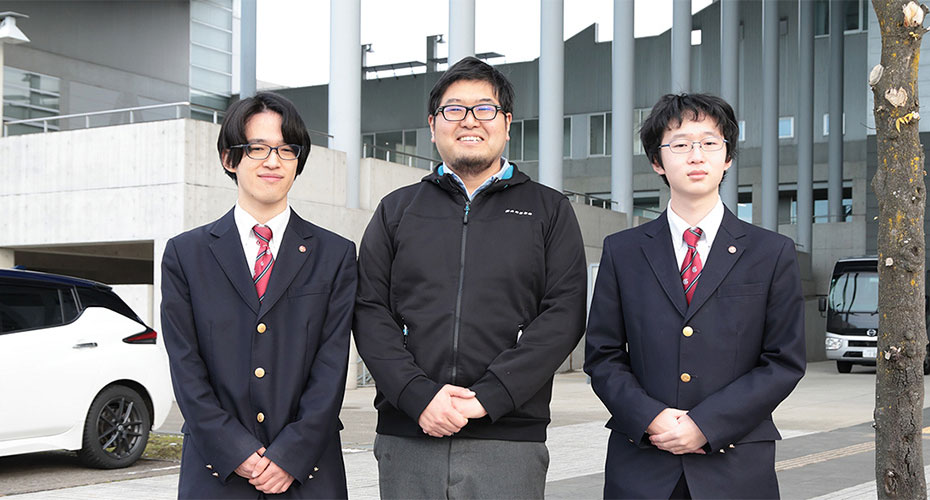
Natsumi Yasuhara (2nd year), Yui Watadani (2nd year): Research into the correlation between plying and weaving methods used in making fabrics and the lint they produce during laundry
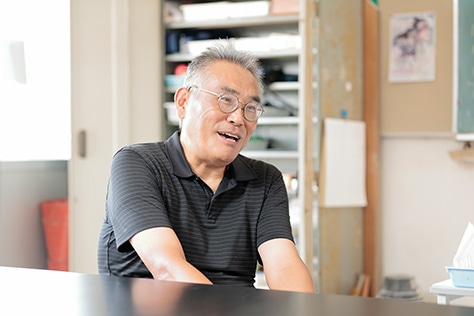
Manabu Fujita, Teacher, Okayama Prefectural Kurashiki Technical High School
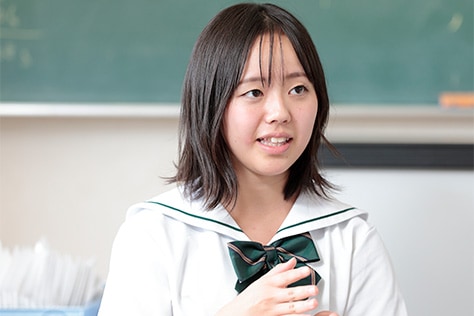
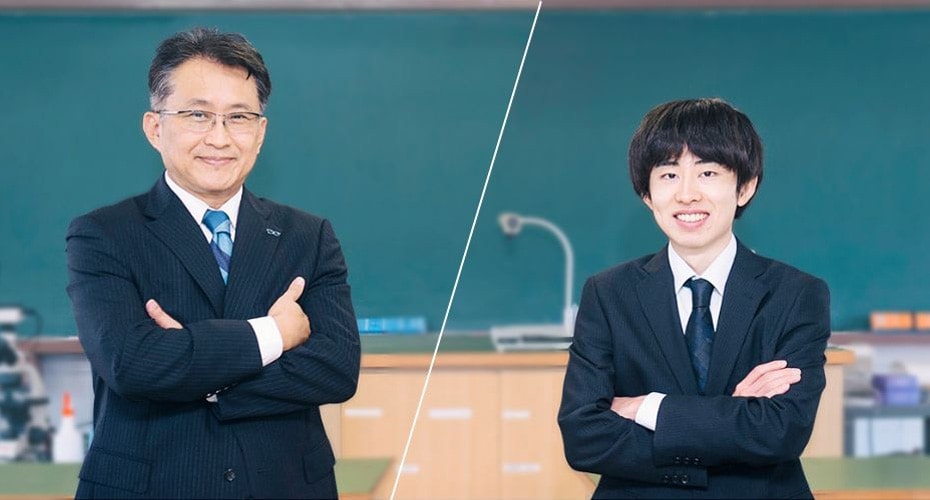
Ayano Yamanoi, Third-year student, Okayama Prefectural Kurashiki Technical High School
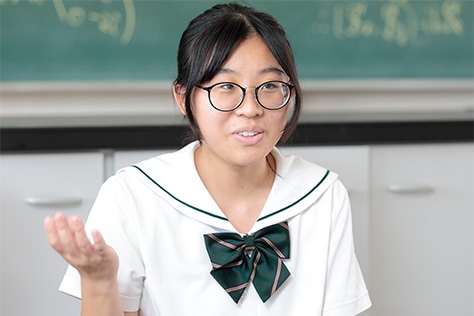
Ayaka Shimizu, Third-year student, Okayama Prefectural Kurashiki Technical High School
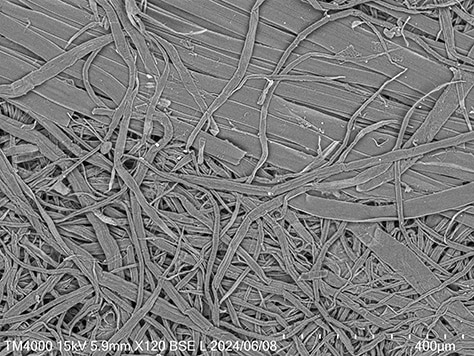
Electron microscope image
(paper surface before applying kakishibu)
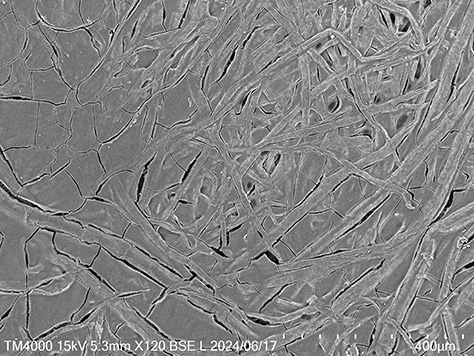
Electron microscope image
(paper surface after applying multiple layers of kakishibu)
Fujita:Yamanoi and Shimizu have used electron microscopes to develop model rocket coating technologies that use natural resin. The natural resin they have researched is kakishibu, a traditional dye made from the tannins in fermented unripe persimmons, which they applied to the rocket exterior. In order to find a water-resistant, heat-resistant and smooth surface for a rocket, it's essential to have a broad perspective, a wide range of knowledge, and carry out repeated experiments.
Yamanoi:I became interested in science and rockets after reading the manga Space Brothers. Because of this, I immediately jumped on the idea of rocket development from the multiple research topics our high school teacher suggested. The idea of using kakishibu on the exterior surface came about when searching for a paint that met the heat and water resistance required for rockets. While researching in the field of textiles, we learned that kakishibu is used to treat bamboo and traditional umbrellas, and that it's water-resistant, so that drew our attention to this natural material.
Shimizu:We repeatedly tested kakishibu by applying different numbers of layers, in different orders, and combined with other materials. We launched a lot of rockets, measured their flight stability, strength and time to fall, and kept making improvements. We continued to verify and tweak the coating to achieve stable flight while also responding to unexpected factors like the choice of explosive fuel and differences in engine performance. As a result, we found that there are both water-resistant types and heat-resistant types of kakishibu. By testing out which order we applied them in and the number of layers of each type we applied, we uncovered the optimal method: applying the heat-resistant type after the water-resistant type, two times each. At the 45th National Model Rocket Contest (JAXA Tsukuba Space Center) held the other day, we achieved third place for duration of flight, third place for altitude, and third place overall.
Fujita:A big reason why they started this research was the Girls Rocketry Challenge. This was a program where companies such as Leave a Nest and Lockheed Martin provided funds and equipment to support female students trying their hand at rocket engineering, and these two were one of four teams selected nationwide.
Yamanoi:How could the results of this experiment affect society, and what are companies looking for? As well as receiving funds, we also received serious guidance and advice from companies and external experts, so it was a valuable opportunity to come into contact with the knowledge and ideas of working people. Electron microscopes played a major role in our research, too. It was important that we could see with our own eyes what the exterior looked like on the rockets that had good results after applying kakishibu in various orders. For example, applying it to the exterior surface filled in gaps, resulting in increased density and smoothness, which led to reduced air resistance. We could visually confirm this with the electron microscope. By understanding why this happened and the mechanism behind it, we were able to develop and verify our next hypothesis.
Shimizu:Even when we were worried about not getting good results, Mr. Fujita was always very encouraging and gave us positive advice.
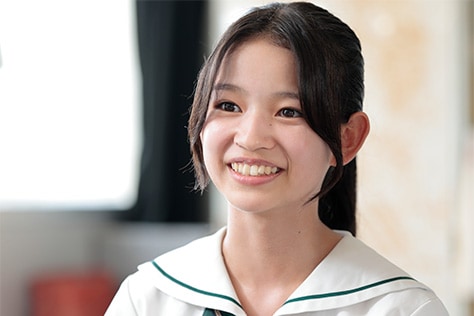
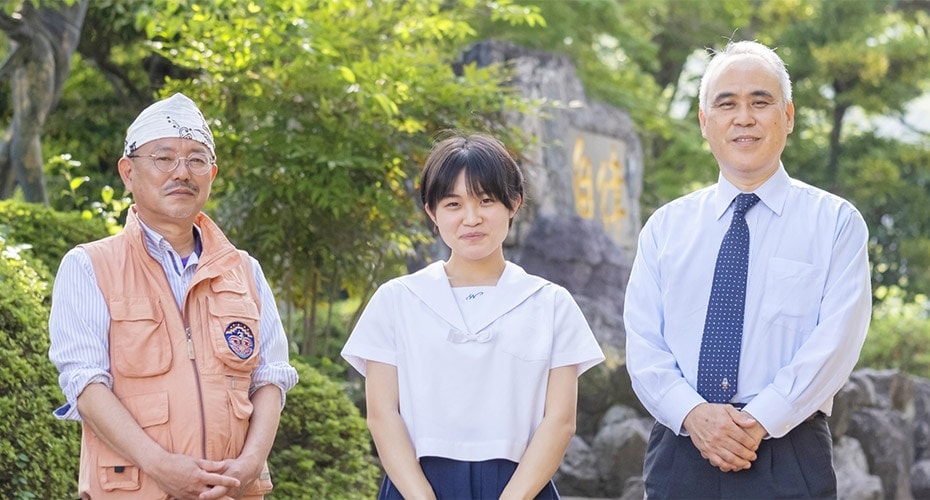
Natsumi Yasuhara, Second-year student, Okayama Prefectural Kurashiki Technical High School
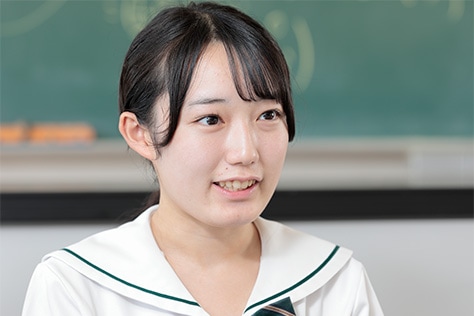
Yui Watadani, Second-year student, Okayama Prefectural Kurashiki Technical High School
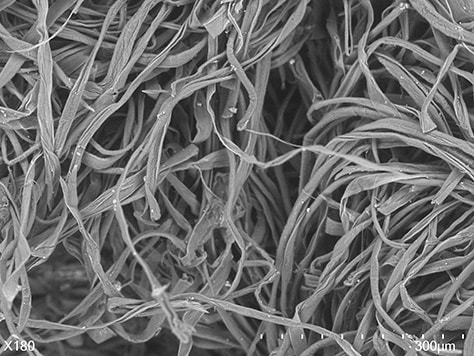
Electron microscope image
(Fiber lint)
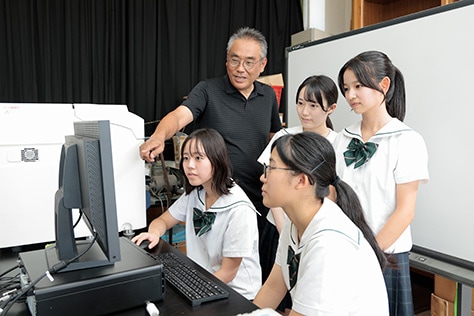
The Miniscope is fully utilized in research.
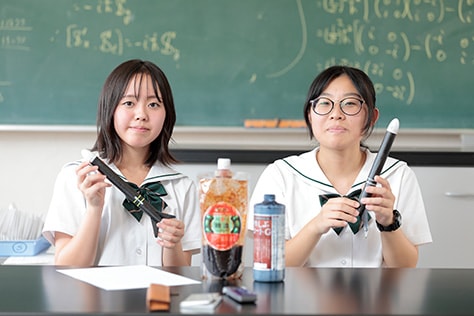
Rockets coated with kakishibu, a natural resin
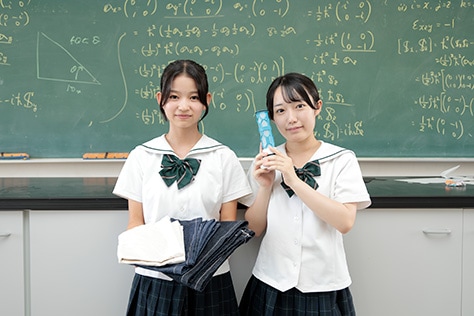
Fabrics washed every day to develop eco-friendly fibers
Fujita:Yasuhara and Watadani are researching the correlation between plying and weaving methods used to make fabrics and the lint they produce during laundry. They independently used their after-school time to find this topic and conduct their research, rather than as part of a science club. They're comparing two fabrics woven in different ways to investigate the differences in how lint is produced during laundry: denim, which is a specialty of Okayama Prefecture, and canvas. It's an ambitious topic that uses the act of laundry as a familiar entrance point and then broadens its perspective to a larger environmental problem.
Yasuhara:We started this research because we thought it would be a fun way to increase our understanding of the specialized textile knowledge we were learning at school, by observing the differences in how lint is created based on fabric structure (plain weaving and twill weaving), and the ratio of warp and weft yarns contained in the lint. Ultimately, we're trying to understand the relationship between plying* and weaving methods and the creation of lint during laundry, and then link this to technologies that suppress the release of microplastics.
Watadani:First, we started by comparing the creation of lint when washing denim (twill weave) and canvas (plain weave). What we found was that while denim produced a lot of lint, canvas barely produced any. We thought the reason for this must be the weaving method. We discovered that in twill-woven denim, vertical yarns are often exposed and easily released as lint, while the plain weave is more firmly woven and produces almost no lint.
Yasuhara:This trend continues even after repeated washing, with denim producing almost the same amount of lint every time and canvas consistently not producing lint. The experiment was conducted by preparing cloths of the same size, hemming them, washing them in a washing machine under the same conditions (washing time/amount of water), filtering the wastewater through a filter to collect any fiber lint, then drying and weighing the lint. During this process, we observed the fiber lint under an electron microscope. We were able to confirm subtle differences that could not be seen with the naked eye, such as thinner fibers contained within a single fiber. This was a major discovery in our investigation of the cause.
Watadani:Based on these results, we're currently conducting research into materials that could be used for vertical and horizontal yarns to produce more environmentally friendly fibers.
Fujita:They've had some valuable exchanges with universities and companies during their research. Through the Leave a Nest Challenge Program, the students receive face-to-face guidance about once a month from a student tutor specializing in textiles at Keio University, as well as advice on how to proceed with their research and prepare presentation materials. Patagonia also provided filters essential for the experiment. These two are currently representing the Chugoku region in the Marine Challenge Program and are preparing a presentation at the national competition. This is a research topic that even Japanese consumer electronics manufacturers and textile manufacturers haven't yet been involved in. I'm very keen for them to share their results and get a feel for how their research connects with society.
Yasuhara:All the advice we've received from the university, companies, and Mr. Fujita has been very helpful. One thing I've developed is the habit of looking into things that interest me, which I feel is important for a wide range of situations, not just during research.
Watadani:The thing that left the biggest impression on me was when we were stuck in our research and Mr. Fujita casually brought us ice creams [laughs].
Yasuhara and Watadani:That was great!
Fujita:Really? That left the biggest impression? [Laughs]
* Plied yarn is a material made by twisting several threads of yarn together. Plying refers to making yarn using this technique.

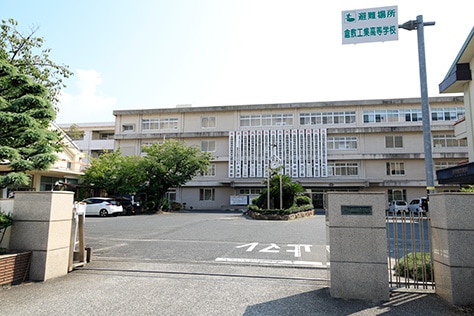
Okayama Prefectural Kurashiki Technical High School was opened in 1939 as Okayama Prefectural Kurashiki Technical School. The school name was changed to its current name as part of the educational system reform of 1948. This year (2025), it will celebrate its 86th anniversary.
The educational aim of the school is to cultivate industry workers with specialized knowledge and skills built on a foundation of general education, who are creative, independent, and strong both mentally and physically. To achieve this goal, the school has five departments: Mechanical Engineering, Electromechanical Engineering, Electrical Engineering, Industrial Chemistry, and Textile Engineering.
In addition to their daily learning, the students actively acquire qualifications, take part in club activities, and craft things by hand. Supplementary lessons are also provided prior to exams, and the results of the specialized learning and skills cultivated by each department are reliably seen.
The school also places importance on developing human resources who can contribute to society and the local community, so club activities such as those of the science club are run with an awareness of collaboration with the local community and businesses. The students always keep in mind how their studies and research relate and contribute to society.