Hitachi High-Tech's
Decarbonization solutions
Solutions for semiconductor manufacturing
Promoting sustainable semiconductor production, reduced environmental impact, and establishing secure networks through the use of data platforms that enable highly efficient semiconductor manufacturing
Value provided to customers
-
Reducing the time required for semiconductor development, prototyping, and mass production
-
Reducing energy consumption and CO2 emissions for semiconductor manufacturing
-
Providing accumulated operational know-how to support a stable semiconductor supply
Results
- We have begun operating data platforms that seamlessly integrate and connect data across our product lineup, including etch systems, CD‑SEMs (Critical-Dimension SEMs), optical inspection systems, and analyzers.
- We are also working with customers at our Co-Creation sites to validate results and drive improvements, advancing seamless productivity-enhancement solutions from development to mass production.
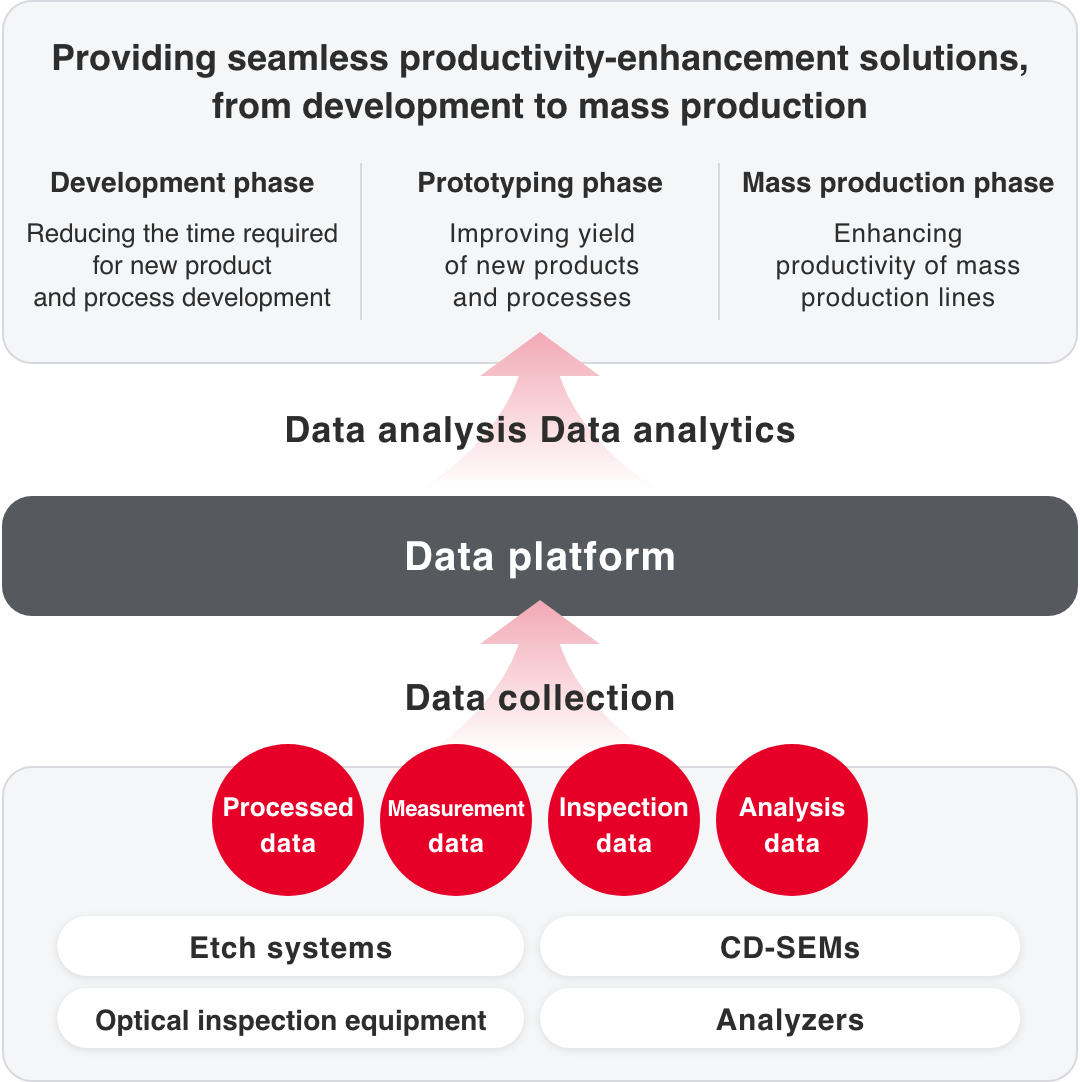
Products related to semiconductor manufacturing, such as etch systems and CD-SEMs
Building a circular value chain for lithium-ion batteries
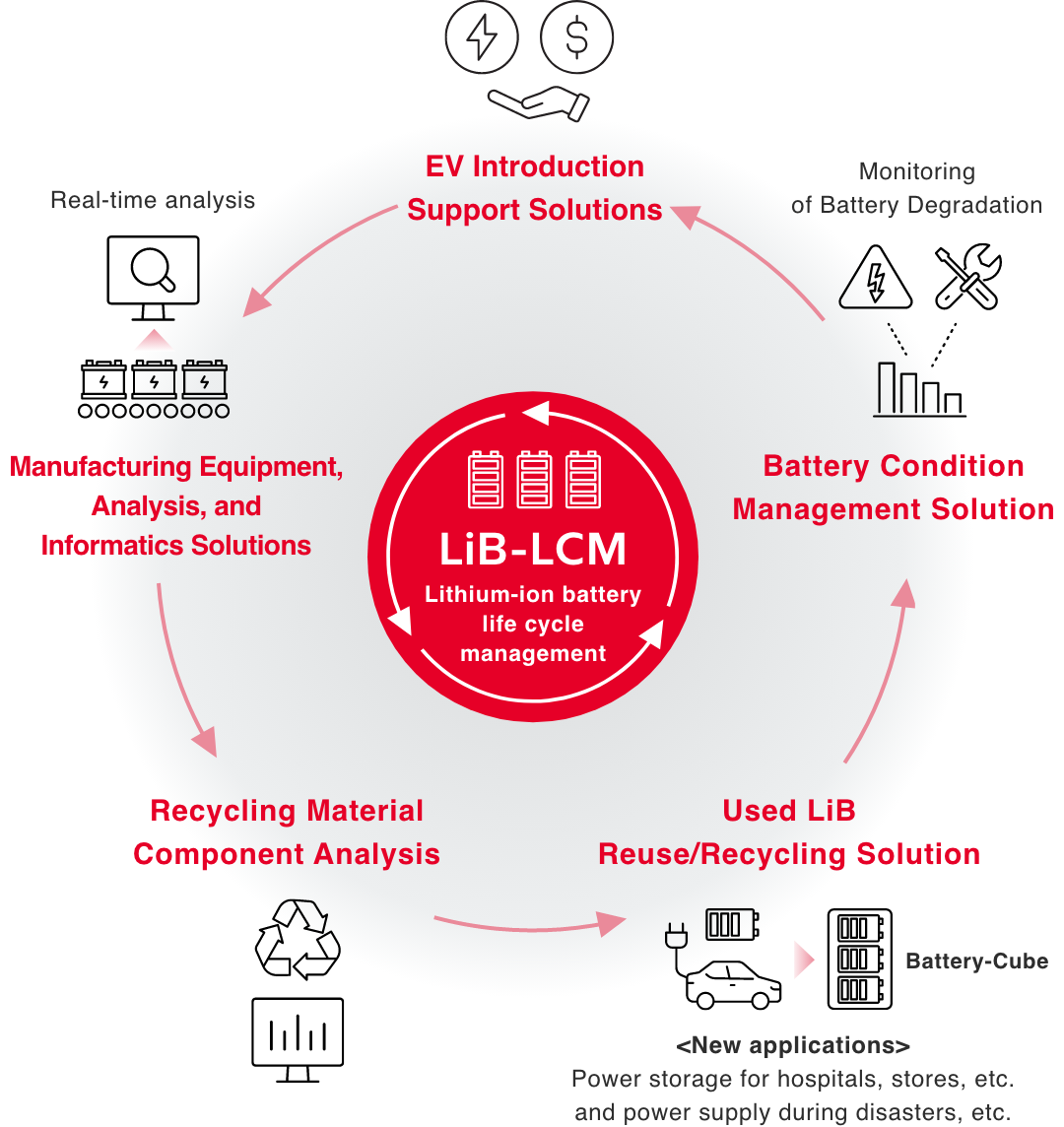
Hitachi High-Tech operates a lithium-ion battery life cycle management (LiB-LCM) business that encompasses LIB manufacturing, EV introduction and operation, and the reuse/recycling of used LIBs from EVs
Value provided to customers
-
Reducing CO2 emissions across the entire life cycle
-
Promoting resource recycling
-
Improving performance and productivity of lithium-ion batteries
Results
- This solution visualizes total cost-effectiveness, including EV vehicle and charging- infrastructure introduction costs, electricity charges during operation, and maintenance expenses.
- Battery condition data is provided in real time to help customers determine maintenance needs and assess residual value. With this technology, challenges related to reuse and recycling can be addressed, supporting the creation of an environment that enables the smooth transition of EV batteries to secondary use.
- Utilizing the Hitachi High-Tech Group’s analytical systems and analyzers to examine the elements, components, and solutions in recycled materials helps improve overall recycling efficiency.
- We provide solutions that support manufacturing automation and digitalization by leveraging a wide range of data generated during lithium-ion battery production.
Related links
Learn more about our Li-ion battery value-chain initiatives
Learn more about Hitachi High-Tech's lithium-ion battery solutions
Building next-generation green data centers
Promoting the transformation of data centers that consume massive amounts of energy into green data centers,
and expanding the use of the All-Photonics Network (APN) to develop communication technologies and reduce power consumption in communications
Value provided to customers
Results
- Environmental improvements are urgently needed at large-scale data centers that support rapidly growing data communications, as these data centers consume a lot of power.
- Photonic integrated circuits (PICs) made using photonics-electronics convergence technology allow for communications that boast higher speeds and consume less power than existing technologies. This contributes to a reduction in CO2 emissions.
- We have established a system capable of providing engineering services for PIC development, from test development to initial mass production.
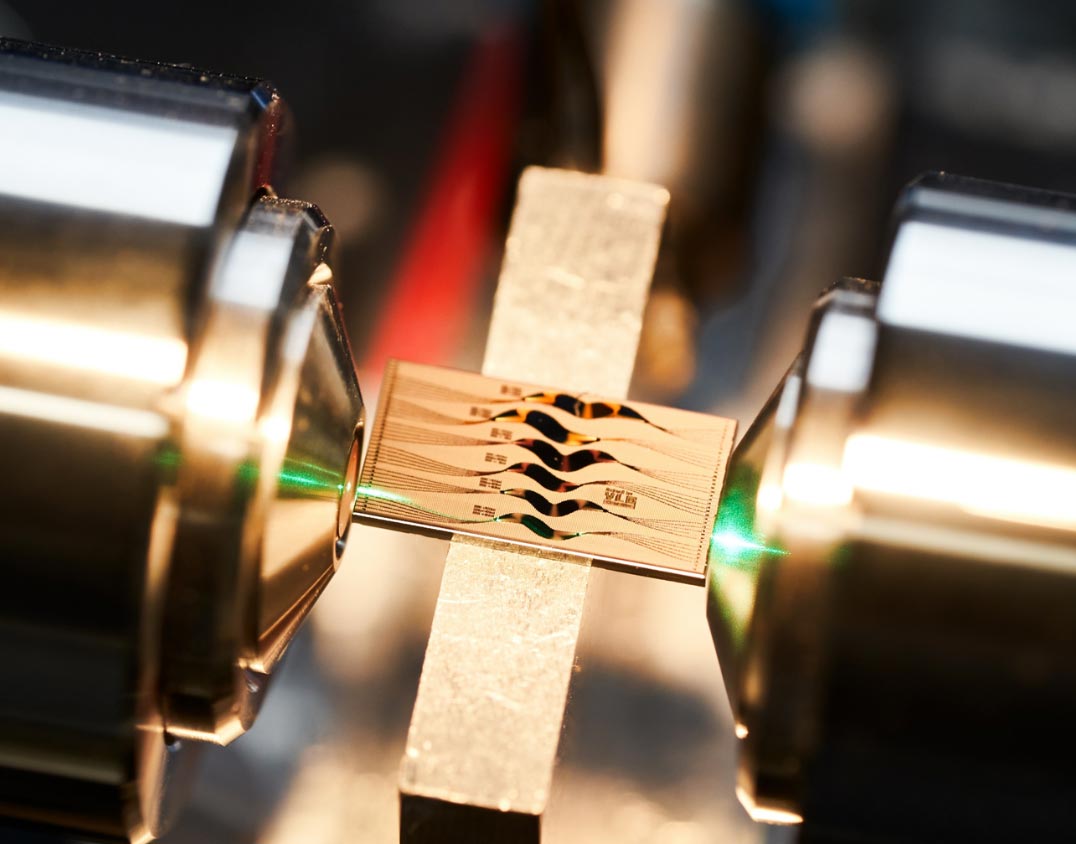
We provide customers with a wide range of value, including coolant degradation diagnostics and predictive diagnostics
Solutions for the development of materials
Demonstrating higher development efficiency for metallic thin-film materials used in electronic devices, etc.,
and contributing not only to functionality but also to tackling decarbonization issues in the development of such materials
Value provided to customers
Results
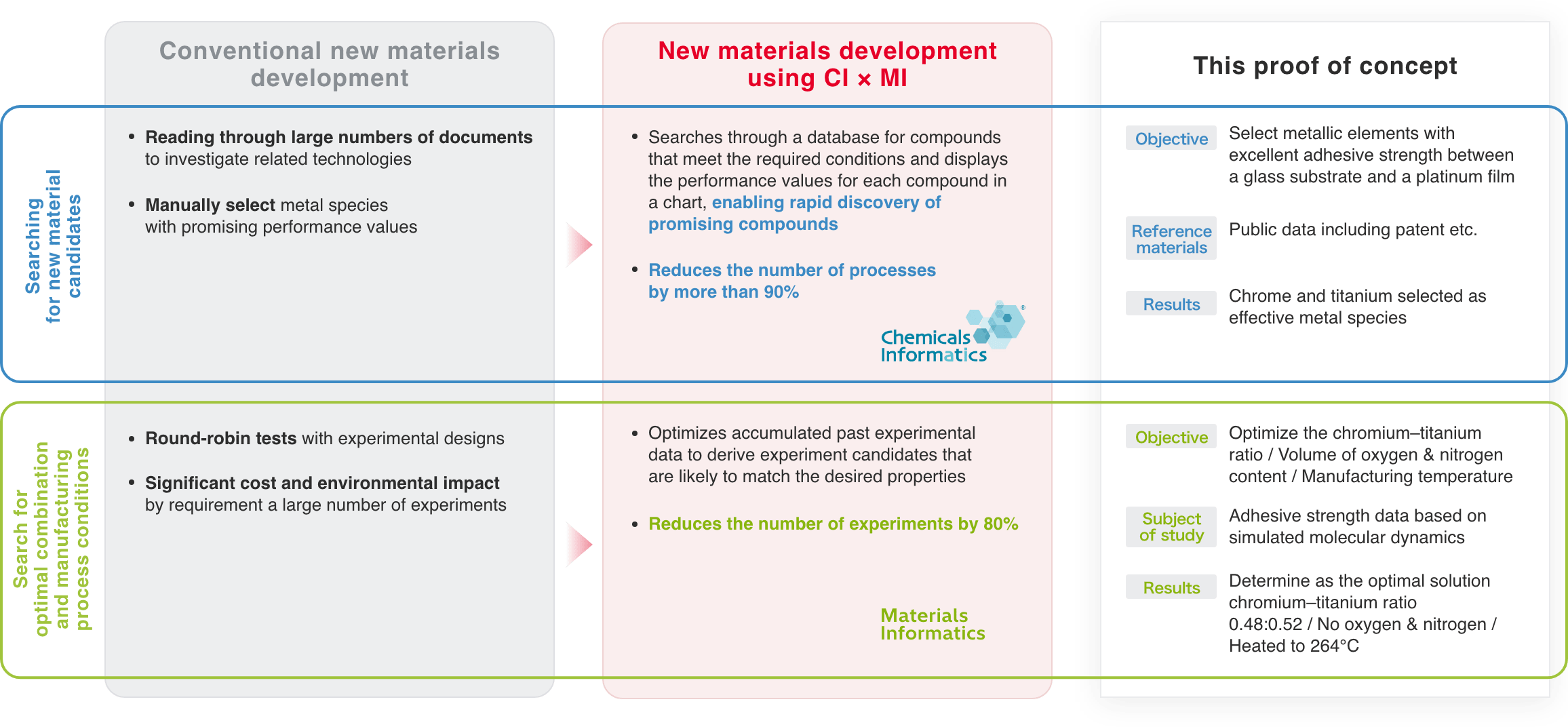
- PROACCELA's Compound Discovery AI was used to identify metallic elements with superior adhesion between glass substrates and platinum films, while PROACCELA's Materials Informatics technology was applied to optimize the chromium-titanium ratio, oxygen and nitrogen content, and manufacturing temperature.
- We have achieved over 90% reduction in the number of processes for the development of materials and an 80% reduction in the number of experiments.
- CO2 emissions have been reduced across the entire development process from the selection of materials to the search for optimal conditions by 1.42 tons, from 1.77 tons in the past to 0.35 tons.